
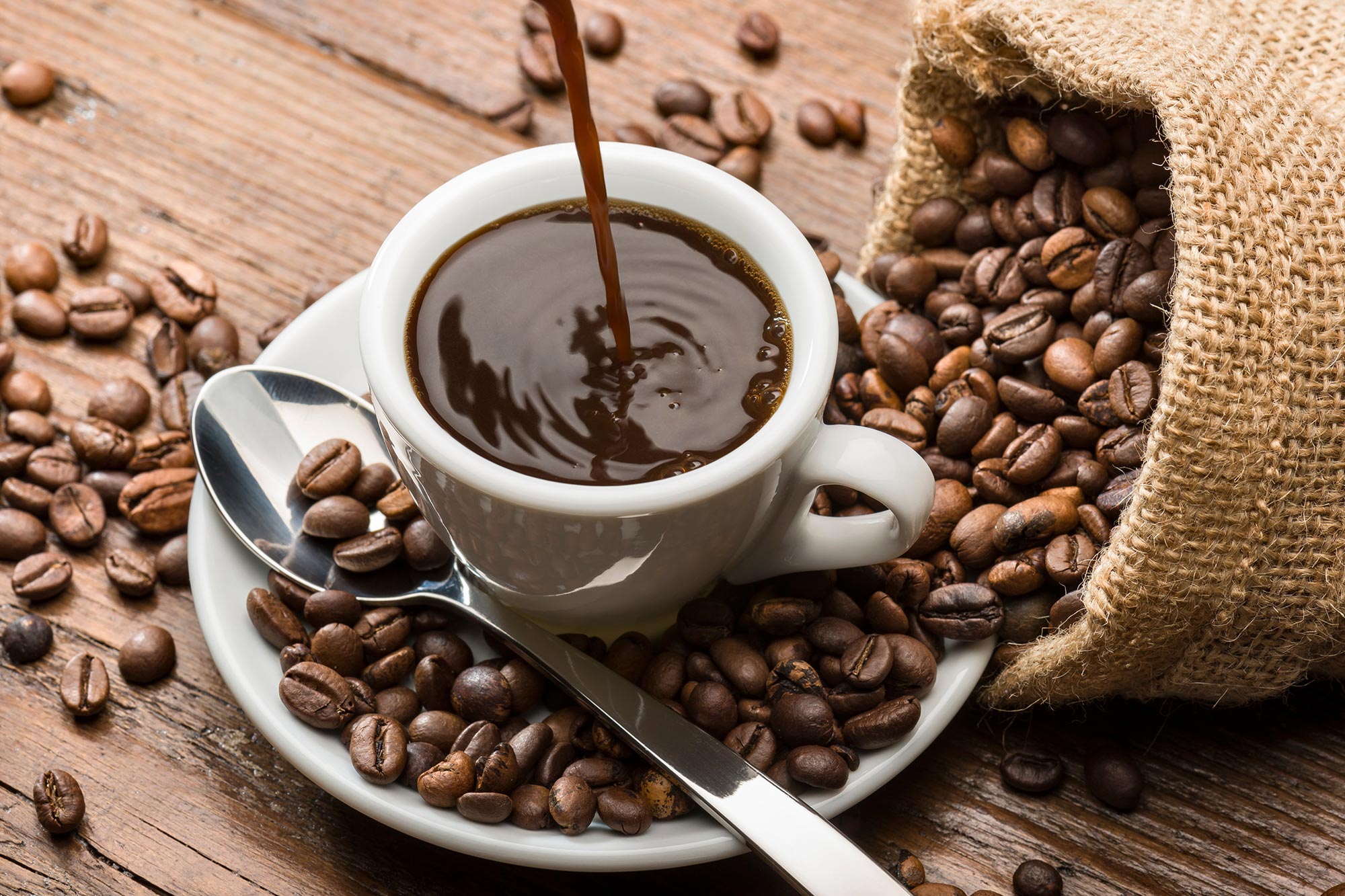
Adding moisture to coffee beans before grinding reduces static electricity, enhancing espresso quality and offering significant benefits for the coffee industry.
The fracturing and friction of coffee beans during grinding generates electricity that causes coffee particles to clump together and stick to the grinder. Researchers report on December 6 in the journal Matter that coffee beans with higher internal moisture produce less static electricity, which means less coffee is wasted and there is less mess to clean up. This effect can be simulated by adding a small amount of water to beans immediately before grinding them. The team also showed that grinding with a splash of water produces more consistent and intense espresso.
“Moisture, whether it’s residual moisture inside the roasted coffee or external moisture added during grinding, is what dictates the amount of charge that is formed during grinding,” says senior author Christopher Hendon, a computational materials chemist at the University of Oregon. “Water not only reduces static electricity and therefore reduces mess as you’re grinding, but it can also make a major impact on the intensity of the beverage and, potentially, the ability to access higher concentrations of favorable flavors.
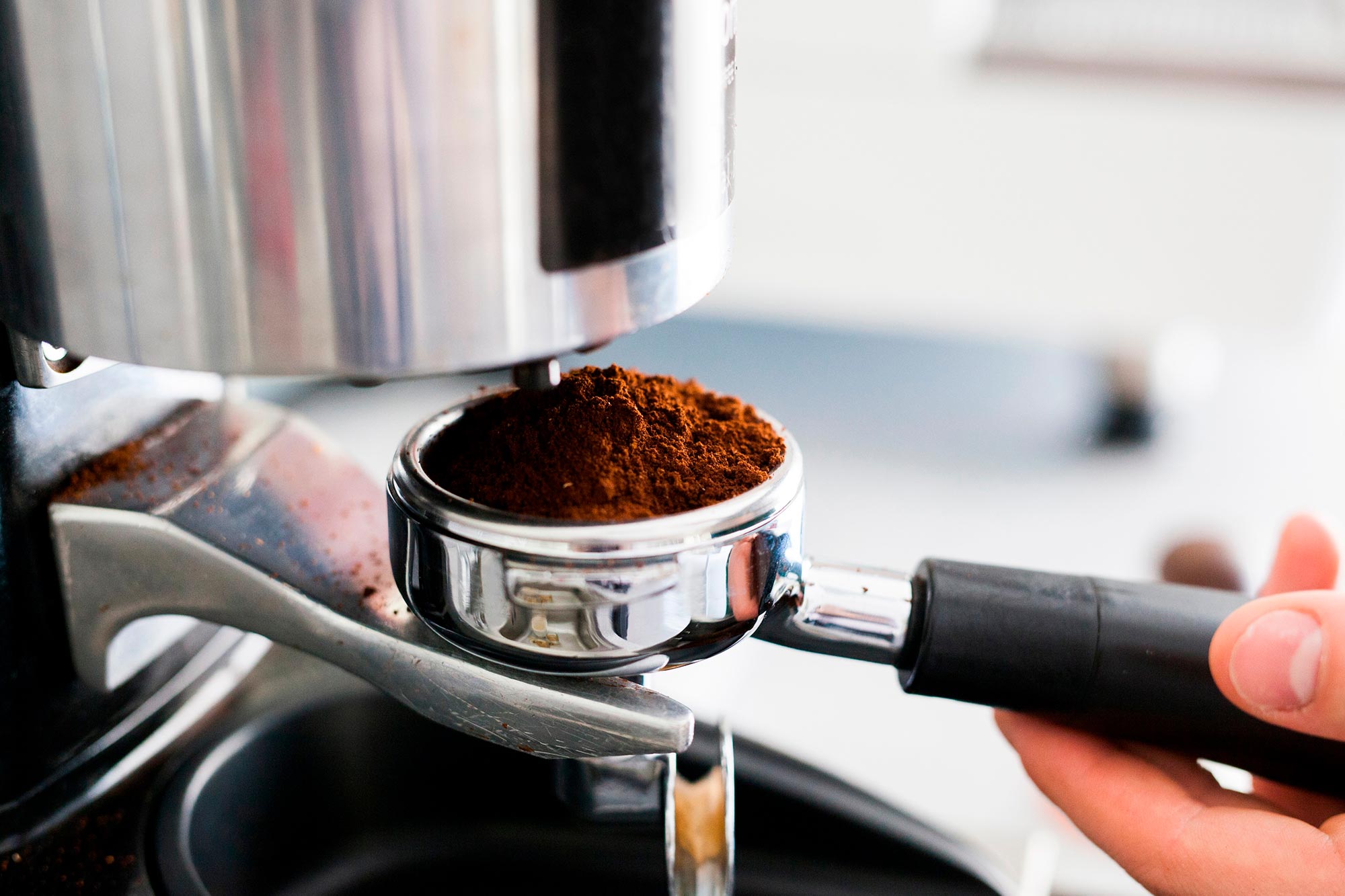
These improvements to coffee extraction could have massive economic implications for the coffee industry, which is worth $343.2 billion or 1.5% of the US gross domestic product, the researchers say. “Pushing the concentration up by 10%–15% for the same dry coffee mass has huge implications for saving money and improving quality,” says Hendon.
Exploring the Causes of Coffee Electrification
That coffee grinding produces static electricity has long been known within the coffee industry, where this electrification causes clumping and occasional zaps, but little was known about how different coffee attributes contribute to this phenomenon or how it impacts brewing. To identify factors associated with static electricity generation during coffee grinding, Hendon teamed up with volcanologists who study similar electrification processes during volcanic eruptions.
“During eruption, magma breaks up into lots of little particles that then come out of the volcano in this big plume, and during that whole process, those particles are rubbing against each other and charging up to the point of producing lightning,” says first author and volcanologist Joshua Méndez Harper at Portland State University. “In a simplistic way, it’s similar to grinding coffee, where you’re taking these beans and reducing them to fine powder.”
This video shows how coffee behaves when grinding with and without a splash of water. Credit: Joshua Mendez Harper
The researchers measured the amount of static electricity produced when they ground different commercially and in-house roasted coffee beans that varied by factors including country of origin, processing method (natural, washed, or decaffeinated), roast color, and moisture content. They also compared the impact of grinding coarseness on the amount of electricity produced.
There was no association between static electricity and the coffee’s country of origin or processing method, but the researchers did find associations between electrification and water content, roast color, and particle size. Less electricity was produced when coffee had a higher internal moisture content and when coffee was ground at a coarser setting. Light roasts produced less charge, and this charge was more likely to be positive, while darker roasts—which also tend to be drier —charged negatively and produced more overall charge. The researchers also showed that dark roast coffees produce much finer particles than light roasts when ground at the same setting.
Improving Espresso Brewing
Next, the team tested whether grinding with water changed the way espresso is brewed. When they compared espresso made with identical coffee beans ground either with or without a splash of water, they found that grinding with water resulted in a longer extraction time and a stronger brew. Grinding with water also resulted in espresso shots that were more similar from shot to shot, overcoming a major hurdle for baristas and industrial coffee brewers.
Though they only tested espresso, the researchers say these benefits would apply to many other brewing methods. “The central material benefit of adding water during grinding is that you can pack the bed more densely because there’s less clumping,” says Hendon. “Espresso is the worst offender of this, but you would also see the benefit in brew formats where you pour water over the coffee or in small percolation systems like a stovetop Bialetti. Where you’re not going to see a benefit during brewing is for methods like the French press, where you submerge the coffee in water.”
Future Research and Broader Implications
The researchers plan to follow up with more investigations into how to prepare the perfect coffee. “Now that we know what grind settings to use to make reproducible espresso, we can start to try to understand what factors give rise to sensory differences in coffee taste,” says Hendon.
Their work also has implications beyond the daily brew, as the electrification of granular materials is an active area of research in material science, geophysics, and engineering.
“It’s sort of like the start of a joke—a volcanologist and a coffee expert walk into a bar and then come out with a paper,” says Méndez Harper, “but I think there are a lot more opportunities for this sort of collaboration, and there’s a lot more to know about how coffee breaks, how it flows as particles, and how it interacts with water. These investigations may help resolve parallel issues in geophysics—whether it’s landslides, volcanic eruptions, or how water percolates through soil.”
Reference: “Moisture-controlled triboelectrification during coffee grinding” by Joshua Méndez Harper, Connor S. McDonald, Elias J. Rheingold, Lena C. Wehn, Robin E. Bumbaugh, Elana J. Cope, Leif E. Lindberg, Justin Pham, Yong-Hyun Kim, Josef Dufek and Christopher H. Hendon, 6 December 2023, Matter.
DOI: 10.1016/j.matt.2023.11.005
This research was supported by the Department of Energy, the National Science Foundation, the Camille and Henry Dreyfus Foundation, and the Coffee Science Foundation with support from Nuova Simonelli.
Never miss a breakthrough: Join the SciTechDaily newsletter.
Follow us on Google and Google News.