
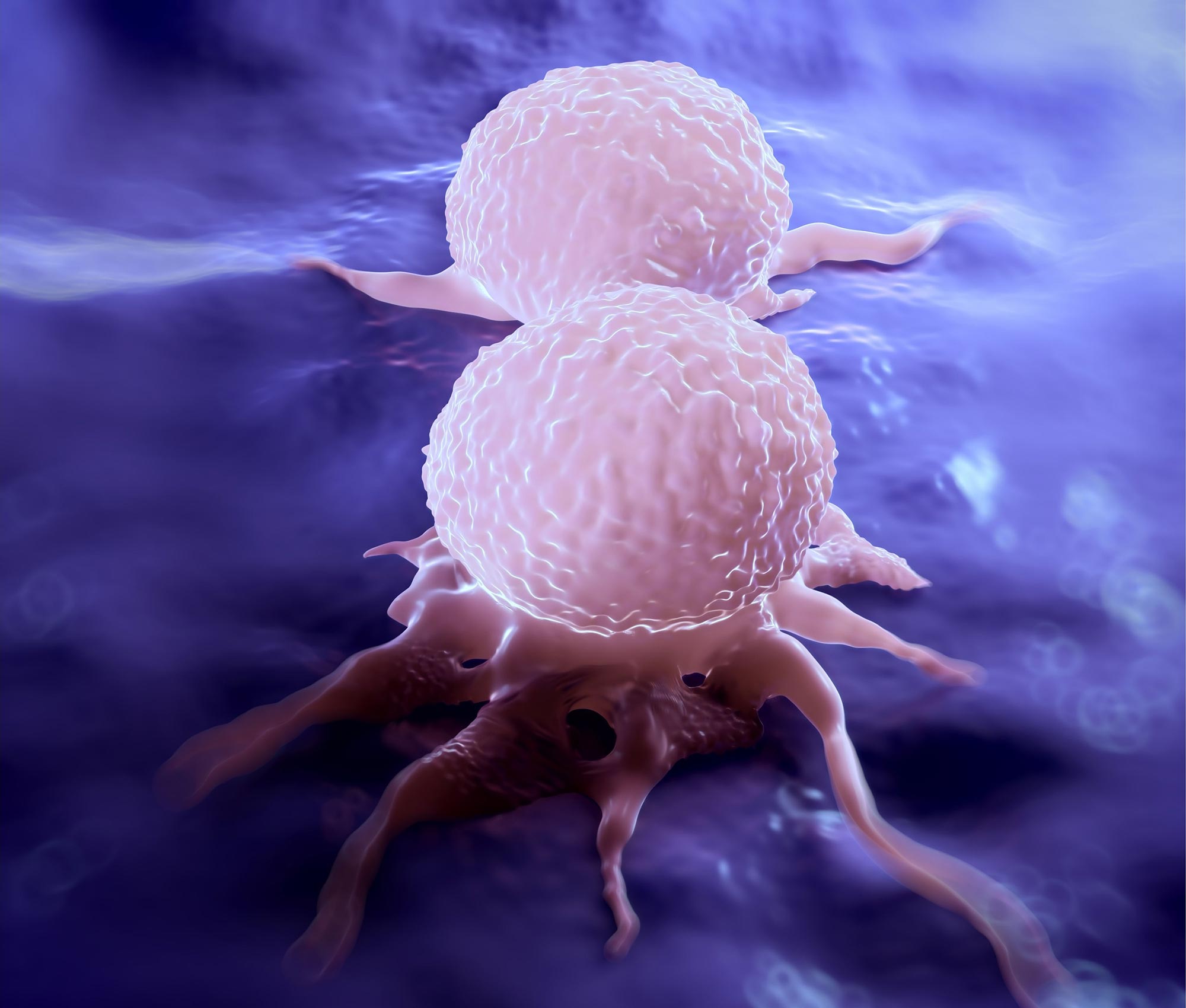
Researchers at the University of São Paulo have discovered a molecule in arachnid venom that behaves like a commonly used chemotherapy drug for treating the disease.
The venom of a scorpion native to the Amazon rainforest may hold the key to a new treatment for one of the most deadly cancers among women.
Scientists at the University of São Paulo’s Ribeirão Preto School of Pharmaceutical Sciences (FCFRP-USP) have discovered a molecule in the toxin of Brotheas amazonicus that targets breast cancer cells in a way similar to an existing chemotherapy drug.
The initial findings, developed in collaboration with the National Institute for Amazonian Research (INPA) and the Amazonas State University (UEA), were presented at FAPESP Week France, held in June in the capital of France’s Occitanie region.
“Through bioprospecting, we were able to identify a molecule in the species of this Amazonian scorpion that is similar to that found in the venoms of other scorpions and that acts against breast cancer cells,” Eliane Candiani Arantes, a professor at FCFRP-USP and the project’s coordinator, told Agência FAPESP.
Researchers at FCFRP-USP are also advancing work on cloning and expressing bioactive compounds, including proteins derived from rattlesnake and scorpion venom. These efforts are part of FAPESP-supported projects within the Center for Translational Science and Development of Biopharmaceuticals (CTS), located at the Center for the Study of Venoms and Venomous Animals (CEVAP) of São Paulo State University (UNESP) in Botucatu.
This ongoing research has already led to a patented CEVAP innovation known as fibrin sealant, a “biological glue” produced from serinoproteinase taken from snake venom (such as from Bothrops neuwiedi pauloensis and Crotalus durissus terrificus) combined with cryoprecipitate rich in fibrinogen sourced from the blood of buffalo, cattle, or sheep.
These components combine at application to form a fibrin network that mimics the natural coagulation and healing processes. The sealant has been studied for use in nerve gluing, treating bone injuries, and restoring movement after spinal cord injuries. It is currently in phase three clinical trials, the final stage of analysis for a new drug before approval.
Recently, researchers cloned and expressed a different rattlesnake serine protease called cholinein-1. This protease has a different amino acid sequence from the gyroxine toxin, which is extracted directly from rattlesnake venom and used in the production of fibrin sealant.
“Our idea now is to obtain this serine protease through heterologous expression [in a fragment or complete gene from a host organism that doesn’t have it naturally] in Pichia pastoris,” said Arantes.
Through heterologous expression in this yeast isolated in France in 1950, the researchers also intend to obtain an endothelial growth factor called CdtVEGF, which was identified in the rattlesnake species Crotalus durissus terrificus.
“This growth factor favors the formation of new vessels. If we combine it with colinein-1, we can create an improved fibrin sealant compared to the one being developed at CEVAP, with the possibility of expanding the industrial scale, since it can be obtained through heterologous expression,” she said.
Through heterologous expression, the researchers also identified two neurotoxins with immunosuppressive action in scorpions. In partnership with colleagues from INPA and UEA, they discovered a bioactive molecule called BamazScplp1 in the venom of the Brotheas amazonicus scorpion that has potential anti-tumor properties.
Test results of the peptide on breast cancer cells revealed a response comparable to that of paclitaxel, a chemotherapy drug commonly used to treat the disease. The peptide induces cell death mainly through necrosis, an action similar to that of molecules identified in other scorpion species.
“We also intend to obtain these molecules through heterologous expression,” said Arantes.
New therapies
In Campinas, in the interior of the state of São Paulo, a group of researchers affiliated with a Research, Innovation and Dissemination Center (RIDC) funded by FAPESP – the Cancer Theranostics Innovation Center (CancerThera) – intends to implement a new approach to fighting the disease in Brazil that integrates diagnosis and targeted treatment.
This approach was initiated in Germany and consists of tagging target molecules of various types of tumors with different radioisotopes for use in both diagnostic imaging and treatment.
“Depending on the type of radiation emitted by the isotope we attach to the molecule – whether positron or gamma – we can produce images of it using the tomography equipment available at CancerThera. When we document that an isotope captures too much of a particular molecule, we can replace it with another that emits more intense radiation locally and thus treat tumors,” explained Celso Darío Ramos, a professor at the School of Medical Sciences at the State University of Campinas (FCM-UNICAMP) and one of CancerThera’s lead researchers.
A basic research group at the center is dedicated to identifying new molecules and determining if they accumulate in certain types of cancer. Meanwhile, a clinical team has focused on identifying new applications for known molecules.
“We’ve been studying known molecules from hematological cancers, primarily multiple myeloma, as well as other unknown molecules from head and neck cancer, liver cancer, sarcomas, lung cancer, colorectal cancer, and gastric cancer, among others. In addition, we’ve also been studying thyroid cancer, which has been treated with radioactive material, radioactive iodine, for many years, but some patients are resistant. That’s why we’re trying to identify another treatment possibility, with a different radioactive material, for these patients,” Ramos told Agência FAPESP.
Cancer vaccine
Another new approach being developed by researchers at the Biomedical Sciences Institute at the University of São Paulo (ICB-USP) is an immunotherapy against cancer based on dendritic cells.
These cells play a unique role in immune system physiology and are affected in cancer patients, explained José Alexandre Marzagão Barbuto, a professor at ICB-USP and the project’s coordinator.
“A few years ago, it was discovered that it’s possible to take monocytes from the blood cells of cancer patients and turn them into dendritic cells in the laboratory. But the dendritic cells produced in this way are often diverted to induce tolerance.”
To overcome this limitation, the researchers produced dendritic cells from healthy donors and fused them with cells from cancer patients to create a vaccine that immunizes against their own tumors.
Results obtained from various types of cancer, and more recently from patients with glioblastoma, suggest that this approach could be effective once the immune response induced by the vaccine can be controlled.
“The immune system interprets this vaccine, based on dendritic cells from a healthy donor fused with the patient’s tumor cells, as a transplant and reacts violently,” said Barbuto. “We did the first studies on patients with melanoma and kidney cancer, and the results were very good, and others with glioblastoma. Now we’re hoping to carry out a phase three clinical study.”
AI in MRI
Advances in the understanding and treatment of glioblastoma have also been the focus of researchers at the Cancer University Institute of Toulouse (IUCT-Oncopole), France. They have been assessing whether applying artificial intelligence to magnetic resonance imaging can accurately determine whether patients undergoing chemotherapy have a DNA modification that is useful for predicting their life expectancy and how they will respond to treatment.
The modification, known as “MGMT promoter region methylation,” can affect how the MGMT protein is produced and modified.
“MGMT methylation status is an important prognostic factor, but it requires biopsies that aren’t necessarily representative of the entire tumor and can vary in recurrence,” explained Elizabeth Moyal, a researcher at IUCT-Oncopole and coordinator of the project.
In collaboration with computer scientist Ahmed Berjaoui from IRT Saint-Exupéry, the researcher has used artificial intelligence techniques already applied in the aerospace sector to overcome these barriers.
“We’ve developed a model capable of predicting survival with high accuracy, ranging from 80% to 90%, and which surpasses other existing techniques,” said Berjaoui.
Meeting: FAPESP Week France
Never miss a breakthrough: Join the SciTechDaily newsletter.
Follow us on Google and Google News.
1 Comment
Why are you sieveing Fly ass!