
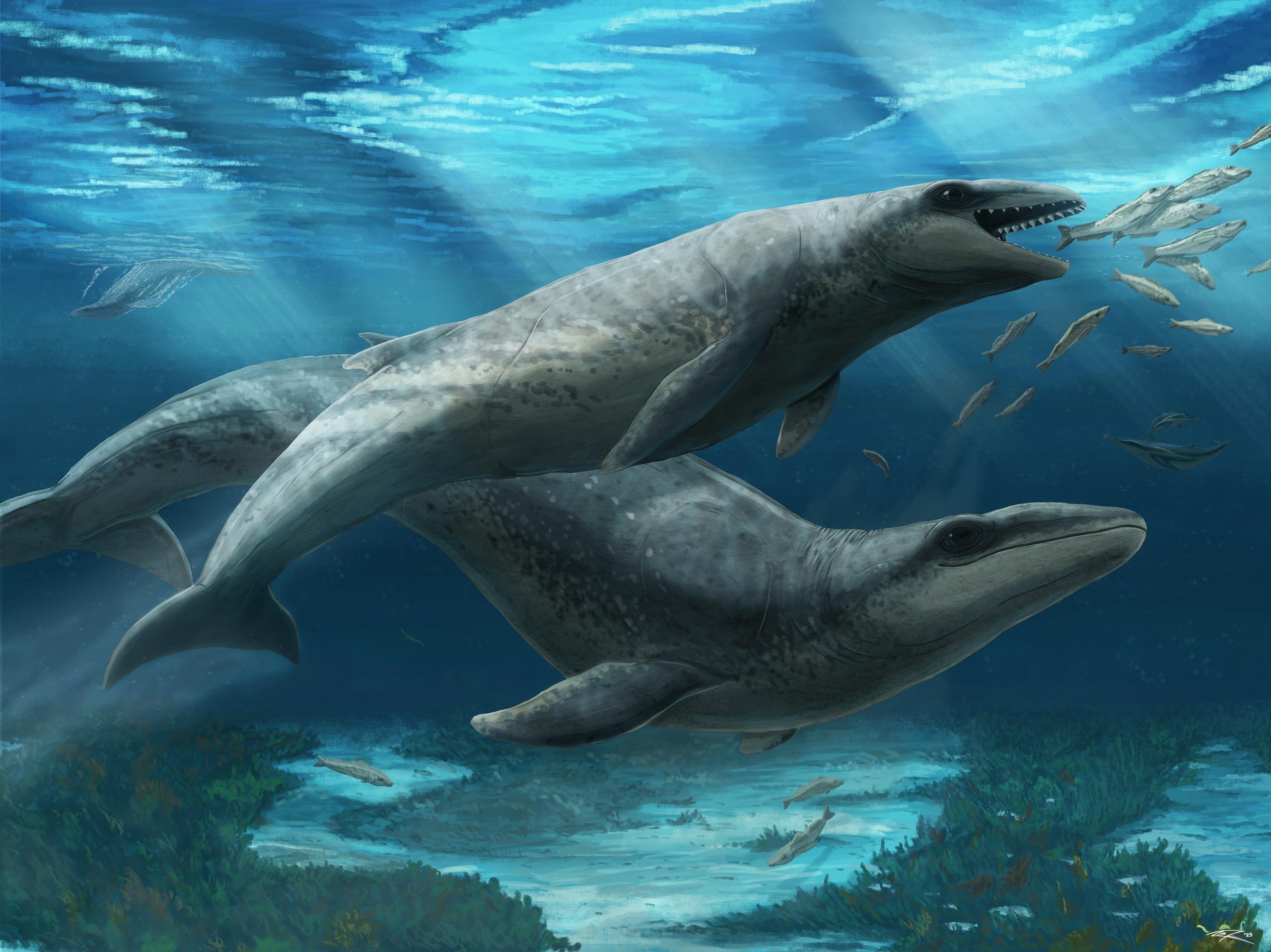
A 26-million-year-old fossil from Victoria has unveiled a small, sharp-toothed whale that sheds new light on the origins of today’s baleen giants.
With its large eyes, razor-sharp teeth, and compact body built for hunting, Janjucetus dullardi looked nothing like today’s gentle giants. Yet this newly described ancient whale is among their earliest relatives.
Scientists at Museums Victoria’s Research Institute identified the species from a 26-million-year-old fossil found near Jan Juc on Wadawurrung Country along Victoria’s Surf Coast.
The find provides rare insight into the early evolution of baleen whales, the filter-feeding giants that now cruise our oceans.
Janjucetus dullardi was no ocean giant. It was a fast, sharp-toothed predator about the size of a dolphin. With a short snout, large forward-facing eyes, and slicing teeth, it would have been a compact but fearsome presence in the warm, shallow seas of ancient Victoria.
The fossil, a partial skull with ear bones and teeth, was discovered in June 2019 by local resident Ross Dullard while walking along the beach. Recognizing its scientific significance, Dullard generously donated it to Museums Victoria, where researchers carefully prepared and studied the fossil. In recognition of his contribution, the new species has been named in his honor.
Unlocking a Chapter in Whale Evolution
“This kind of public discovery and its reporting to the museum is vital,” said Dr Erich Fitzgerald, senior curator of vertebrate palaeontology at Museums Victoria Research Institute and senior author of the study. “Ross’ discovery has unlocked an entire chapter of whale evolution we’ve never seen before. It’s a reminder that world-changing fossils can be found in your own backyard.”
The research, published today in the prestigious Zoological Journal of the Linnean Society, identifies Janjucetus dullardi as a juvenile ‘baby whale’, just over two meters long. Despite its small size, it belonged to a group known as mammalodontids, early whales that lived only during the Oligocene Epoch, around 30 to 23 million years ago.
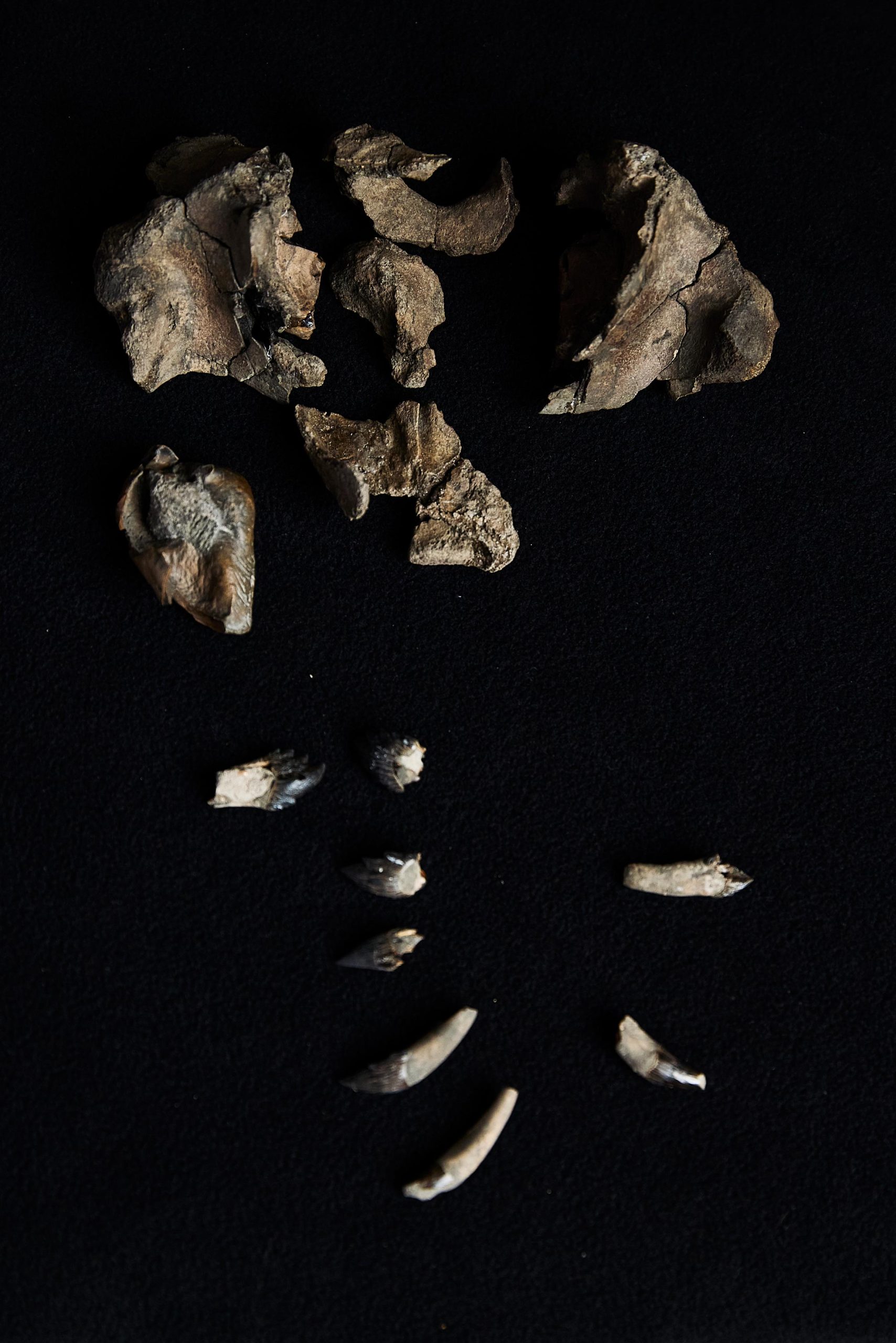
“It’s essentially a little whale with big eyes and a mouth full of sharp, slicing teeth,” said Ruairidh Duncan, PhD student at the Museums Victoria Research Institute and Monash University, and lead author of the study. “Imagine the shark-like version of a baleen whale – small and deceptively cute, but definitely not harmless.”
This is the third known mammalodontid species from Victoria, and only the fourth found worldwide. It’s also the first to preserve both the teeth and inner ear structures in such detail, which are key features for understanding how early whales fed, heard, moved, and behaved in the water.
Listening to the Ancient Seas
Advanced microCT scanning revealed delicate structures inside the ear bones, including the cochlea, helping scientists explore how Janjucetus dullardi may have sensed its environment, an ability crucial for hunting and navigating the oceans.
“This fossil opens a window into how ancient whales grew and changed, and how evolution shaped their bodies as they adapted to life in the sea,” said Fitzgerald.
The fossil was recovered from the fossil-rich Jan Juc Formation, which dates to a time of global warmth and rising seas. This coastal stretch of Victoria is becoming internationally recognized as a hotspot for early whale evolution.
Understanding how ancient whales adapted to warmer oceans millions of years ago gives scientists valuable clues about how today’s marine life might respond to climate change.
“This region was once a cradle for some of the most unusual whales in history, and we’re only just beginning to uncover their stories,” said Fitzgerald.
This discovery marks a major milestone in the understanding of early whale evolution and highlights the critical importance of southeast Australia in that story.
“We’re entering a new phase of discovery,” said Fitzgerald. “This region is rewriting the story of how whales came to rule the oceans, with some surprising plot twists!”
The team expects more fossil discoveries from Victoria’s coastline in the coming years and is continuing to study newly uncovered fossils, as well as long-unstudied specimens from the region in the Museums Victoria State Collection.
When considering the impact of this remarkable discovery, Lynley Crosswell, CEO and Director of Museums Victoria said: “The findings demonstrate the power of our collections to unlock stories that change the way we understand life on Earth. Thanks to the generosity of the public and the expertise of our scientists, Museums Victoria Research Institute is making globally significant contributions to evolutionary research. Discoveries like Janjucetus dullardi remind us that our collections are not just about the past – they’re shaping the future of science.”Reference: “An immature toothed mysticete from the Oligocene of Australia and insights into mammalodontid (Cetacea: Mysticeti) morphology, systematics, and ontogeny” by Ruairidh J Duncan, James P Rule, Travis Park, Alistair R Evans, Justin W Adams and Erich M G Fitzgerald, 12 August 2025, Zoological Journal of the Linnean Society.
DOI: 10.1093/zoolinnean/zlaf090
Never miss a breakthrough: Join the SciTechDaily newsletter.
Follow us on Google and Google News.
3 Comments
These phenotypes are recognizable – and since whales have a suggested history of re-entering the seas from land, I guess this is what ya look like when ya decide to eat fish.
Omg, you just made history of baleen whales so much more interesting!!!!! Learning about this species give me a new insight of whale evolution and how animals chsnge over time to better adapt to the world around them. I love this!!!!!!!
All I’m wondering is about the teeth where they found on both upper and lower jaw? So much fluff and unnecessary quotes having little to do with specifically how this animal could be called “shark whale” seems more like an orca with less intellectual capacity of course but I just wanna hear what professionals hypothesize about the animals behavior etc. I’ll read the paper but man if I’m a paleontologist I’d be hyped af spittin new theories left n right.