
Climate change’s effects on ecosystems increase dangerous interactions between humans and wildlife. Addressing root causes is key to minimizing risks and fostering coexistence.
Traditionally, research on the effects of climate change has treated its impacts on people and ecosystems as separate entities. However, a recent study has demonstrated the interwoven nature of humans and their environment by showing the connection between a warming world and a worldwide increase in human-wildlife conflicts.
The research, led by scientists at the University of Washington’s Center for Ecosystem Sentinels and in the journal Nature Climate Change, reveals that a warming world is increasing human-wildlife conflicts.
“We found evidence of conflicts between people and wildlife exacerbated by climate change on six continents, in five different oceans, in terrestrial systems, in marine systems, in freshwater systems – involving mammals, reptiles, birds, fish, and even invertebrates,” said lead author Briana Abrahms, a UW assistant professor of biology. “Although each individual case has its own array of different causes and effects, these climate-driven conflicts are really ubiquitous.”
The Ripple Effect of Changing Habitats
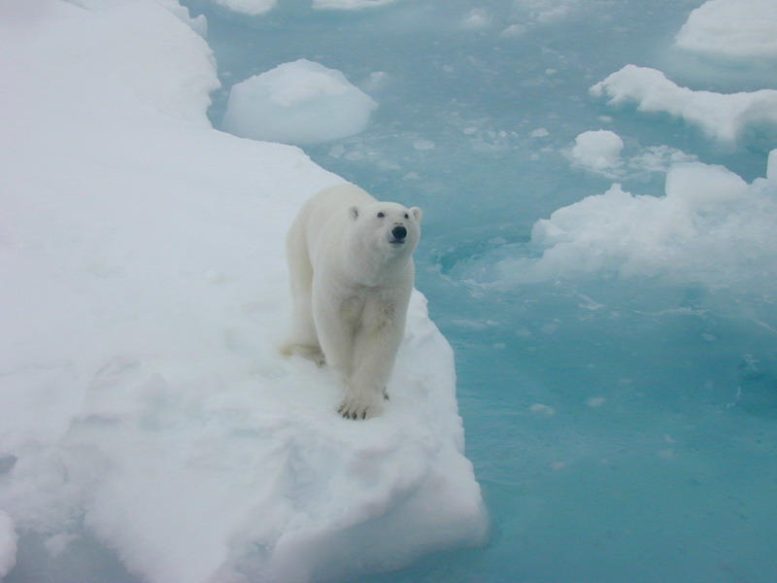
To identify trends, the team pored over published, peer-reviewed incidents of human-wildlife conflicts and identified cases that were linked specifically to the effects of climate change. These include both short-term climate events — such as a drought — as well as longer-term changes. Warming in the Arctic, for example, is leading to the loss of sea ice which has left polar bears short of food. They increasingly travel on land, sometimes entering human settlements and attacking people, as a recent incident in Alaska illustrates.
The new study shows that climate shifts can drive conflicts by altering animal habitats — like sea ice for polar bears — as well as the timing of events, wildlife behaviors, and resource availability. It also showed that people are changing their behaviors and locations in response to climate change in ways that increase conflicts. Other examples of the effects of short- and long-term climate events include:
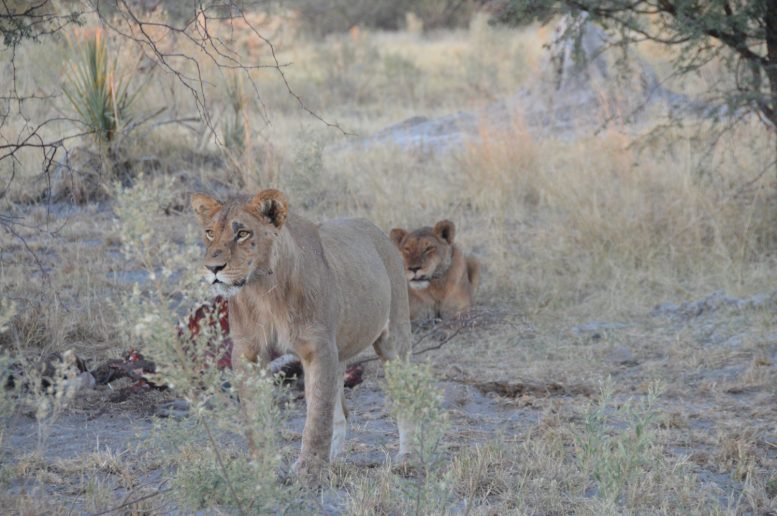
- Torrential floods in Tanzania led to more lion attacks after their usual prey migrated away from floodplains.
- Higher air temperatures in Australia triggered more aggressive behavior in eastern brown snakes, leading to more incidents of snake bites.
- Wildfires in Sumatra, Indonesia — triggered by El Nino — drove Asian elephants and tigers out of reserves and into human-inhabited areas, leading to at least one death.
- Disruption of terrestrial food webs during La Nina events in the Americas drove black bears in New Mexico and foxes in Chile into human settlements in search of food.
- Warmer air and ocean temperatures in a severe El Nino led to an increase in shark attacks in South Africa.
Social and Environmental Consequences
Most cases of human-wildlife conflict linked to climate involve a shift in resources — not just for wildlife, but also for people.
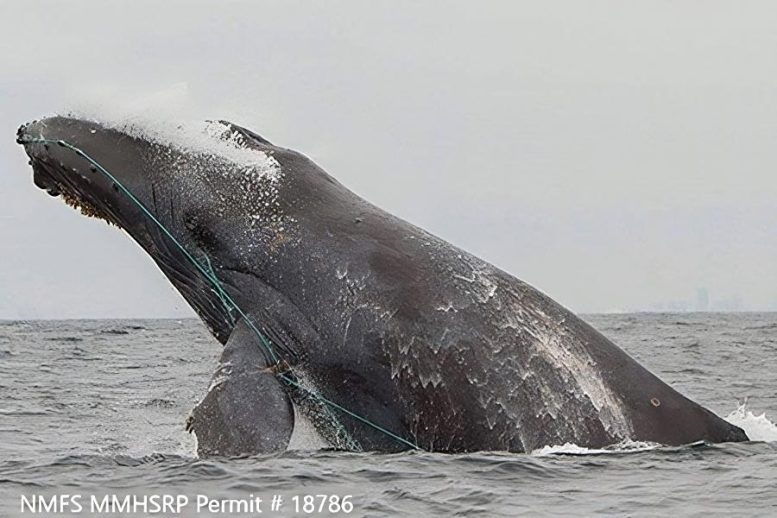
This breaching humpback whale is entangled in rope from fishing gear. Credit: NOAA-NMFS West Coast RegionA majority of cases on land also involved a change in precipitation, which will continue to be affected by climate change. Many resulted in human deaths or injuries, as well as property damage.
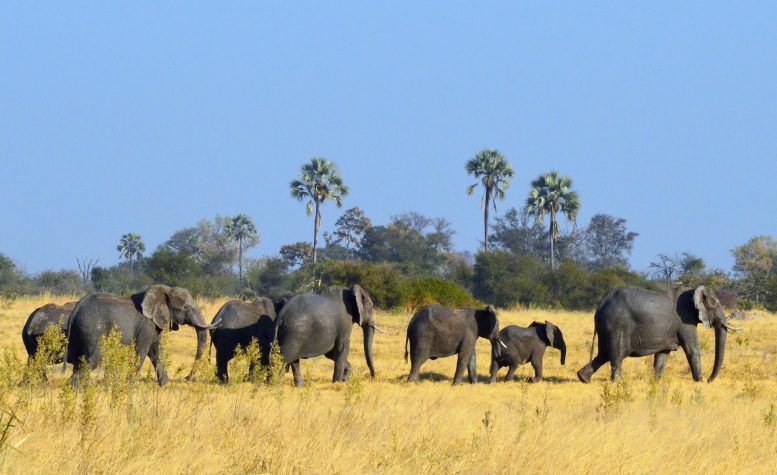
In 2009, for example, a severe drought struck the western part of Tanzania’s Kilimanjaro Region. This reduced food supplies for African elephants, which in turn entered local fields to graze on crops — at times destroying 2 to 3 acres daily. Local farmers, whose livelihoods were directly threatened by the drought, at times resorted to retaliatory killings of elephants to try to mitigate these raids.
“Identifying and understanding this link between human-wildlife conflicts is not only a conservation issue,” said Abrahms. “It is also a social justice and human safety issue.”
These types of conflicts are likely to rise as climate change intensifies, particularly as mass migrations of people and wildlife increase and resources shift.
But, it doesn’t have to be all bad news.
Pathways to Solutions and Mitigation Strategies
“One major motivation in studying the link between climate change and human-wildlife conflict is finding solutions,” said Abrahms. “As we learn about specific incidents, we can identify patterns and trends — and come up with interventions to try to address or lessen these conflicts.”
Some interventions may be as simple as public-awareness campaigns, such as advising residents of the American Southwest during La Nina years to carry bear spray on a hike. Governments can also plan for times when extreme climate events will bring people and wildlife into closer contact. Botswana, for example, has funds in place to compensate herders and ranchers for drought-induced attacks by wildlife on livestock, often in exchange for pledges not to engage in retaliatory killings of wildlife.
“We have effective drought forecasts now. So, governments can engage in fiscal planning for mitigating conflicts ahead of time,” said Abrahms. “Instead of a ‘rainy day’ fund, have a ‘dry day’ fund.”
To Abrahms, one success story of note lies in the waters of the eastern Pacific. In 2014 and 2015, a record number of humpback and blue whales became ensnared in fishing lines off the California coast. Research later showed that an extreme marine heat wave had pushed whales closer to shore, following their primary food sources. California regulators now adjust the start and end of each fishing season based on climate and ocean conditions in the Pacific — delaying the season if whales and fishing gear are likely to come into close contact.
“These examples show us that once you know the root causes of a conflict, you can design interventions to help both people and wildlife,” said Abrahms. “We can change.”
Reference: “Climate change as a global amplifier of human–wildlife conflict” by Briana Abrahms, Neil H. Carter, T. J. Clark-Wolf, Kaitlyn M. Gaynor, Erik Johansson, Alex McInturff, Anna C. Nisi, Kasim Rafiq and Leigh West, 27 February 2023, Nature Climate Change.
DOI: 10.1038/s41558-023-01608-5
Never miss a breakthrough: Join the SciTechDaily newsletter.
Follow us on Google and Google News.
2 Comments
Was that greta thunderburger on that single melting iceberg?
It couldn’t be a polar bear, according to behind-the-TIMEs they were extinct in 2001,or was it 1999 or??
Oh well…
“… this species uses to traverse vast distances in the Arctic to find food.”
Polar bears are strong swimmers, with webbed feet, that have been known to “traverse vast distances” by swimming. Distances that most people today wouldn’t consider walking.
Any ecosystem that has reached a state of quasi-stability will react to an environmental perturbation. This shouldn’t be a surprise. Weather is highly variable, meaning that climate can be expected to change with time. Changing climate is exactly how polar bears came to be. They evolved from brown bears, adapting to the changed climate. The only things that are constant are taxes, death, and change in the environment. It is naive to expect the environment to be static.