
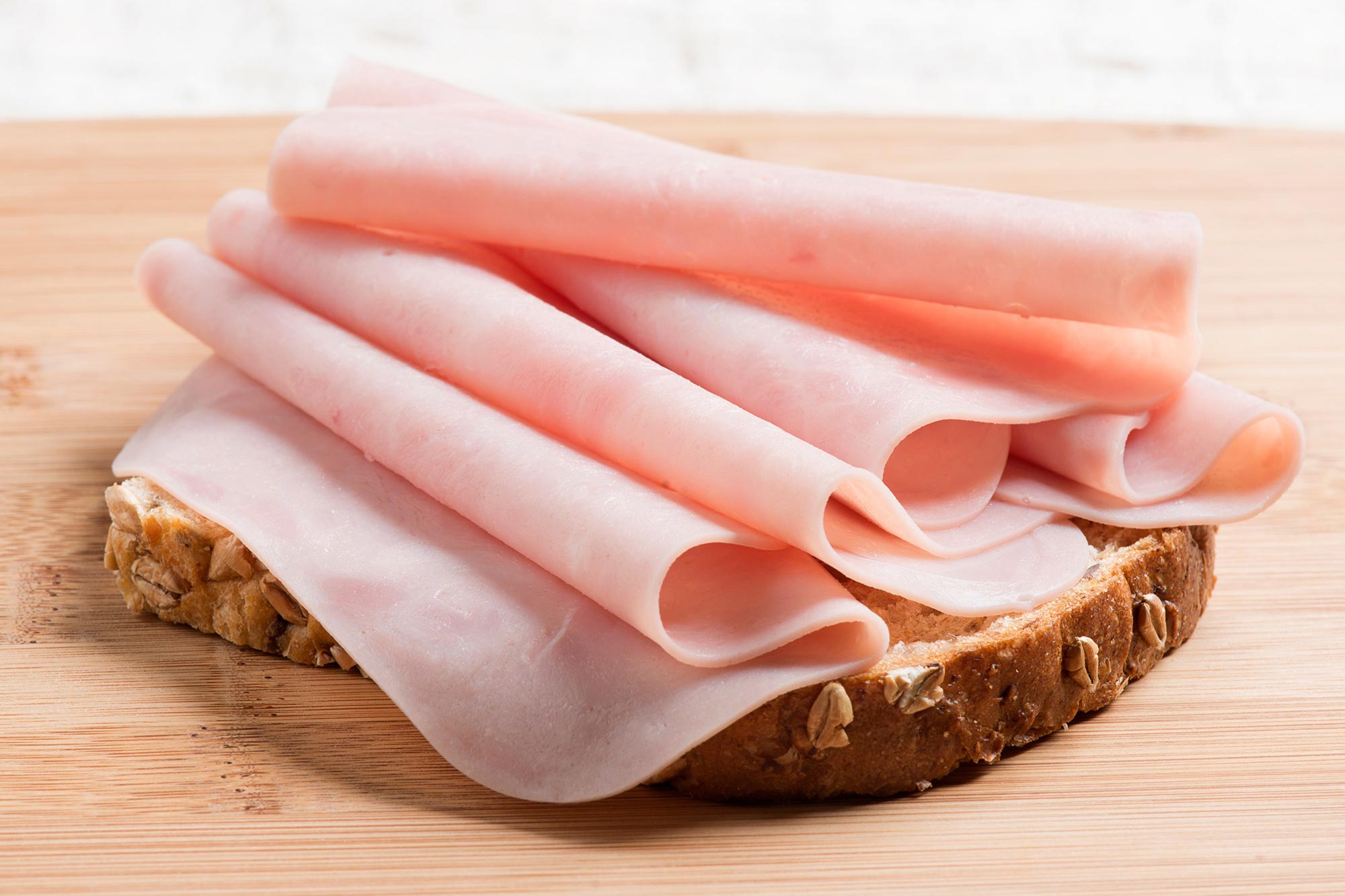
A study reveals that consuming meat, especially processed meat and unprocessed red meat, is linked to an increased risk of type 2 diabetes. This conclusion is based on an analysis of data from 1.97 million participants.
A new analysis of data from 1.97 million participants, published in The Lancet Diabetes and Endocrinology, has found that consuming meat, especially processed and unprocessed red meat, is linked to an increased risk of type 2 diabetes.
Global meat production has increased rapidly in recent decades and meat consumption exceeds dietary guidelines in many countries. Earlier research indicated that higher intakes of processed meat and unprocessed red meat are associated with an elevated risk of type 2 diabetes, but the results have been variable and not conclusive.
Poultry such as chicken, turkey, or duck is often considered to be an alternative to processed meat or unprocessed red meat, but fewer studies have examined the association between poultry consumption and type 2 diabetes.
Methodology and Findings of the Study
To determine the association between the consumption of processed meat, unprocessed red meat, and poultry and type 2 diabetes, the team led by researchers at the University of Cambridge used the global InterConnect project to analyze data from 31 study cohorts in 20 countries. Their extensive analysis took into account factors such as age, gender, health-related behaviors, energy intake, and body mass index.
The researchers found that the habitual consumption of 50 grams of processed meat a day — equivalent to 2 slices of ham — is associated with a 15% higher risk of developing type 2 diabetes in the next 10 years. The consumption of 100 grams of unprocessed red meat a day — equivalent to a small steak — was associated with a 10% higher risk of type 2 diabetes.
Habitual consumption of 100 grams of poultry a day was associated with an 8% higher risk, but when further analyses were conducted to test the findings under different scenarios the association for poultry consumption became weaker, whereas the associations with type 2 diabetes for each of processed meat and unprocessed meat persisted.
Research Findings and Implications
Professor Nita Forouhi of the Medical Research Council (MRC) Epidemiology Unit at the University of Cambridge, and a senior author on the paper, said:
“Our research provides the most comprehensive evidence to date of an association between eating processed meat and unprocessed red meat and a higher future risk of type 2 diabetes. It supports recommendations to limit the consumption of processed meat and unprocessed red meat to reduce type 2 diabetes cases in the population.
While our findings provide more comprehensive evidence on the association between poultry consumption and type 2 diabetes than was previously available, the link remains uncertain and needs to be investigated further.”
InterConnect uses an approach that allows researchers to analyze individual participant data from diverse studies, rather than being limited to published results. This enabled the authors to include as many as 31 studies in this analysis, 18 of which had not previously published findings on the link between meat consumption and type 2 diabetes. By including this previously unpublished study data the authors considerably expanded the evidence base and reduced the potential for bias from the exclusion of existing research.
Lead author Dr Chunxiao Li, also of the MRC Epidemiology Unit, said:
“Previous meta-analysis involved pooling together of already published results from studies on the link between meat consumption and type 2 diabetes, but our analysis examined data from individual participants in each study. This meant that we could harmonize the key data collected across studies, such as the meat intake information and the development of type 2 diabetes.
Using harmonized data also meant we could more easily account for different factors, such as lifestyle or health behaviors, that may affect the association between meat consumption and diabetes.”
Professor Nick Wareham, Director of the MRC Epidemiology Unit, and a senior author on the paper said:
“InterConnect enables us to study the risk factors for obesity and type 2 diabetes across populations in many different countries and continents around the world, helping to include populations that are under-represented in traditional meta-analyses.
Most research studies on meat and type 2 diabetes have been conducted in the USA and Europe, with some in East Asia. This research included additional studies from the Middle East, Latin America, and South Asia, and highlighted the need for investment in research in these regions and in Africa.
Using harmonized data and unified analytic methods across nearly 2 million participants allowed us to provide more concrete evidence of the link between consumption of different types of meat and type 2 diabetes than was previously possible.”
Reference: “Meat consumption and incident type 2 diabetes: an individual-participant federated meta-analysis of 1·97 million adults with 100 000 incident cases from 31 cohorts in 20 countries” by Chunxiao Li, Tom R P Bishop, Fumiaki Imamura, Stephen J Sharp, Matthew Pearce, Soren Brage, Ken K Ong, Habibul Ahsan, Maira Bes-Rastrollo, Joline W J Beulens, Nicole den Braver, Liisa Byberg, Scheine Canhada, Zhengming Chen, Hsin-Fang Chung, Adrian Cortés-Valencia, Luc Djousse, Jean-Philippe Drouin-Chartier, Huaidong Du, Shufa Du, Bruce B Duncan, J Michael Gaziano, Penny Gordon-Larsen, Atsushi Goto, Fahimeh Haghighatdoost, Tommi Härkänen, Maryam Hashemian, Frank B Hu, Till Ittermann, Ritva Järvinen, Maria G Kakkoura, Nithya Neelakantan, Paul Knekt, Martin Lajous, Yanping Li, Dianna J Magliano, Reza Malekzadeh, Loic Le Marchand, Pedro Marques-Vidal, Miguel A Martinez-Gonzalez, Gertraud Maskarinec, Gita D Mishra, Noushin Mohammadifard, Gráinne O’Donoghue, Donal O’Gorman, Barry Popkin, Hossein Poustchi, Nizal Sarrafzadegan, Norie Sawada, Maria Inês Schmidt, Jonathan E Shaw, Sabita Soedamah-Muthu, Dalia Stern, Lin Tong, Rob M van Dam, Henry Völzke, Walter C Willett, Alicja Wolk, Canqing Yu, Nita G Forouhi and Nicholas J Wareham, September 2024, The Lancet Diabetes & Endocrinology.
DOI: 10.1016/S2213-8587(24)00179-7
InterConnect was initially funded by the European Union’s Seventh Framework Programme for research, technological development, and demonstration under grant agreement no 602068.
Never miss a breakthrough: Join the SciTechDaily newsletter.
Follow us on Google and Google News.
8 Comments
Eat your ham and then go for a walk. You’ll be fine.
And that’s all it is, a link. As various doctors pointed out after this study was first reported, it does not demonstrate a causal connection, just a correlation.
Hear, hear! Everything in moderation, eat less, eat well, balance out your food groups and exercise everyday for at least thirty mins is key. It’s not rocket science.
We evolved to eat meat protein.
More meat and less processed carbs means less money for the health industry. They are all tied together. There is no monetary interest in keeping you healthy to them.
Only an idiot could conclude that meat “causes” diabetes.
But of course there’s a link! People with diabetes naturally eat more meat because that’s one safe thing they can eat that won’t cause sugar spikes.
This is stupid. It’s not the meat that causes type two diabetes, it is processed carbs. Meat heals type two diabetes!
If what the article says here is true, then that explains why we have so many people with diabetes in the US.
I don’t eat it though,