
Close Menu
    Facebook X (Twitter) Instagram
    SciTechDaily
    • Biology
    • Chemistry
    • Earth
    • Health
    • Physics
    • Science
    • Space
    • Technology
    Facebook X (Twitter) Pinterest YouTube RSS
    SciTechDaily
    Home»Biology»Eating Prunes May Reduce Inflammation and Improve Bone Health
    Biology

    Eating Prunes May Reduce Inflammation and Improve Bone Health

    By Experimental BiologyApril 2, 20223 Comments3 Mins Read
    Facebook Twitter Pinterest Telegram LinkedIn WhatsApp Email Reddit
    Share
    Facebook Twitter LinkedIn Pinterest Telegram Email Reddit
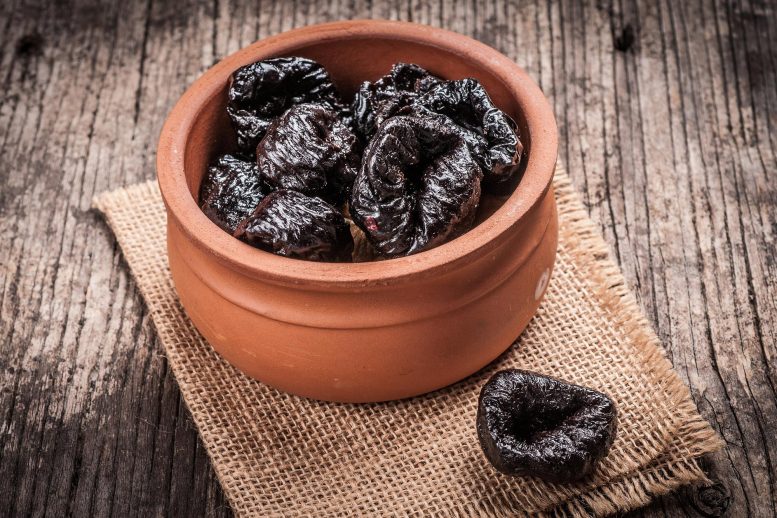
    Prunes
    A study suggests that daily consumption of nutrient-rich prunes may improve bone health in postmenopausal individuals by reducing inflammation linked to osteoporosis.

    Study suggests daily prune consumption may reduce osteoporosis risk after menopause.

    A study in postmenopausal people suggests eating nutrient-rich prunes every day may be beneficial to bone health, reducing inflammatory factors that contribute to osteoporosis. The research will be presented this week in Philadelphia at the American Physiological Society’s (APS) annual meeting at Experimental Biology 2022.

    An estimated 13.6 million people in the U.S. over the age of 50 will develop osteoporosis—a loss of bone strength caused by reduced mineral density of the bones—by the year 2030. Osteoporosis increases the risk of fracture, especially in older adults. People who experience menopause have lower levels of estrogen, which trigger an increase in inflammation in the body, which can also contribute to bone loss.
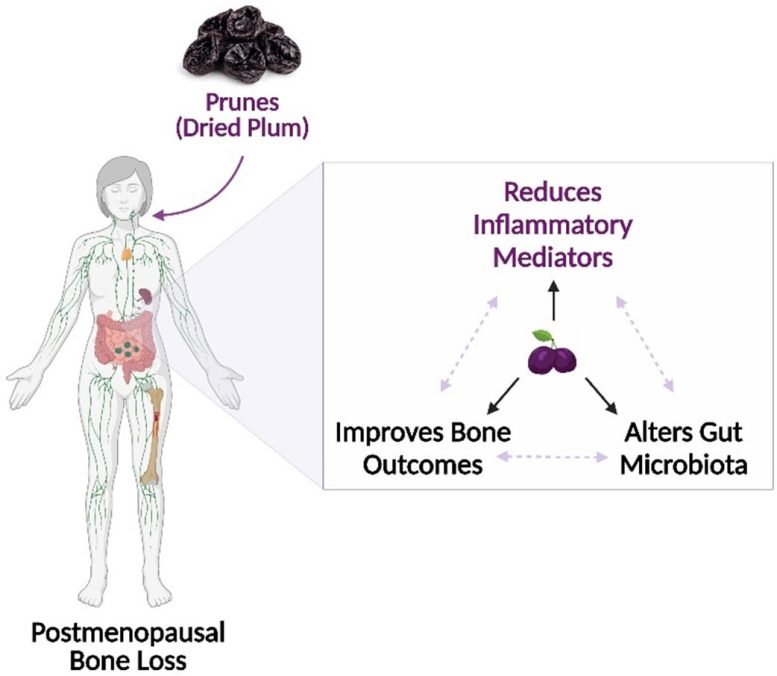
    Prune Study Graphic
    Prune study graphic. Credit: Janhavi J. Damani, MS; Nicole C.A. Strock, PhD; Mary Jane De Souza, PhD; Connie J. Rogers, PhD, MPH

    Previous research has shown that polyphenol extracts—plant compounds that act as antioxidants and reduce inflammation—in prunes promote lower levels of oxidative stress and inflammation in a type of bone cell called osteoclasts. In a new study, researchers from the Integrative and Biomedical Physiology Program and the Departments of Nutritional Sciences and Kinesiology at The Pennsylvania State University explored the effects of prunes on bone health after menopause.

    Janhavi Damani
    Janhavi Damani, MS, Pennsylvania State University. Credit: Janhavi Damani

    Postmenopausal women with a bone mineral density score that was defined as low—a marker of osteoporosis—were divided into three groups:

    • One group ate 50 grams (g) of prunes (about six prunes) daily for 12 months.
    • A second group ate 100 g of prunes (about 12 prunes) daily for 12 months.
    • A control group ate no prunes.

    The research team looked at blood samples taken from all volunteers before and after the trial and found significant reductions in inflammatory markers in both of the prune-eating groups compared to the control group.

    “Our findings suggest that consumption of six to 12 prunes per day may reduce pro-inflammatory mediators that may contribute to bone loss in postmenopausal women. Thus, prunes might be a promising nutritional intervention to prevent the rise in inflammatory mediators often observed as part of the aging process,” said Janhavi Damani, MS, first author of the study.

    Meeting: Experimental Biology 2022

    Never miss a breakthrough: Join the SciTechDaily newsletter.
    Follow us on Google and Google News.

    Bones Inflammation Nutrition Osteoporosis
    Share. Facebook Twitter Pinterest LinkedIn Email Reddit

    Related Articles

    Tea or Coffee? Your Daily Choice Could Affect Osteoporosis Risk

    Study Warns: Too Much Coffee May Weaken Bones in Older Women

    A Surprising Superfood: New Bone-Boosting Benefits of Prunes Discovered

    Breakthrough 3D Imaging Reveals Hidden Changes in the Aging Skull

    The Secret Protein Sabotaging Bone Health and What It Means for Osteoporosis

    A Surprising Superfood: Scientists Discover New Health Benefits of Prunes

    Researchers Suggest Halofuginone (HF) May Treat Autoimmune Disorders

    Massages Change Gene Expression and Reduce Inflammation

    Researchers Use “Fracture Putty” to Quickly Repair Broken Bones

    3 Comments

    1. Roger Whiffin on April 2, 2022 10:24 am

      Although very interesting – it would be interesting to know if a similar study on males would have a similar outcome

      Reply
    2. Carolyne Short on April 3, 2022 1:33 pm

      Can’t that be inferred from the evidence cited? ‘prunes are antiinflammatory re:osteoclasts True that men suffer bone loss in aging, but I think she has addressed your question. Eat prunes!

      Reply
    3. Holly Eaton on April 4, 2022 4:01 am

      But was there a slowing of the progression of osteoporosis? Isn’t that what you ultimately want to know?

      Reply
    Leave A Reply Cancel Reply

    • Facebook
    • Twitter
    • Pinterest
    • YouTube

    Don't Miss a Discovery

    Subscribe for the Latest in Science & Tech!

    Trending News

    Scientists Reversed Autism-Like Symptoms in Adult Mice Within Two Hours

    30-Year-Old Museum Rock May Hide a New Mosasaur Species

    Unzipping the Code of Life: Scientists Pinpoint Where DNA First Opens

    American Heart Association Reveals How Much Coffee Is Safe for Your Heart

    Earth May Be Twice As Vulnerable to Extreme Solar Storms As Scientists Thought

    New Compound Could Help Aging Muscles Repair Themselves

    Scientists Tested an 8-Hour Eating Window and Found a Surprising Brain Benefit

    Killer Whales Filmed Smashing Giant Sunfish Into Thousands of Pieces, Possibly for Fun

    Follow SciTechDaily
    • Facebook
    • Twitter
    • YouTube
    • Pinterest
    • Newsletter
    • RSS
    SciTech News
    • Biology News
    • Chemistry News
    • Earth News
    • Health News
    • Physics News
    • Science News
    • Space News
    • Technology News
    Recent Posts
    • Coffee’s Most Destructive Pest Is Accidentally Helping the Ants That Hunt It
    • Cells Join Forces To Survive Prolonged Mechanical Strain
    • When Gut Bacteria Run Out of Fiber, They May Start Eating You
    • Scientists Discover the Brain May Enter a New Biological Phase Between 50 and 75
    • New Research Reveals Autistic Brains Process Faces Differently
    Copyright © 1998 - 2026 SciTechDaily. All Rights Reserved.
    • Science News
    • About
    • Contact
    • Editorial Board
    • Privacy Policy
    • Terms of Use

    Type above and press Enter to search. Press Esc to cancel.