
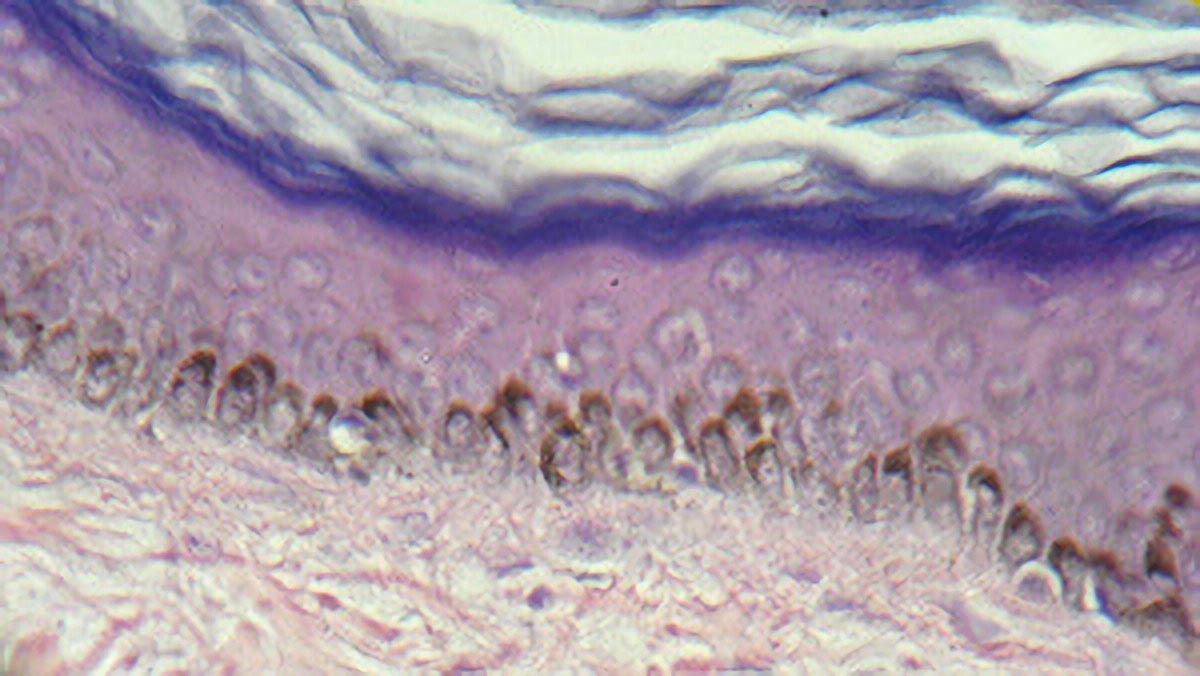
New research data from scientists at USC San Diego suggests that the human exosome maintains progenitor cell function, functioning as a surveillance system in cells to regulate the normal turnover of RNAs as well as to destroy RNAs with errors in them.
In the July 6 issue of Cell Stem Cell, researchers at the University of California, San Diego School of Medicine describe how human epidermal progenitor cells and stem cells control transcription factors to avoid premature differentiation, preserving their ability to produce new skin cells throughout life.
The findings provide new insights into the role and importance of exosomes and their targeted gene transcripts, and may help point the way to new drugs or therapies for not just skin diseases, but other disorders in which stem and progenitor cell populations are affected.
Stem cells, of course, are specialized cells capable of endlessly replicating to become any type of cell needed, a process known as differentiation. Progenitor cells are more limited, typically differentiating into a specific type of cell and able to divide only a fixed number of times.
Throughout life, human skin self-renews. Progenitor and stem cells deep in the epidermis constantly produce new skin cells called keratinocytes that gradually rise to the surface where they will be sloughed off. One of the ways that stem and progenitor cells maintain internal health during their lives is through the exosome – a collection of approximately 11 proteins responsible for degrading and recycling different RNA elements, such as messenger RNA that wear out or that contain errors resulting in the translation of dysfunctional proteins which could potentially be deleterious to the cell.
“In short,” said George L. Sen, PhD, assistant professor of medicine and cellular and molecular medicine, “the exosome functions as a surveillance system in cells to regulate the normal turnover of RNAs as well as to destroy RNAs with errors in them.”
Sen and colleagues Devendra S. Mistry, PhD, a postdoctoral research fellow, and staff scientist Yifang Chen, MD, PhD, discovered that in the epidermis the exosome functions to target and destroy mRNAs that encode for transcription factors that induce differentiation. Specifically, they found that the exosome degrades a transcription factor called GRHL3 in epidermal progenitor cells, keeping the latter undifferentiated. Upon receiving differentiation inducing signals, the progenitor cells lose expression of certain subunits of the exosome which leads to higher levels of GRHL3 protein. This increase in GRHL3 levels promotes the differentiation of the progenitor cells.
“Without a functioning exosome in progenitor cells,” said Sen, “the progenitor cells prematurely differentiate due to increased levels of GRHL3 resulting in loss of epidermal tissue over time.”
Sen said the findings could have particular relevance if future research determines that mutations in exosome genes are linked to skin disorders or other diseases. “Recently there was a study showing that recessive mutations in a subunit of the exosome complex can lead to pontocerebellar hypoplasia, a rare neurological disorder characterized by impaired development or atrophy of parts of the brain,” said Sen. “This may potentially be due to loss of progenitor cells. Once mutations in exosome complex genes are identified in either skin diseases or other diseases like pontocerebellar hypoplasia, it may be possible to design drugs targeting these defects.”
Reference: “Progenitor Function in Self-Renewing Human Epidermis is Maintained by the Exosome” by Devendra S. Mistry, Yifang Chen and George L. Sen, 6 July 2012, Cell Stem Cell.
DOI: 10.1016/j.stem.2012.04.022
Funding for this research came, in part, from the National Institutes of Health grant K01AR057828-04 and a Ray Thomas Edwards Award.
Never miss a breakthrough: Join the SciTechDaily newsletter.
Follow us on Google and Google News.