
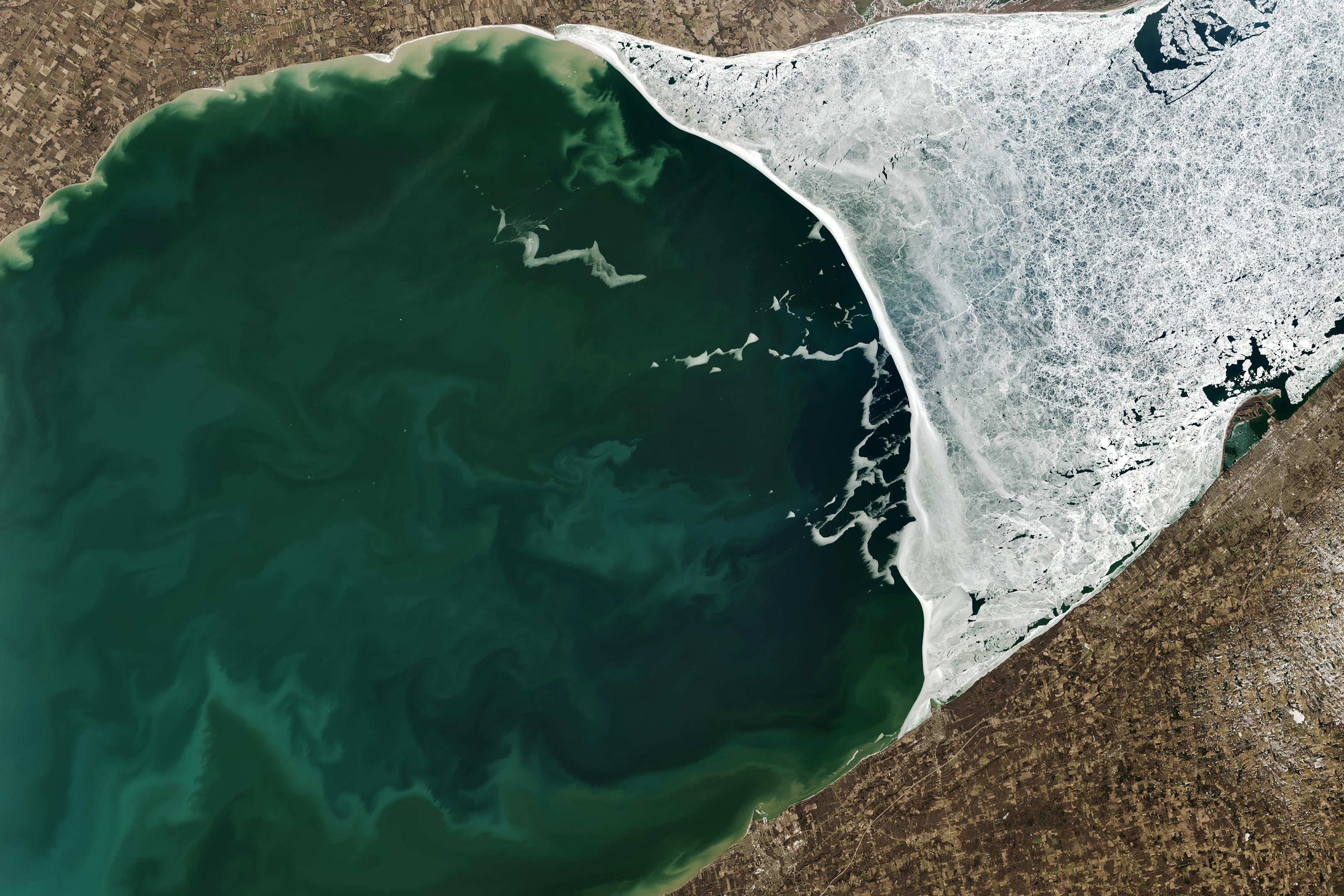
Winter brought a colder and icier season to the Great Lakes, especially Lake Erie, which saw a near-complete ice cover in February. As spring approached, the lake revealed dynamic waters filled with swirling sediment and a vibrant bloom of diatoms, microscopic algae that thrive even under ice.
Scientists studying these organisms found they not only help clean the water but also sustain the aquatic food web during the colder months. Their clever survival strategy involves teaming up with bacteria to cling to the ice and photosynthesize in low light. This under-ice bloom is offering fresh insight into the lake’s winter ecology, once considered a dormant season.
Winter 2024-2025 Brings More Ice
Winter 2024–2025 brought bitter cold and frequent lake-effect snow to the Great Lakes region, making its presence felt. Ice cover across the lakes spiked above average in February. Although ice levels remained mostly below average for the rest of the season, they were much closer to typical conditions than the minimal ice seen during the previous two winters.
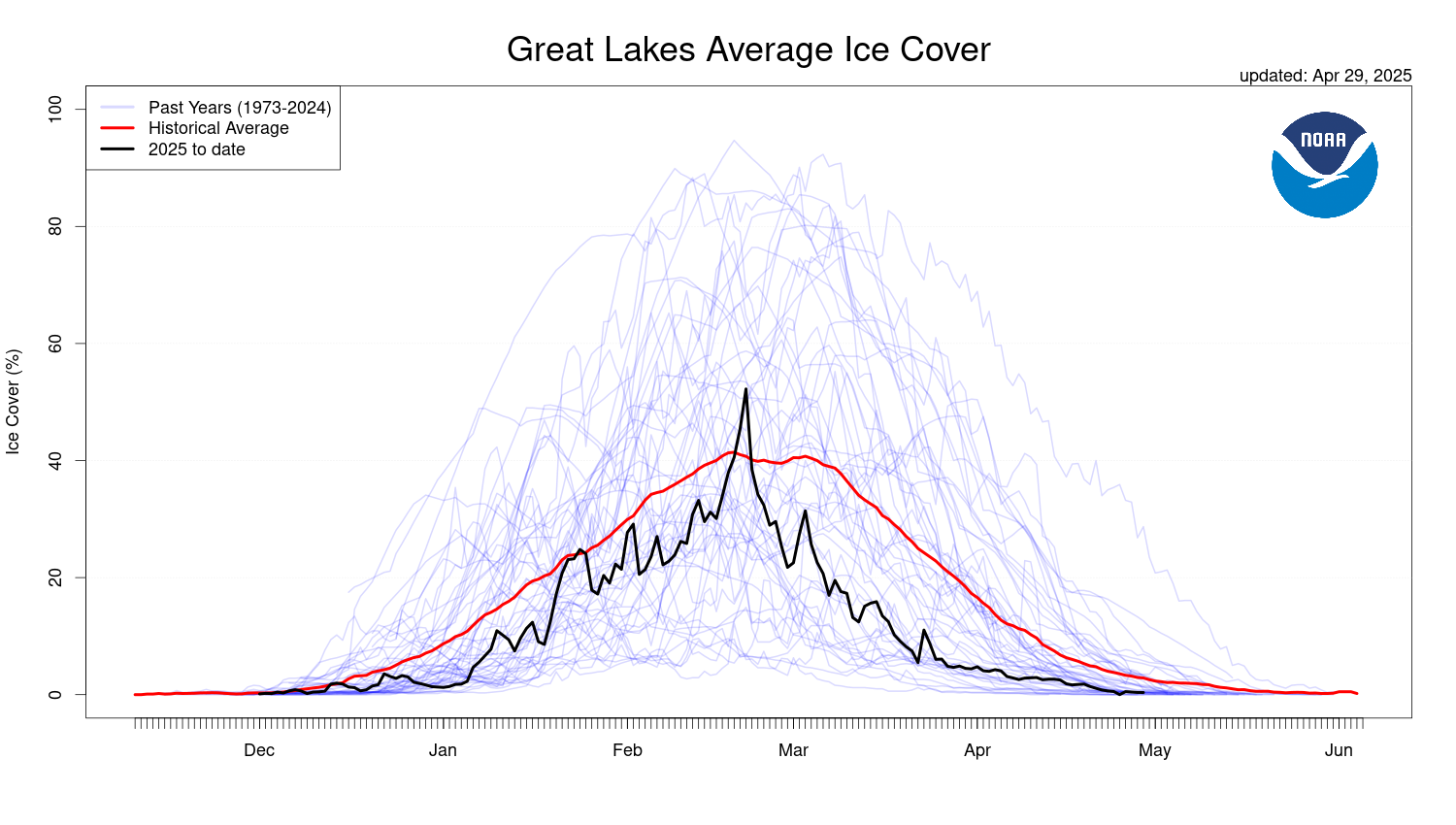
Lake Erie, the shallowest of the Great Lakes, reached 95 percent ice coverage in February 2025, right in line with seasonal norms. As spring approached, the ice gradually receded, uncovering signs of life at the lake’s surface.
Landsat 8 Captures Swirling Spring Waters
On March 10, the Operational Land Imager (OLI) on NASA’s Landsat 8 captured the image above of central Lake Erie. At the time, ice covered about 33 percent of the lake. The exposed water revealed swirling bands of sediment and phytoplankton, hinting at growing biological activity.
Resuspended sediment often produces colorful patterns in Lake Erie’s surface waters, especially in spring. Strong winds and the currents they generate can stir up material from the shallow lakebed. The lake bottom is rich in quartz sand and silt, as well as calcium carbonate from limestone. A lot of resuspension was occurring at the time of this image, said Michael McKay, director of the Great Lakes Institute for Environmental Research at the University of Windsor, accounting for some of the color.
Diatoms Add a Biological Tint
At the same time, McKay added, elevated levels of a type of phytoplankton called diatoms were present. Communities of these microscopic organisms, which have silica shells and plenty of chlorophyll, may have contributed to the color of surface waters. Although Lake Erie, specifically its western basin, is a hotspot for harmful algal blooms in the summer, different phytoplankton groups can thrive in the lake other times of year.
Samples collected by a Canadian Coast Guard icebreaker on March 10 contained elevated chlorophyll concentrations indicative of a spring bloom and showed that diatoms made up 80 to 90 percent of the phytoplankton present, said McKay. The samples came from locations near the ice edge and extending west approximately 80 kilometers (50 miles), and the measurements corroborated those from samples collected by a U.S. Coast Guard icebreaker in Lake Erie’s central basin three days earlier.
Diatoms Thrive Even Beneath the Ice
Scientists discovered in the early 2000s that diatoms could live within and just below Lake Erie’s ice. As the main components of winter-spring blooms, these microbes play important roles in the lake ecosystem, including cleaning pollutants from water and forming the base of the aquatic food web.
Subsequent work has revealed their clever strategy for surviving harsh winter conditions. The diatoms have a symbiotic relationship with a type of bacteria that can form ice crystals. That relationship enables diatoms to attach to the underside of lake ice and access the light needed to perform photosynthesis. Sparser ice cover during some winters has resulted in lower abundance of some diatom species, researchers found, with implications for the lake ecosystem that are not yet fully understood.
A New Appreciation for Winter Ecology
“We spent decades ignoring this time of year,” said Steven Wilhelm, director of the Aquatic Microbial Ecology Research Group at the University of Tennessee. “[McKay and I] were lucky to be part of a team that had a chance to start reinvestigating Lake Erie in the winter about 18 years ago.” Many questions around relationships between the seasons—how diatom blooms might shape the onset and severity of summertime blooms, for example—remain ripe for more investigation, he said. “Clearly the lake is active and alive year-round.”
NASA Earth Observatory image by Michala Garrison, using Landsat data from the U.S. Geological Survey.
Never miss a breakthrough: Join the SciTechDaily newsletter.
Follow us on Google and Google News.