
Close Menu
    Facebook X (Twitter) Instagram
    SciTechDaily
    • Biology
    • Chemistry
    • Earth
    • Health
    • Physics
    • Science
    • Space
    • Technology
    Facebook X (Twitter) Pinterest YouTube RSS
    SciTechDaily
    Home»Space»Galaxies are Hiding More Atomic Hydrogen Gas than Previously Calculated
    Space

    Galaxies are Hiding More Atomic Hydrogen Gas than Previously Calculated

    By CSIROMay 31, 2012No Comments3 Mins Read
    Facebook Twitter Pinterest Telegram LinkedIn WhatsApp Email Reddit
    Share
    Facebook Twitter LinkedIn Pinterest Telegram Email Reddit
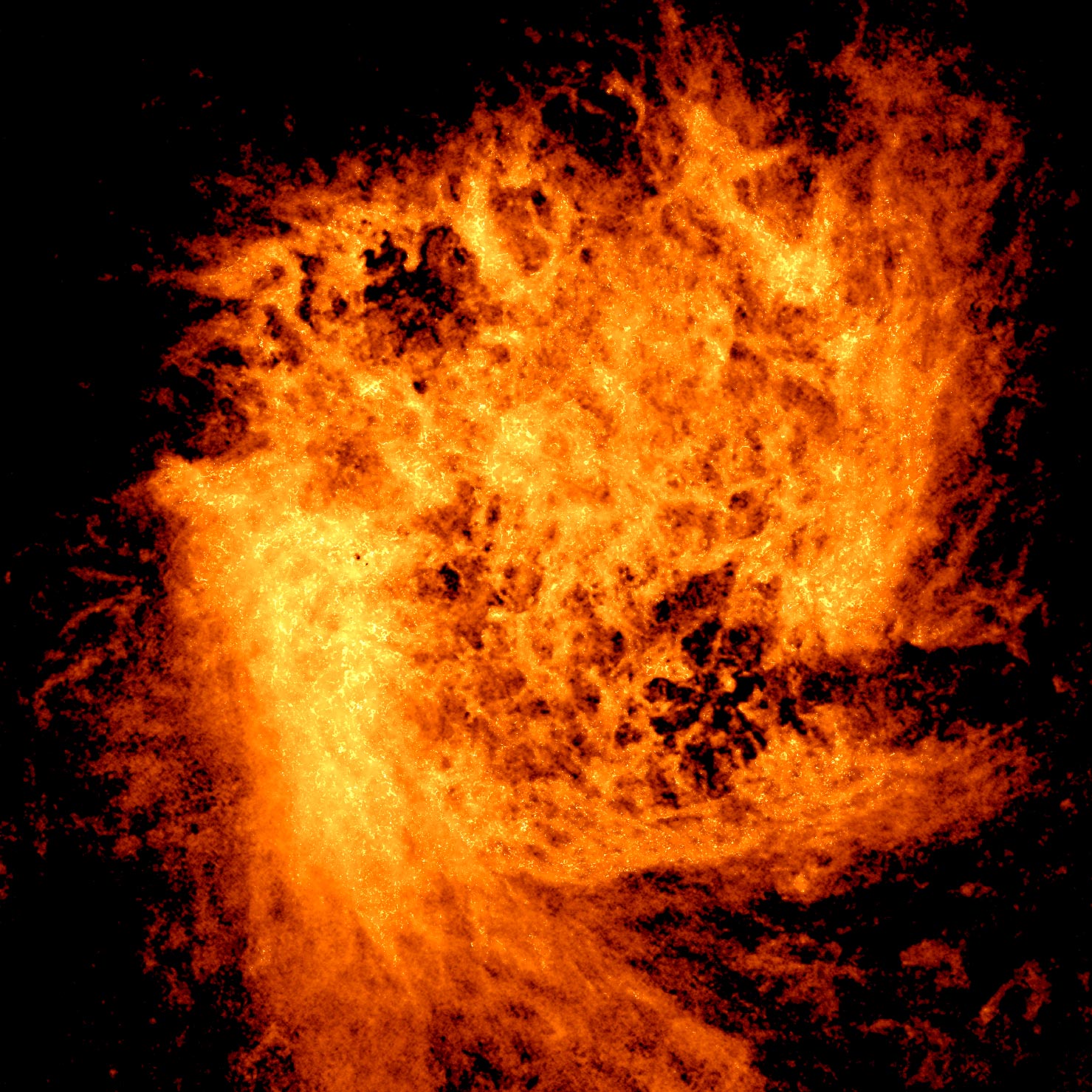
    Large Magellanic Cloud Atomic Hydrogen Gas
    A radio image of a small nearby galaxy, the Large Magellanic Cloud, made with CSIRO radio telescopes. The bright areas are where the most atomic hydrogen gas is found. Credit: S. Kim et al. / CSIRO

    Using observations made with radio telescopes, astronomer Dr. Braun has discovered that the galaxies around us are hiding about a third more atomic hydrogen gas than previously calculated. His published findings don’t help solve the problem of “Dark Matter,” but suggest that the atomic hydrogen gas is distributed very differently from how it was in the past.

    More atomic hydrogen gas — the ultimate fuel for stars — is lurking in today’s Universe than we thought, CSIRO astronomer Dr. Robert Braun has found. This is the first accurate measurement of this gas in galaxies close to our own.

    Just after the Big Bang the Universe’s matter was almost entirely hydrogen atoms. Over time this gas of atoms came together and generated galaxies, stars, and planets — and the process is still going on. Astronomers want to understand where, when and how the atomic gas is transformed to better understand the Universe in which we live.

    By taking a new look at some archival data, Dr. Braun, Chief Scientist at CSIRO Astronomy and Space Science in Sydney, Australia, has discovered that galaxies around us are hiding about a third more atomic hydrogen gas than previously calculated.

    The study also shows that the gas is distributed very differently from how it was in the past, with much less in the galaxies’ outer suburbs than billions of years ago.

    “This means that it’s much harder for galaxies to pull the gas in and form new stars,” Dr. Braun said. “It’s why stars are forming 20 times more slowly now than in the past.”

    The new finding doesn’t help solve the problem of “Dark Matter” — lots of mass, detectable by its gravity, that we haven’t yet identified.

    “Even though there’s more atomic hydrogen than we thought, it’s not a big enough percentage to solve the Dark Matter problem. If what we are missing had the weight of a large kangaroo, what we have found would have the weight of a small echidna,” Dr. Braun said.

    Nevertheless, the work will continue to feed into our understanding of how galaxies evolve over time.

    Dr. Braun based his work on observations made with radio telescopes: CSIRO’s Parkes and Australia Telescope Compact Array telescopes in New South Wales (eastern Australia) and other radio telescopes in the USA and the Netherlands. His paper has been published in The Astrophysical Journal.

    Reference: “Cosmological Evolution of Atomic Gas and Implications for 21 cm H i Absorption” by Robert Braun, 26 March 2012, The Astrophysical Journal.
    DOI: 10.1088/0004-637X/749/1/87

    Never miss a breakthrough: Join the SciTechDaily newsletter.
    Follow us on Google and Google News.

    Astronomy CSIRO Dark Matter Galaxy Galaxy Evolution Hydrogen
    Share. Facebook Twitter Pinterest LinkedIn Email Reddit

    Related Articles

    Hubble Helps Solve the Mystery of Why Ultra-Faint Dwarf Galaxies Contain Few Stars

    Discovery Solves Decades Old Discrepancies

    Dark Matter Filament in Galaxy Supercluster Directly Measured

    ULIRG Arp 220 Developed From a Multiple Merger of Four or More Galaxies

    Seeing Galaxy HDF850.1 As it Was 12.5 Billion Years Ago

    Patterns of Light Appear to be From the First Stars and Galaxies

    Using Infrared Images from Hubble & Spitzer, Scientists Discover 25 Distant Galaxies

    New Model May Rule Out the Presence of Dark Matter

    Researchers find Evidence that Dwarf Galaxy NGC 4449 is Swallowing Smaller Companion

    Leave A Reply Cancel Reply

    • Facebook
    • Twitter
    • Pinterest
    • YouTube

    Don't Miss a Discovery

    Subscribe for the Latest in Science & Tech!

    Trending News

    Scientists Break 50-Year-Old Bottleneck To Supercharge Cancer Drug Production

    Popular Weight-Loss Drug Wegovy Linked to Sudden Vision Loss

    Extraordinary Fossil Reveals Fatal Duel Between Ocean Titans 80 Million Years Ago

    “Super Bizarre” – Neuroscientists Discover That Adult Brain Is Filled With Millions of “Silent Synapses”

    Simple Brain Training Cuts Dementia Risk Decades Later, Study Finds

    A Simple Injection Could Help the Heart Heal Itself After a Heart Attack

    Scientists Just Discovered a Hidden Freshwater World Beneath the Great Salt Lake

    Why Your Daily Shower Could Be Worsening the Water Crisis

    Follow SciTechDaily
    • Facebook
    • Twitter
    • YouTube
    • Pinterest
    • Newsletter
    • RSS
    SciTech News
    • Biology News
    • Chemistry News
    • Earth News
    • Health News
    • Physics News
    • Science News
    • Space News
    • Technology News
    Recent Posts
    • Scientists Propose a Radical New Method To Find Alien Life
    • New Research Reveals Ancient Mars May Have Been Warm, Wet – and Possibly Alive
    • After Centuries of Destruction, Scientists Have Figured Out How To Best Restore Oyster Reefs
    • This Spice Combo Could Slash Inflammation Hundreds of Times More Effectively
    • This Surprising Daily Habit Could Cut Dementia Risk by 35%
    Copyright © 1998 - 2026 SciTechDaily. All Rights Reserved.
    • Science News
    • About
    • Contact
    • Editorial Board
    • Privacy Policy
    • Terms of Use

    Type above and press Enter to search. Press Esc to cancel.