
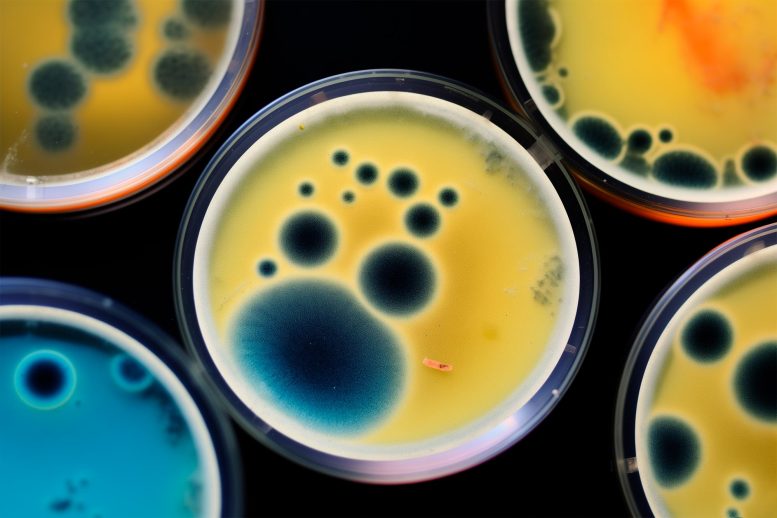
Harnessing new advances in genomic surveillance technology could help detect the rise of deadly ‘superbugs’.
Harnessing new advances in genomic surveillance technology could help detect the rise of deadly ‘superbugs’ and slow their evolution and spread, improving global health outcomes, a new Australian study suggests.
Antimicrobial resistance occurs when bacteria, viruses, fungi, and parasites change over time and no longer respond to the medicines and chemicals we use to kill them. These ‘superbugs’ make infections harder to treat and increase the risk of disease spread, severe illness, and death.
Without significant intervention, global annual deaths involving antimicrobial resistance are estimated to reach 10 million by 2050, with low and middle-income countries bearing the highest burden.
The ‘One Health’ Approach
The new study, “Genomic surveillance for antimicrobial resistance — a One Health perspective,” which was published in Nature Reviews Genetics, highlights the need for a multifaceted ‘One Health’ approach to the surveillance of antimicrobial resistance in the environment.
The research was led by Distinguished Professor Steven Djordjevic from the Australian Institute for Microbiology and Infection at the University of Technology Sydney, together with researchers from the University of Melbourne and the University of South Australia.
“The evolutionary nature of antimicrobial resistance makes it a constantly changing and evolving threat. There is no easy solution, but ongoing genomic surveillance can help us better understand and mitigate this global health challenge.”
Distinguished Professor Steven Djordjevic
Global Threat and Genomic Tracing
“Antimicrobial resistance is a complex and global threat requiring large-scale, coordinated, and cross-disciplinary collaboration to tackle,” said Professor Djordjevic.
“Understanding the evolution, emergence, and spread of antimicrobial resistance within and between humans, animals, plants and natural environments is critical in mitigating the colossal impacts associated with this phenomenon.”
The use of genomic tracing during the COVID-19 pandemic has provided insight into the potential of genomic technologies to monitor the development and spread of antimicrobial genes and mutations.
“Antimicrobial resistance can occur when microorganisms acquire genetic information, either by mutation, recombination or transfer of antibiotic resistance genes from the bacterial gene pool,” said Professor Erica Donner from the University of South Australia.
“Genomic technologies, combined with AI and machine learning, are powerful platforms for determining resistance trends. They can identify instances where microbes and their genetic material move between different environments, evaluating the impact of intervention strategies.
“The evolution of antimicrobial resistance is a complex process that includes the overuse and misuse of antibiotics, metals, and disinfectants in medicine and agriculture, and widely varying standards of water, sanitation, and hygiene.”
Recommendations and Call to Action
The paper is a call to action for policymakers, highlighting the need to establish national genomic surveillance programs spanning human health, animal health, agriculture, food, and environmental management sectors and to share data at both a national and international level.
“Utilising the technology of microbial genomics in the context of effective cross-sectoral data integration will enhance the understanding of antimicrobial resistance emergence and spread within and across these sectors and identify targeted interventions,” said Professor Ben Howden from the University of Melbourne.
The researchers provide practical recommendations to implement genomics-enabled surveillance and mitigation strategies and underscore the need for equitable solutions that allow integration of partners from lower- and middle-income countries.
The recommendations include:
- Establishing a national One Health antimicrobial resistance surveillance program incorporating genomics
- Increase antimicrobial resistance awareness and education and foster collaboration
- Enhancing laboratory capacity in lower and middle-income countries
- Encouraging research and innovation
- Strengthening regulation and oversight in agriculture
- Improving antibiotic stewardship
“The evolutionary nature of antimicrobial resistance makes it a constantly changing and evolving threat. There is no easy solution, but ongoing genomic surveillance can help us better understand and mitigate this global health challenge,” said Professor Djordjevic.
Reference: “Genomic surveillance for antimicrobial resistance — a One Health perspective” by Steven P. Djordjevic, Veronica M. Jarocki, Torsten Seemann, Max L. Cummins, Anne E. Watt, Barbara Drigo, Ethan R. Wyrsch, Cameron J. Reid, Erica Donner and Benjamin P. Howden, 25 September 2023, Nature Reviews Genetics.
DOI: 10.1038/s41576-023-00649-y
Never miss a breakthrough: Join the SciTechDaily newsletter.
Follow us on Google and Google News.