
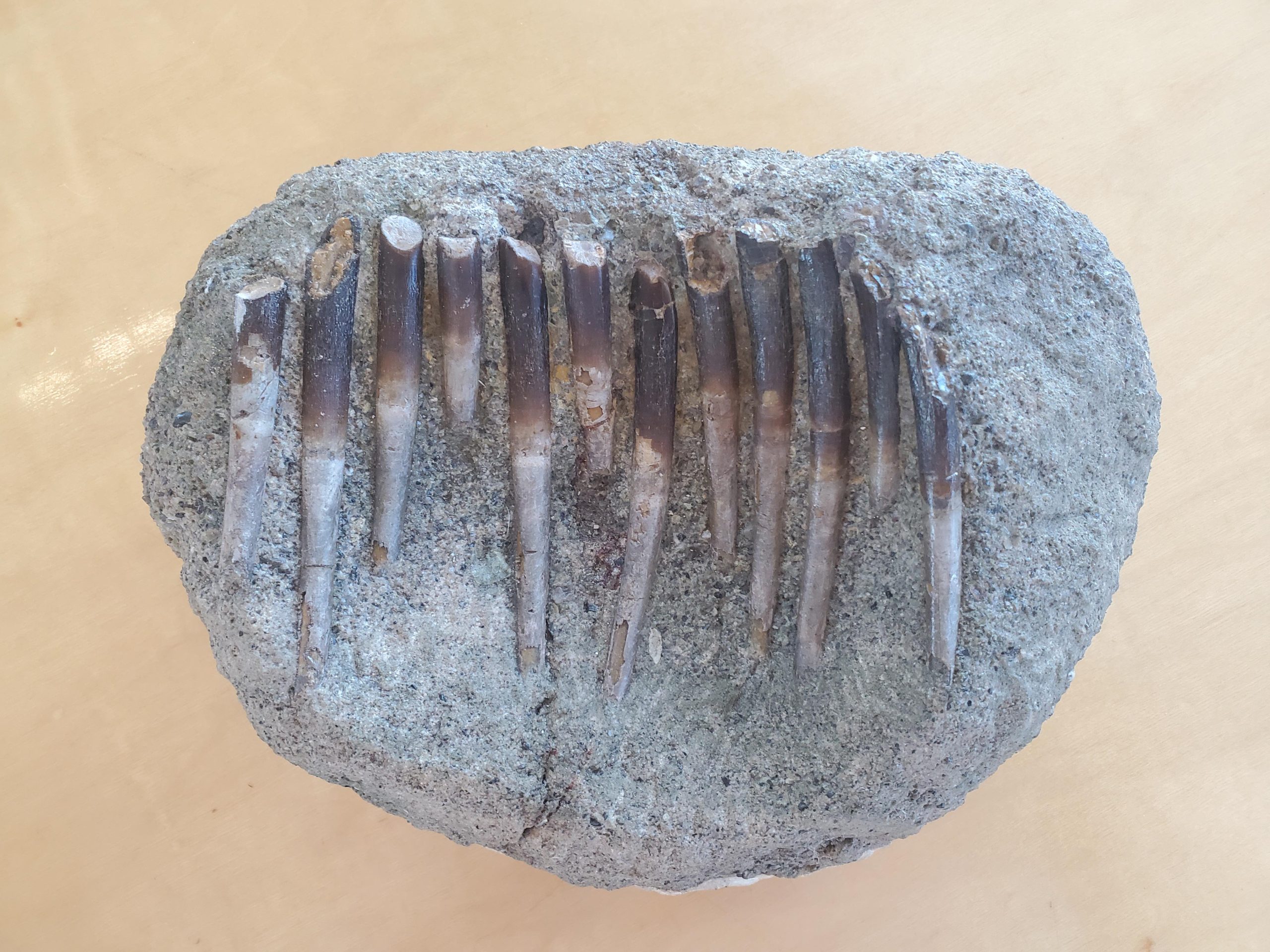
Jurassic dinosaurs ate different plant parts, allowing them to share habitats. Tooth chemistry proves their dietary separation.
It turns out you really are what you eat—even if your last meal was 150 million years ago.
Although the actual meals have long since vanished, the chemical evidence of what dinosaurs once consumed remains preserved in their tooth enamel. Researchers at the University of Texas at Austin examined these ancient remains and found that certain dinosaurs had distinct food preferences, with different species favoring specific parts of plants.
Tooth enamel retains calcium isotopes that record the diversity of a dinosaur’s diet. Different plants, and even individual components of a single plant like bark or buds, leave behind unique isotopic markers. According to lead author Liam Norris, these findings shed light on how multiple large herbivores were able to share the same environment without directly competing for food.
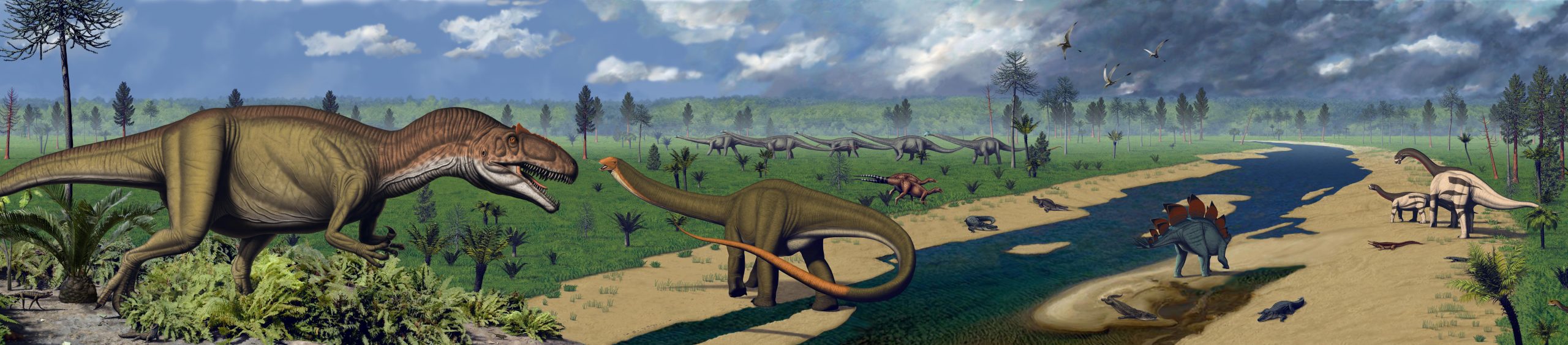
“The ecosystem that I studied has been a mystery for a long time because it has these giant herbivores all coexisting,” said Norris, a recent doctoral graduate at UT’s Jackson School of Geosciences. “The idea is that they were all eating different things, and now we have found proof of that.”
The findings were published in Palaeogeography, Palaeoclimatology, Paleoecology.
Fossils from a rapid burial site
Norris analyzed fossilized teeth from five ancient species—four dinosaurs and one crocodyliform—that lived in the Western United States during the Late Jurassic period. Among the herbivores were the long-necked Camarasaurus, the short-armed Camptosaurus, and the large-bodied Diplodocus. The carnivores included the two-legged predator Allosaurus and the smaller, crocodile-like Eutretauranosuchus. All of these specimens were recovered from the Carnegie Quarry in northeast Utah, a fossil-rich site believed to have been created during a severe drought lasting anywhere from several months to a few thousand years.
“We were very lucky to be able to study fossils of dinosaurs that lived together and were all rapidly preserved in a single deposit,” said Rowan Martindale, an associate professor at the Jackson School’s Department of Earth and Planetary Sciences. “The Jurassic tomb preserved a unique paleontological gem and these skeletons are beautifully displayed at Dinosaur National Monument.”
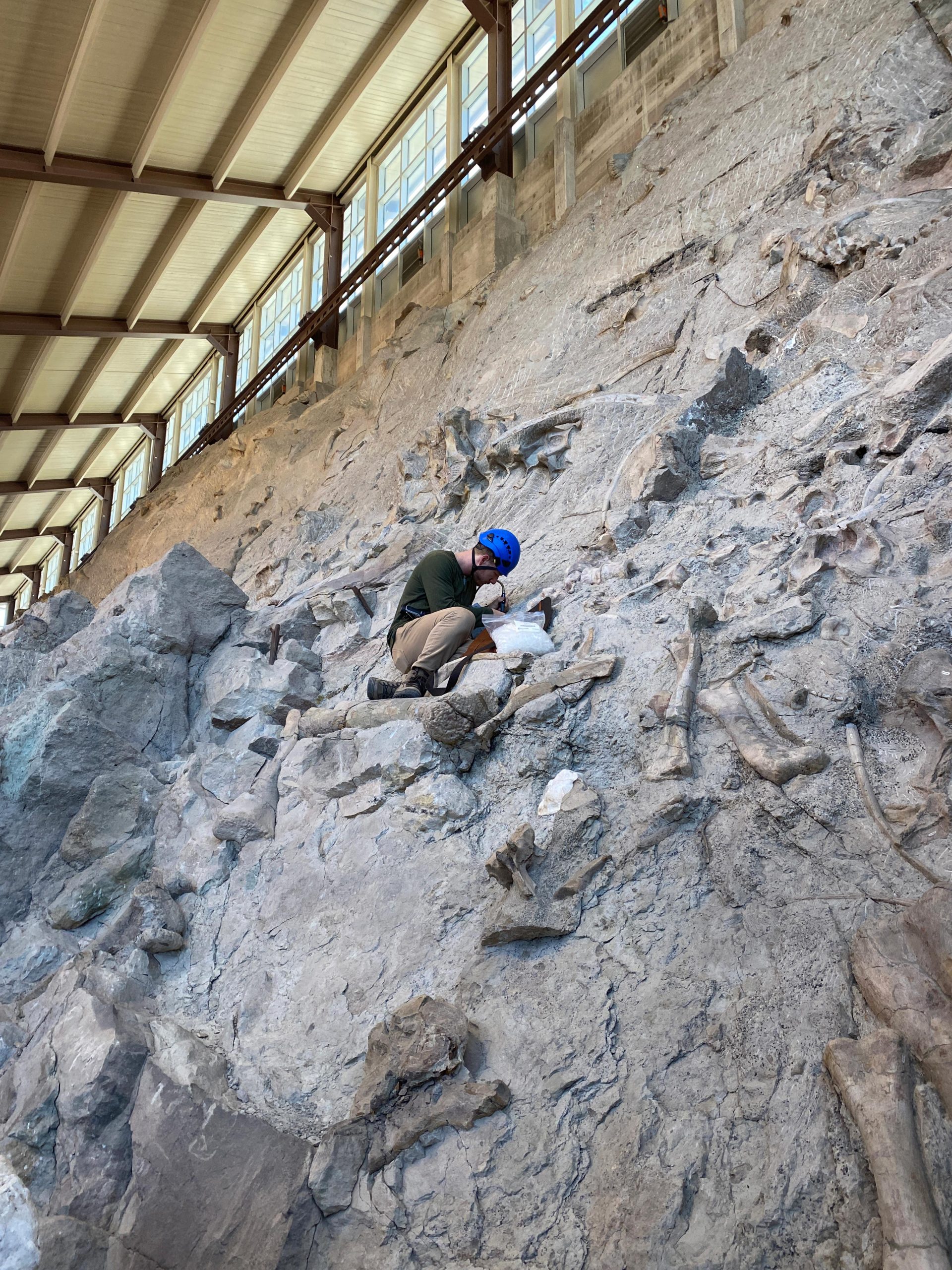
Now employed at the Texas Science & Natural History Museum, Norris examined teeth from 17 individual animals representing the five studied species. These fossil specimens were either provided by the Utah Field House of Natural History State Park Museum or examined directly at Dinosaur National Monument. Norris removed a thin layer of enamel from each tooth and transported the samples to the Jackson School for calcium isotope analysis. He collaborated with Jackson School Professor John Lassiter and Radiogenic Isotope Laboratory Manager Aaron Satkoski—both co-authors of the study—to analyze and interpret the resulting data.
More than just tree height
Previously, scientists believed that large herbivorous dinosaurs coexisted by munching on different levels of the tree canopy according to height. However, Norris’s research shows that plant height wasn’t the only factor driving the differentiation of their diets — instead, it was specific plant parts.
For example, Norris found that the Camptosaurus was a rather discerning eater, preferring softer, more nutritious plant parts such as leaves and buds. The Camarasaurus ate mostly conifers, with a preference for woody plant tissues. The Diplodocus ate more of a mixed diet that included soft ferns and horsetail plants lower to the ground, as well as tougher plant parts.
“This differentiation in diet makes sense with what we see from the morphology of these animals: the different height, the different snout shape. Then, we bring in this geochemical data, which is a very concrete piece of evidence to add to that pot,” Norris said.
This research also provides interesting food for thought to a theory about long-necked dinosaurs having flexible necks that could be used to reach many areas of vegetation without having to expend the energy to move the rest of their body. This research, which shows that the dinosaurs ate from different levels of the tree canopy, furthers that line of thinking.
The carnivores in the study — the Allosaurus and Eutretauranosuchus — had an overlap in calcium isotope values, which could mean that they ate some of the same things. However, the results also showed that the Eutretauranosuchus is more likely to have eaten fish, while the Allosaurus primarily ate herbivorous dinosaurs — possibly including the three other dinosaur species mentioned in this study.
For this ancient ecosystem to have supported so many enormous dinosaurs with such specific dietary proclivities helps to paint a picture of the vegetation and plant productivity of the time.
“It’s really just more proof that this ecosystem was as spectacular as we thought it was,” Norris said.
Reference: “Calcium isotopes reveal niche partitioning within the dinosaur fauna of the Carnegie Quarry, Morrison Formation” by Liam Norris, Rowan C. Martindale, Aaron Satkoski, John C. Lassiter and Henry Fricke, 1 October 2025, Palaeogeography, Palaeoclimatology, Palaeoecology.
DOI: 10.1016/j.palaeo.2025.113103
Never miss a breakthrough: Join the SciTechDaily newsletter.
Follow us on Google and Google News.