
Close Menu
    Facebook X (Twitter) Instagram
    SciTechDaily
    • Biology
    • Chemistry
    • Earth
    • Health
    • Physics
    • Science
    • Space
    • Technology
    Facebook X (Twitter) Pinterest YouTube RSS
    SciTechDaily
    Home»Science»This Giant Dinosaur Walked in Circles 150 Million Years Ago – Scientists Uncover Its Secrets
    Science

    This Giant Dinosaur Walked in Circles 150 Million Years Ago – Scientists Uncover Its Secrets

    By University of QueenslandMarch 10, 2026No Comments4 Mins Read
    Facebook Twitter Pinterest Telegram LinkedIn WhatsApp Email Reddit
    Share
    Facebook Twitter LinkedIn Pinterest Telegram Email Reddit
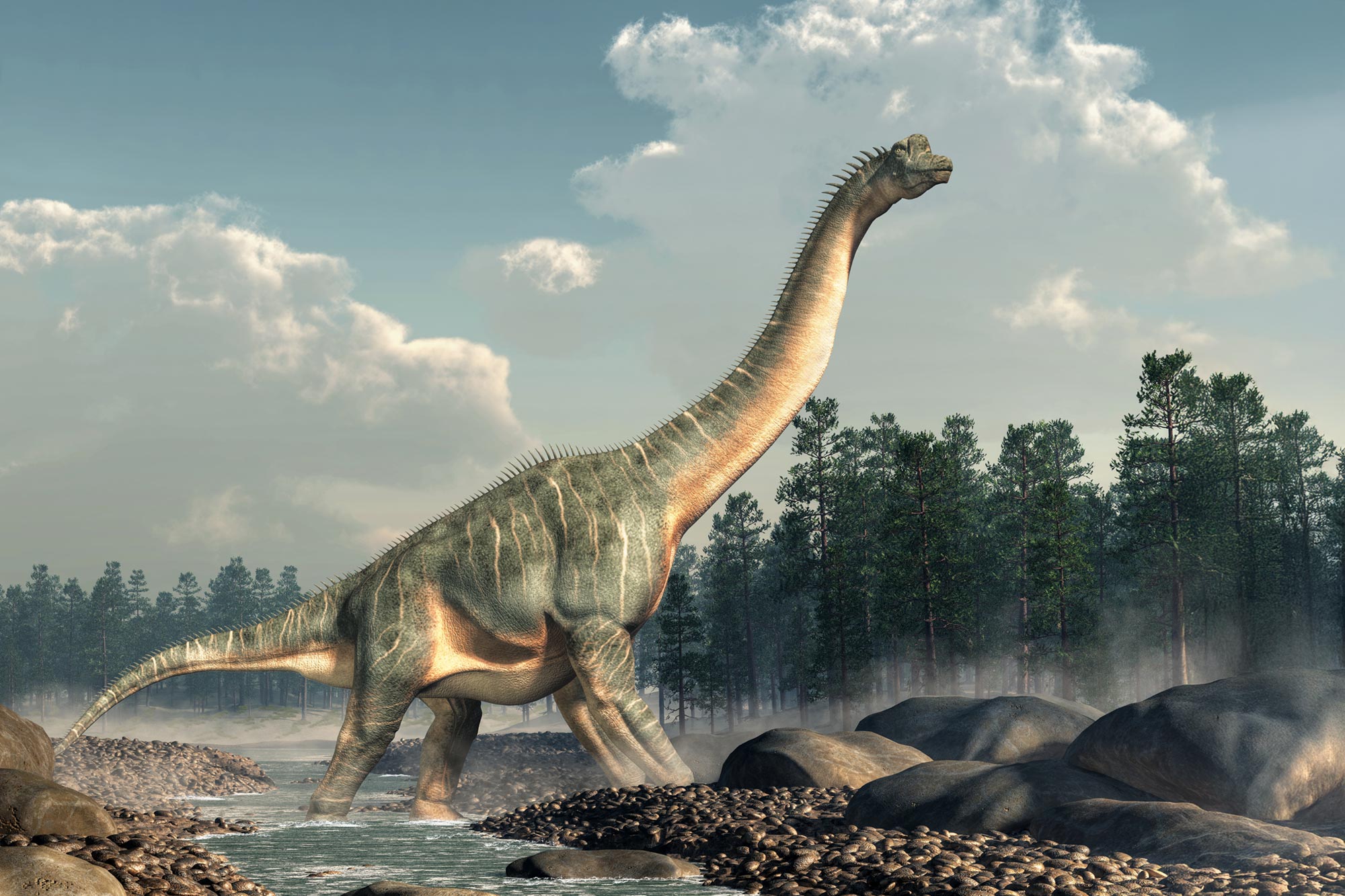
    Brachiosaurus Sauropod Dinosaur
    A rare looping dinosaur trackway preserved in Colorado offers an unusual window into the movement of a giant sauropod that lived around 150 million years ago. Credit: Shutterstock

    A rare looping dinosaur trackway in Colorado reveals new clues about sauropod movement and hints that the massive animal may have walked with a limp.

    Researchers studying an unusual looping trail of fossilized footprints in the United States have uncovered evidence suggesting the dinosaur that left them may have walked with a limp.

    Near the town of Ouray in Colorado lies one of the most continuous and sharply turning sauropod trackways ever identified. This remarkable series of fossil footprints provides an unusually complete record of a dinosaur’s movement across ancient ground.

    Dr. Anthony Romilio from the University of Queensland’s Dinosaur Lab examined more than 130 individual footprints that form a 95.5-meter path created roughly 150 million years ago.
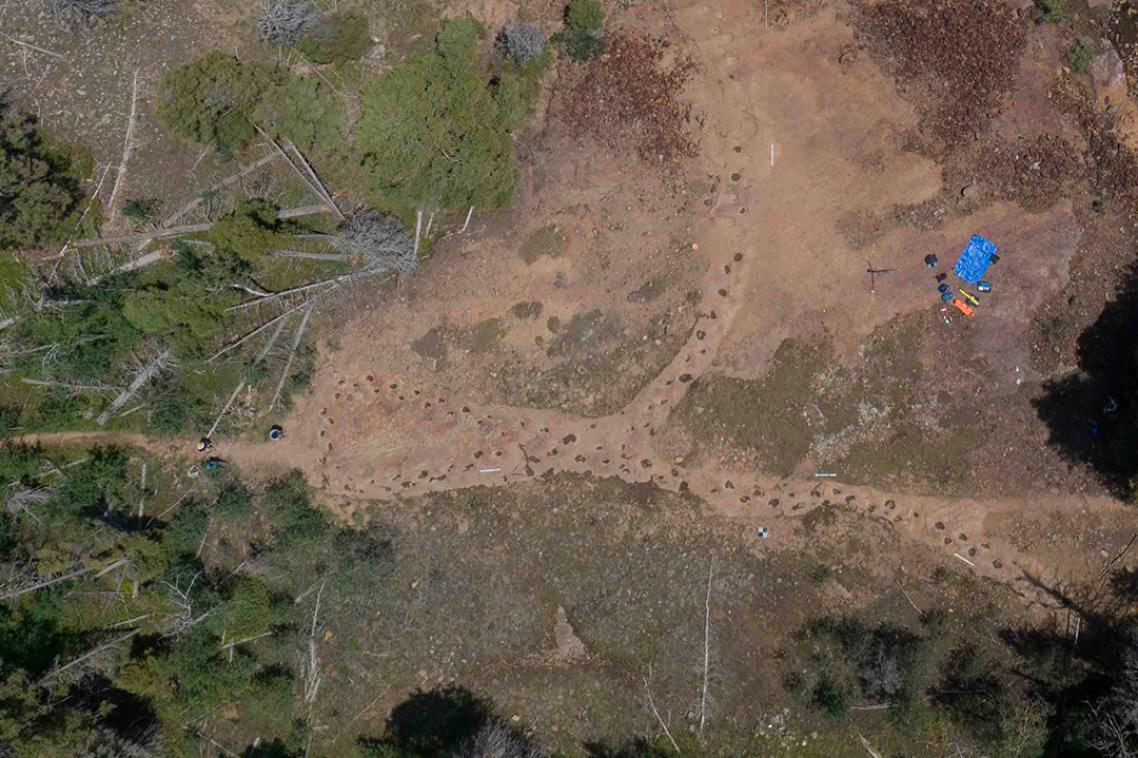
    Aerial View of Sauropod Fossil Trackway
    An aerial view of the complete dinosaur trackway in Colorado, USA. Credit: Dr. Paul Murphey

    “This was left in the Late Jurassic when long-necked dinosaurs such as Diplodocus and Camarasaurus roamed North America,” Dr. Romilio said.

    “This trackway is unique because it is a complete loop. While we may never know why this dinosaur curved back on itself, the trackway preserves an extremely rare chance to study how a giant sauropod handled a tight, looping turn before resuming its original direction of travel.”
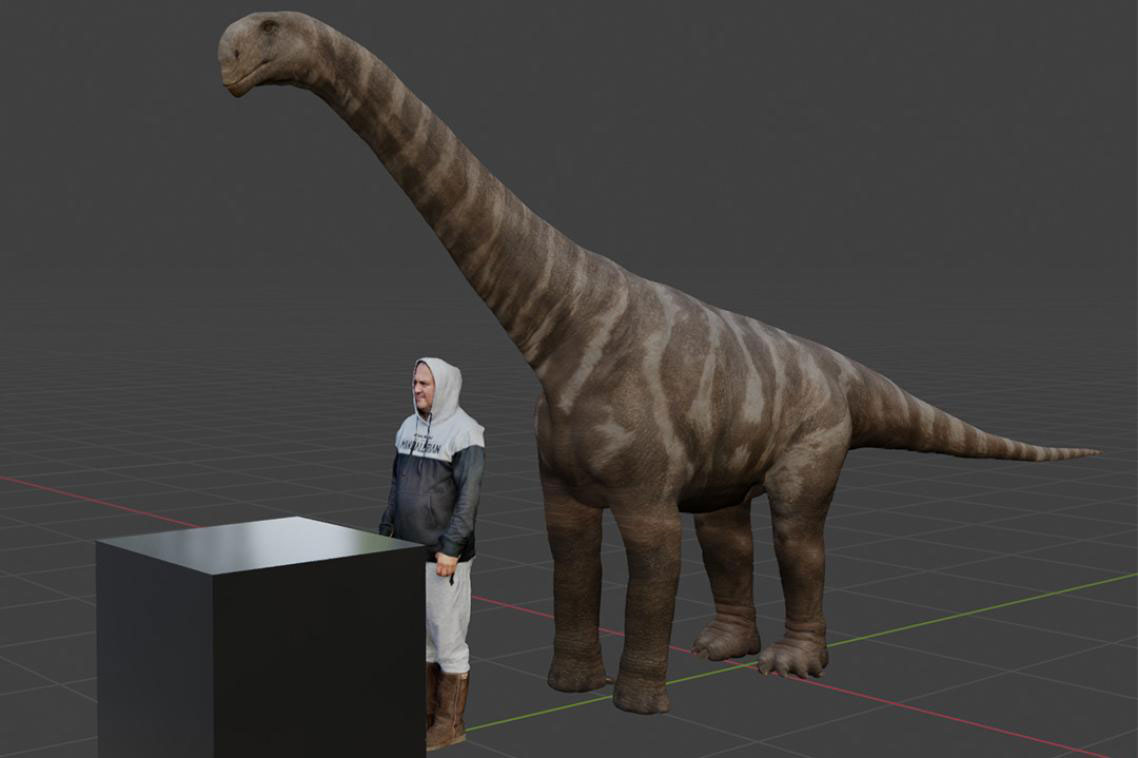
    Sauropod Size Simulation Beside Human
    A simulation showing the size of the sauropod which made the tracks next to an adult for scale. Credit: Dr. Anthony Romilio

    Drone mapping reveals hidden detail

    Co-author Dr. Paul Murphey from the San Diego Natural History Museum explained that documenting such a large tracksite required methods beyond traditional field observation.

    “It has been challenging to document these footprints from the ground because of the size of the trackway,” Dr. Murphey said.

    “We used drones to capture the entire trackway in high resolution.

    “With these images we generated a detailed 3D model, which could then be digitally analyzed in the lab at millimeter-scale accuracy.”
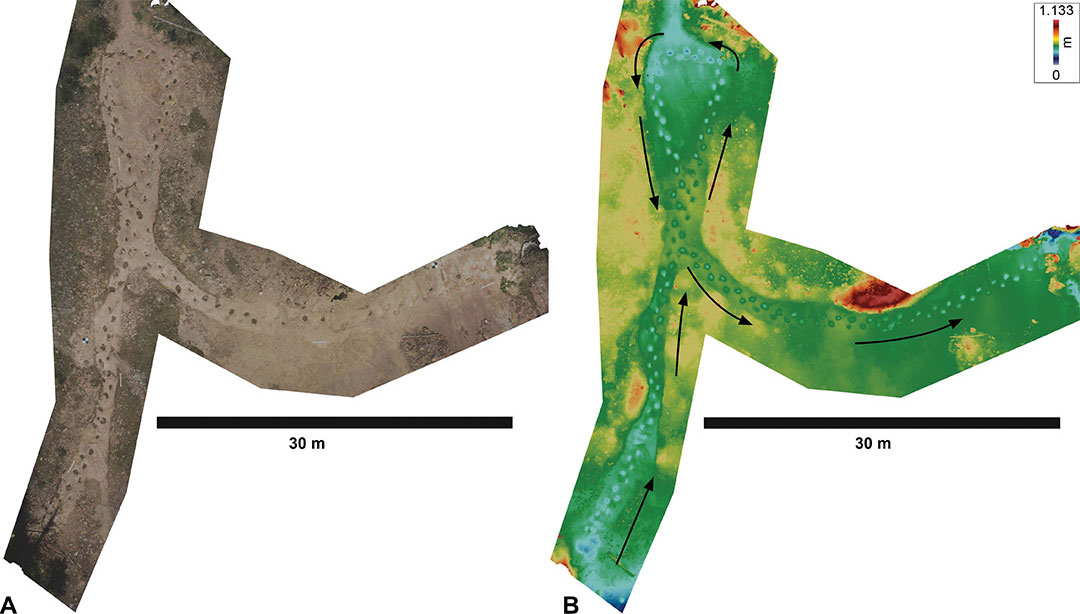
    Sauropod Trackway Photo and Elevation Map
    Overhead views of the 130-plus fossil footprints, shown as (A) a stitched photographic model and (B) as a false-colour height map, where changes in elevation highlight the footprints by their depth. The arrows indicate the dinosaur’s turning path as it walked across the site. Credit: Dr. Anthony Romilio

    Using the aerial imagery, researchers built a detailed digital reconstruction of the entire footprint trail.

    This model allowed the team to examine the shape, spacing, and orientation of the prints with far greater precision than would be possible in the field alone.
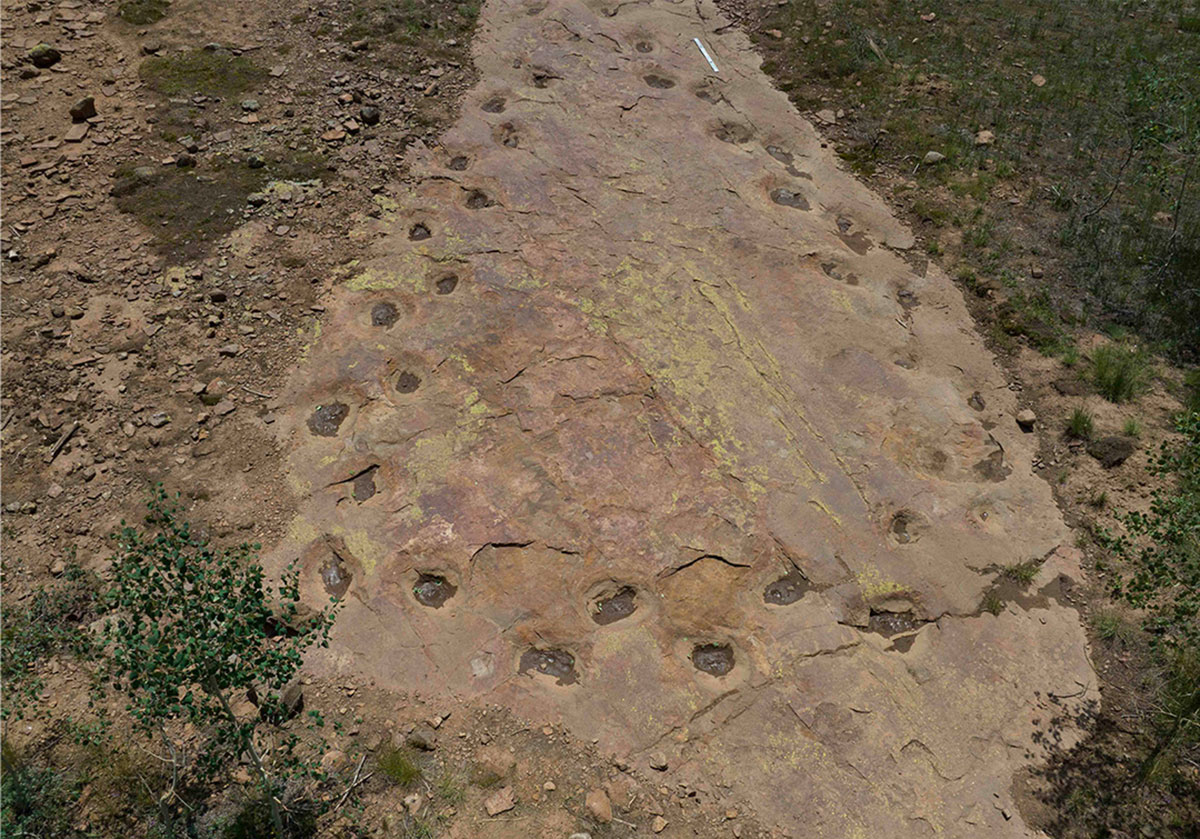
    West Gold Hill Dinosaur Tracksite From Above
    Aerial view of a section of the West Gold Hill Dinosaur Tracksite, Colorado. Credit: Dr. Paul Murphey

    Footprints reveal possible limp

    The digital reconstruction allowed scientists to retrace the dinosaur’s route across the ancient landscape.

    “It was clear from the start that this animal began walking toward the northeast, completed a full loop, and then finished facing the same direction again,” Dr. Romilio said.

    “Within that loop, we found subtle, yet consistent, clues to its behavior. One of the clearest patterns was a variation in the width between left and right footprints, shifting from quite narrow to distinctly wide.”

    He continues, “This shift from narrow to wide step placement shows that footprint width can change naturally as a dinosaur moves, meaning short trackway segments with seemingly consistent widths may give a misleading picture of its usual walking style.”
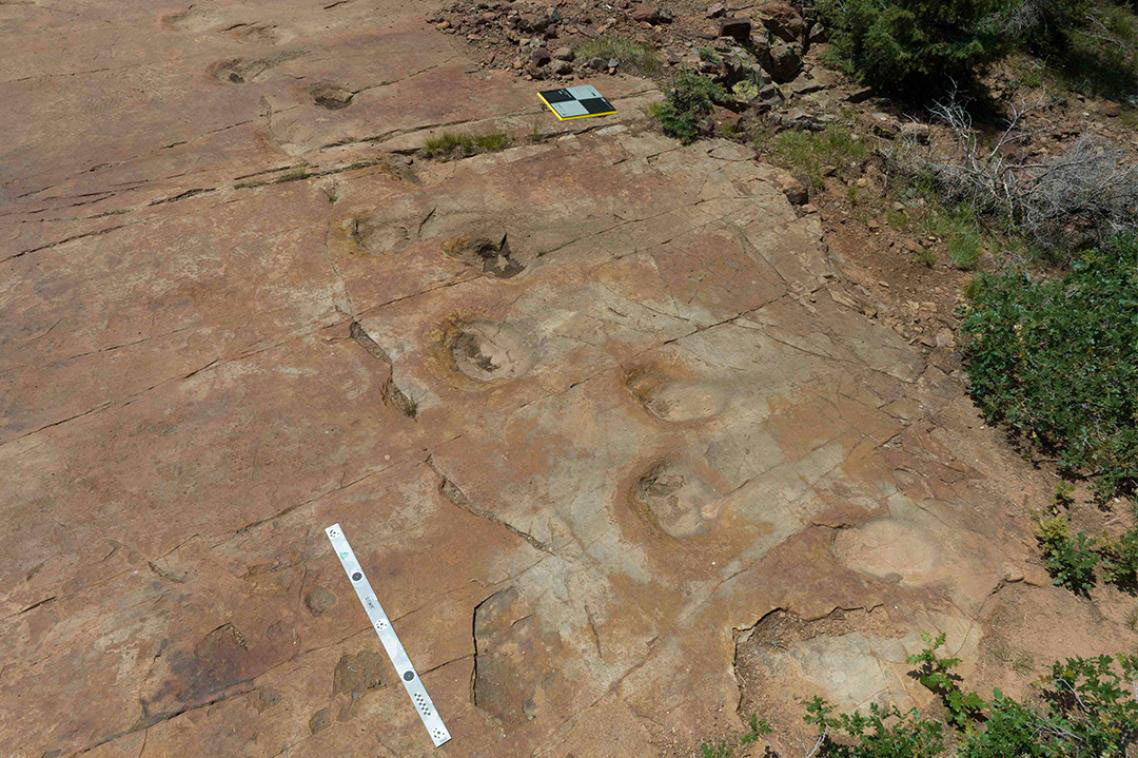
    Sauropod Fossil Footprints at West Gold Hill
    Footprints which make up the West Gold Hill Dinosaur Tracksite. Credit: Dr Paul Murphey

    Uneven steps suggest a limp

    “We also detected a small but persistent difference in left and right step lengths, of about 10 centimeters or 4 inches,” Dr. Romilio adds.

    “Whether that reflects a limp or simply a preference for one side is hard to say. There are many long dinosaur trackways around the world where this method could be applied to extract behavioral information that was previously inaccessible.”

    Reference: “Track by Track: Revealing Sauropod Turning and Lateralised Gait at the West Gold Hill Dinosaur Tracksite (Upper Jurassic, Bluff Sandstone, Colorado)” by Anthony Romilio, Paul C. Murphey, Neffra A. Matthews, Bruce A. Schumacher, Lance D. Murphey, Marcello Toscanini, Parker Boyce and Zach Fitzner, 20 November 2025, Geomatics.
    DOI: 10.3390/geomatics5040067

    The investigation of the track site has been supported by U.S. Forest Service.

    Never miss a breakthrough: Join the SciTechDaily newsletter.
    Follow us on Google and Google News.

    Dinosaurs Jurassic Period Paleontology Sauropod University of Queensland
    Share. Facebook Twitter Pinterest LinkedIn Email Reddit

    Related Articles

    Strange 65-Foot Dinosaur Discovered in Argentina

    These Giant Long-Necked Dinosaurs Could Stand Upright – and Scientists Finally Figured Out Why

    Giant Jurassic Dinosaurs Were Picky Eaters, Ancient Tooth Enamel Shows

    Fossil Jackpot! Researcher Uncovers 200-Million-Year-Old Dinosaur Footprints Hidden in a Highschool

    Mystery Solved: How Did Dinosaurs Support Their Gigantic Bodies?

    Tiny Cat-Sized Dinosaur Leaves the Smallest Stegosaur Footprint Ever Discovered by Paleontologists

    Researchers Stunned to Discover Ancient Crocodiles That Walked on Two Legs

    First Plant-Eating Dinosaur Discovered in Antarctica

    ‘Skin Bones’ Helped Large Dinosaurs Survive In Harsh Times

    Leave A Reply Cancel Reply

    • Facebook
    • Twitter
    • Pinterest
    • YouTube

    Don't Miss a Discovery

    Subscribe for the Latest in Science & Tech!

    Trending News

    First-of-Its-Kind Discovery: Homer’s Iliad Found Embedded in a 1,600-Year-Old Egyptian Mummy

    Beyond Inflammation: Scientists Uncover New Cause of Persistent Rheumatoid Arthritis

    A Simple Molecule Could Unlock Safer, Easier Weight Loss

    Scientists Just Built a Quantum Battery That Charges Almost Instantly

    Researchers Unveil Groundbreaking Sustainable Solution to Vitamin B12 Deficiency

    Millions of People Have Osteopenia Without Realizing It – Here’s What You Need To Know

    Researchers Discover Boosting a Single Protein Helps the Brain Fight Alzheimer’s

    World-First Study Reveals Human Hearts Can Regenerate After a Heart Attack

    Follow SciTechDaily
    • Facebook
    • Twitter
    • YouTube
    • Pinterest
    • Newsletter
    • RSS
    SciTech News
    • Biology News
    • Chemistry News
    • Earth News
    • Health News
    • Physics News
    • Science News
    • Space News
    • Technology News
    Recent Posts
    • How Cells Copy DNA Might Matter More Than We Ever Realized
    • Scientists Just Solved the Mystery of the Twelve Apostles
    • Stone Age Mystery: DNA Reveals Ancient Population Wipeout in France
    • Why Did the Neanderthals Disappear? Scientists Reveal Humans Had a Hidden Advantage
    • Unusually Warm Water Detected Creeping Toward Antarctica – and Scientists Are Alarmed
    Copyright © 1998 - 2026 SciTechDaily. All Rights Reserved.
    • Science News
    • About
    • Contact
    • Editorial Board
    • Privacy Policy
    • Terms of Use

    Type above and press Enter to search. Press Esc to cancel.