
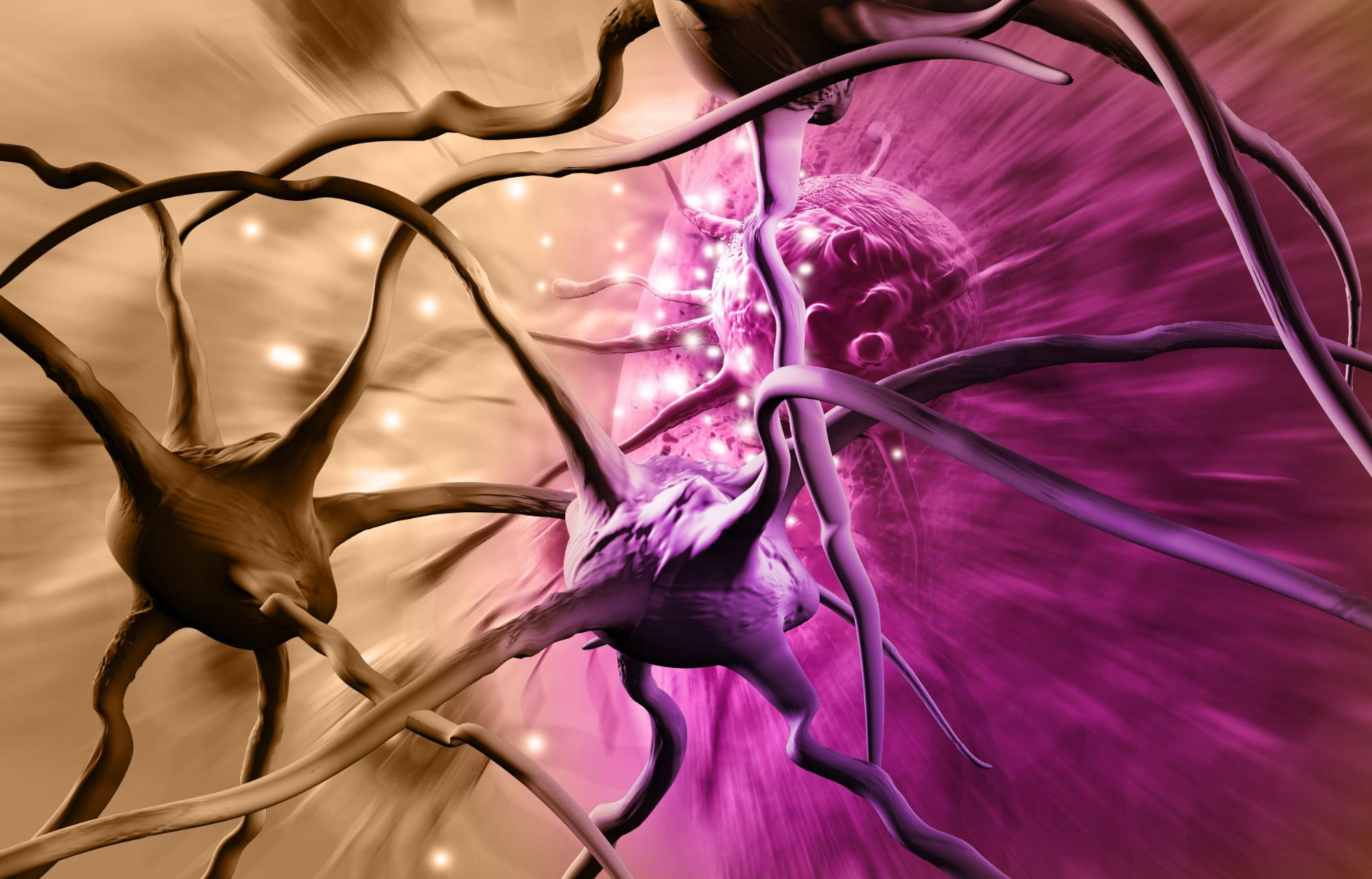
A recent study has revealed that chloride flow through channels on the surface of tumor cell lines plays a crucial role in their growth. By blocking these ion currents, the replication of tumor cells can be effectively stopped.
Chloride ion influx into cells plays a crucial role in the proliferation of glioblastoma cells, an aggressive form of brain cancer. This discovery was highlighted in a recent study published in the journal Molecular Cancer Research, conducted by research teams from SISSA (Scuola Internazionale Superiore di Studi Avanzati) in collaboration with IOM-CNR, the University of Trieste, University Hospital of Udine, the University of Udine, and GlioGuard S.r.l.
The study revealed that so-called “Calcium-dependent chloride ion channels”, which act like “gates” regulating chloride ion flows in and out of the cell, play a role in regulating tumor cell lines division and thus their proliferation.
By using substances that block these flows, the research group demonstrated that it is possible to stop replication in tumor cells cultured in the laboratory. This result points to ion currents as a potential target for future therapeutic approaches.
A higher concentration of chloride ions in cells promotes tumor progression
“Glioblastoma is the most common and malignant tumor among neoplasms of the non-neuronal cellular component of the central and peripheral nervous system, generally called ‘glia’. In glioblastoma cells, an increased concentration of chloride is found compared to normal levels,” Anna Menini, one of the leaders of the study, explains, “For this reason, we asked ourselves: can this increase aid tumor progression, and if so, how?”

To answer this question, the scientists used various experimental techniques on cells that resemble those in tumors, such as imaging of calcium and chloride channels, electrophysiology, and immunocytochemistry.
By doing so, the researchers demonstrated that chloride ion channels indeed have a direct influence on the replication of these cells. In particular, by allowing the influx of chloride ions into the cell they seem to help increase the cell’s volume, a fundamental process that promotes division into two daughter cells.
Ion flows to drive cell division
More specifically, Vincent Torre, another leader of the study, explains: “In glioblastoma cells undergoing division, we noticed three different phases. Initially, there is an increase in calcium concentration inside the cell. This process triggers the second phase: this calcium increase activates the chloride channels, allowing the entry of chloride ions. Finally, to maintain osmotic balance, glioblastoma cells swell until they divide into two daughter cells.”
“This evidence,” the researchers explain, “indicates that these channels play a significant role in making the tumor cell grow so that it can divide and multiply, thereby promoting tumor progression.”
Blocking the chloride channels
To demonstrate this, the authors used specific substances that selectively block chloride channels, such as niflumic acid and carbenoxolone.
Vincent Torre explains: “In laboratory experiments conducted using tumor cell lines, we observed that, when treated with these substances, the cells stop in the early stages of division, remaining in a rounded configuration and cease dividing and multiplying. These same channels could therefore be considered potential targets for novel drugs specifically designed to halt tumor progression. Given the high heterogeneity of glioblastoma cells, further in-depth studies will be needed before verifying the robustness of this hypothesis in patients, but a new route is open. The Editor of Indeed notes this work could offer new possible approaches for GBM treatment.”
Reference: “Mechanisms of Glioblastoma Replication: Ca2+ Flares and Cl− Currents” by Yunzhen Li, Cesar Adolfo Sanchez Triviño, Andres Hernandez, Simone Mortal, Federica Spada, Ilona Krivosheia, Nicoletta Franco, Renza Spelat, Daniela Cesselli, Ivana Manini, Miran Skrap, Anna Menini, Fabrizia Cesca and Vincent Torre, 4 September 2024, Molecular Cancer Research.
DOI: 10.1158/1541-7786.MCR-23-0934
Never miss a breakthrough: Join the SciTechDaily newsletter.
Follow us on Google and Google News.