
Close Menu
    Facebook X (Twitter) Instagram
    SciTechDaily
    • Biology
    • Chemistry
    • Earth
    • Health
    • Physics
    • Science
    • Space
    • Technology
    Facebook X (Twitter) Pinterest YouTube RSS
    SciTechDaily
    Home»Space»Gyroscope Failures Force NASA to Change How It Points Hubble Space Telescope
    Space

    Gyroscope Failures Force NASA to Change How It Points Hubble Space Telescope

    By NASAJune 11, 20241 Comment4 Mins Read
    Facebook Twitter Pinterest Telegram LinkedIn WhatsApp Email Reddit
    Share
    Facebook Twitter LinkedIn Pinterest Telegram Email Reddit
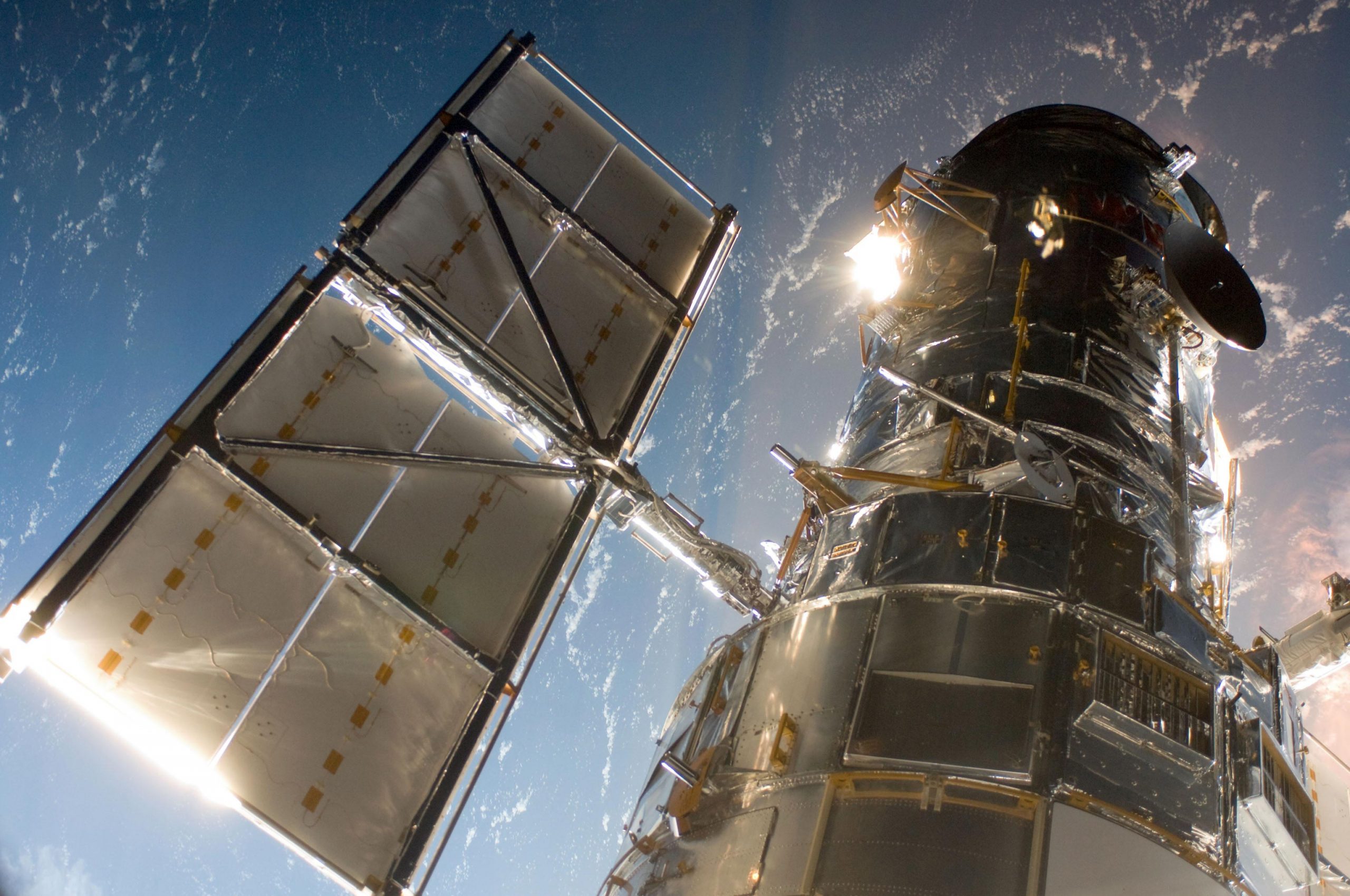
    Hubble Space Telescope in Orbit
    The Hubble Space Telescope was launched by the space shuttle Discovery on April 24, 1990. Avoiding distortions of the atmosphere, Hubble has an unobstructed view peering to planets, stars, and galaxies, some more than 13.4 billion light-years away. Credit: NASA

    NASA plans to transition Hubble to a single-gyro mode to address ongoing issues with one of its gyroscopes. This adjustment is aimed at prolonging Hubble’s operational life and maintaining its scientific output, despite expected minor limitations in tracking and slewing capabilities.

    After completing a series of tests and carefully considering the options, NASA announced that work is underway to transition its Hubble Space Telescope to operate using only one gyroscope (gyro). While the telescope went into safe mode on May 24, where it now remains until work is complete, this change will enable Hubble to continue exploring the secrets of the universe through this decade and into the next, with the majority of its observations unaffected.

    Gyroscope Challenges and Adjustments

    Of the six gyros currently on the spacecraft, three remain active. They measure the telescope’s slew rates and are part of the system that determines and controls the direction the telescope is pointed. Over the past six months, one particular gyro has increasingly returned faulty readings, causing the spacecraft to enter safe mode multiple times and suspending science observations while the telescope awaits new instructions from the ground.

    This one gyro is experiencing “saturation,” where it indicates the maximum slew rate value possible regardless of how quickly the spacecraft is slewing. Although the team has repeatedly been able to reset the gyro’s electronics to return normal readings, the results have only been temporary before the problem reappears as it did again in late May.
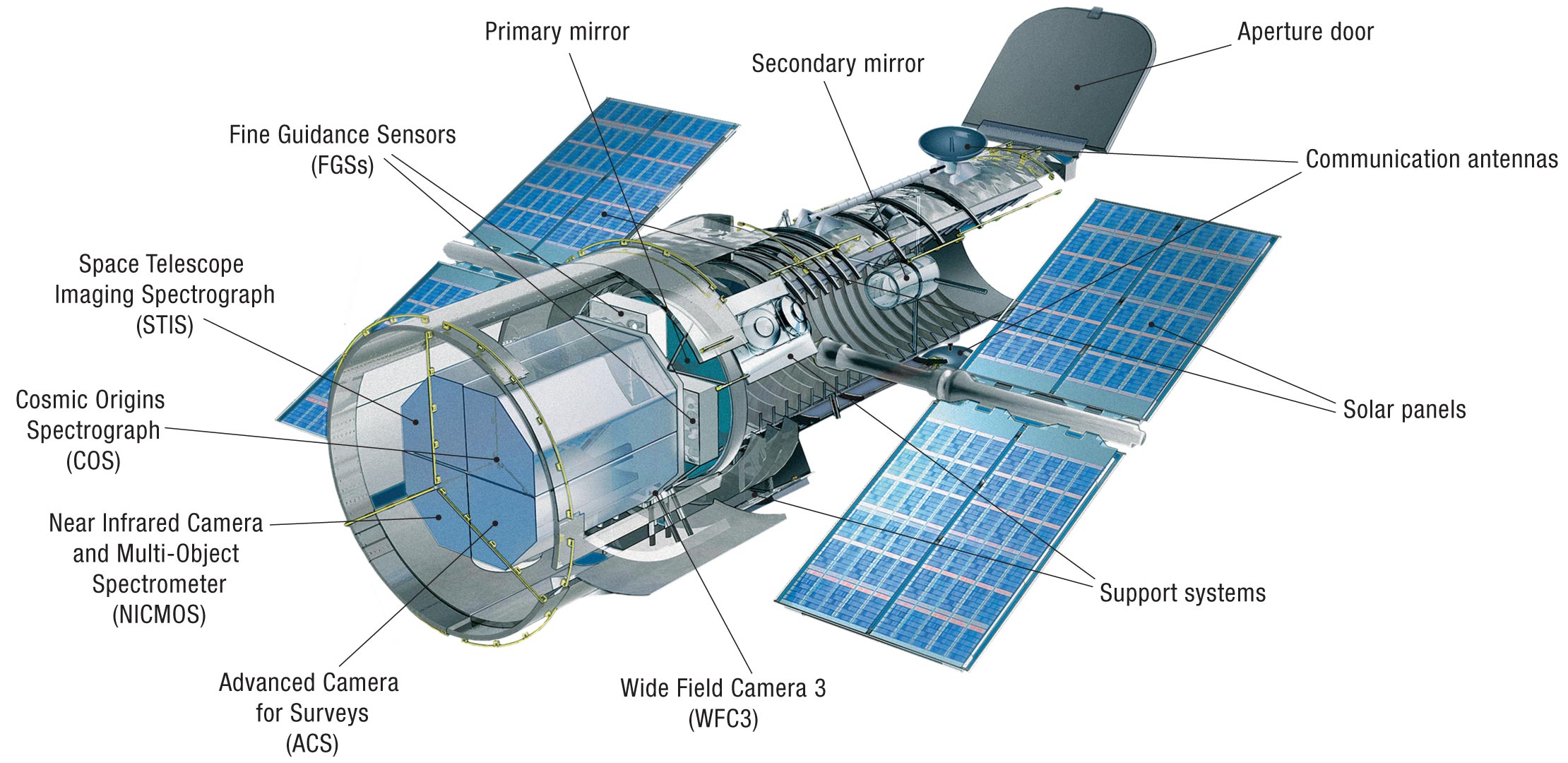
    Hubble’s Instruments Including Control and Support Systems
    This is a cutaway diagram of the Hubble Space Telescope, with components labeled. The forward shell houses the telescope’s optical assembly. In the middle of the telescope are the reaction wheels and the bays that house the observatory’s control electronics. The aft shroud houses the scientific instruments, gyroscopes, and star trackers. Credit: NASA’s Goddard Space Flight Center, ESA

    Transitioning to Single-Gyro Mode

    To return to consistent science operations, NASA is transitioning the spacecraft to a new operational mode it had long considered: Hubble will operate with only one gyro, while keeping another gyro available for future use. The spacecraft had six new gyros installed during the fifth and final space shuttle servicing mission in 2009. To date, three of those gyros remain operational, including the gyro currently experiencing problems, which the team will continue to monitor.

    Hubble uses three gyros to maximize efficiency but can continue to make science observations with only one gyro. NASA first developed this plan more than 20 years ago, as the best operational mode to prolong Hubble’s life and allow it to successfully provide consistent science with fewer than three working gyros. Hubble previously operated in two-gyro mode, which is negligibly different from one-gyro mode, from 2005-2009. One-gyro operations were demonstrated in 2008 for a short time with no impact to science observation quality.

    Expected Limitations and Adjustments

    While continuing to make science observations in one-gyro mode, there are some expected minor limitations. The observatory will need more time to slew and lock onto a science target and won’t have as much flexibility as to where it can observe at any given time. It also will not be able to track moving objects closer than Mars, though these are rare targets for Hubble.

    Continuing Legacy and Future Operations

    The transition involves reconfiguring the spacecraft and ground system as well as assessing the impact to future planned observations. The team expects to resume science operations again by mid-June. Once in one-gyro mode, NASA anticipates Hubble will continue making new cosmic discoveries alongside other observatories, such as the agency’s James Webb Space Telescope and future Nancy Grace Roman Space Telescope, for years to come.

    Launched in 1990, Hubble has more than doubled its expected design lifetime, and has been observing the universe for more than three decades, recently celebrating its 34th anniversary. Read more about some of Hubble’s greatest scientific discoveries.

    Never miss a breakthrough: Join the SciTechDaily newsletter.
    Follow us on Google and Google News.

    Astronomy Hubble Space Telescope NASA
    Share. Facebook Twitter Pinterest LinkedIn Email Reddit

    Related Articles

    Hubble Reveals a Star Disk Three Times Hotter Than the Sun’s Surface

    A Star’s Unexpected Heatwave: FU Orionis Challenges Astrophysics Models

    NASA’s Hubble Reveals How the LMC Defied Galactic Destruction

    Legendary Star’s Smooth Disk Mystifies Astronomers, Challenges Planet Formation Theories

    Cosmic Horror Unveiled: NASA Reveals “Blood-Soaked Eyes” Staring From Deep Space [Video]

    Spanning 248 Billion Miles: Stunning Hubble Timelapse Captures a Star’s Violent Eruptions

    Jupiter’s Great Red Spot Enigma: Unexplained Oscillations Baffle Astronomers

    Unlocking Uranus: NASA’s Dual Observations Pave the Way to Discovering New Worlds

    Astronomers Baffled by Black Hole Jets Igniting Star Explosions

    1 Comment

    1. stephen p schaffer on June 11, 2024 9:25 am

      Did Perkins-Elmer make the gyros?

      Reply
    Leave A Reply Cancel Reply

    • Facebook
    • Twitter
    • Pinterest
    • YouTube

    Don't Miss a Discovery

    Subscribe for the Latest in Science & Tech!

    Trending News

    Largest-Ever Study Finds Medicinal Cannabis Ineffective for Anxiety, Depression, PTSD

    250-Million-Year-Old Egg Solves One of Evolution’s Biggest Mysteries

    Living With Roommates Might Be Changing Your Gut Microbiome Without You Knowing

    Century-Old Cleaning Chemical Linked to 500% Increased Risk of Parkinson’s Disease

    What if Your Memories Never Happened? Physicists Take a New Look at the Boltzmann Brain Paradox

    One of the Universe’s Largest Stars May Be Getting Ready To Explode

    Scientists Discover Enzyme That Could Supercharge Ozempic-Like Weight Loss Drugs

    Popular Sweetener Linked to DNA Damage – “It’s Something You Should Not Be Eating”

    Follow SciTechDaily
    • Facebook
    • Twitter
    • YouTube
    • Pinterest
    • Newsletter
    • RSS
    SciTech News
    • Biology News
    • Chemistry News
    • Earth News
    • Health News
    • Physics News
    • Science News
    • Space News
    • Technology News
    Recent Posts
    • Scientists Say This Overlooked Organ Could Hold the Key to Longer Life
    • Want Less Stress? Landmark Study Points to a Simple Habit
    • Scientists Reveal Eating Fruits and Vegetables May Increase Your Risk of Lung Cancer
    • AI Reveals Explosive Growth of Floating Algae Across the World’s Oceans
    • 5.5 Million Bees Discovered Living Beneath a New York Cemetery
    Copyright © 1998 - 2026 SciTechDaily. All Rights Reserved.
    • Science News
    • About
    • Contact
    • Editorial Board
    • Privacy Policy
    • Terms of Use

    Type above and press Enter to search. Press Esc to cancel.