
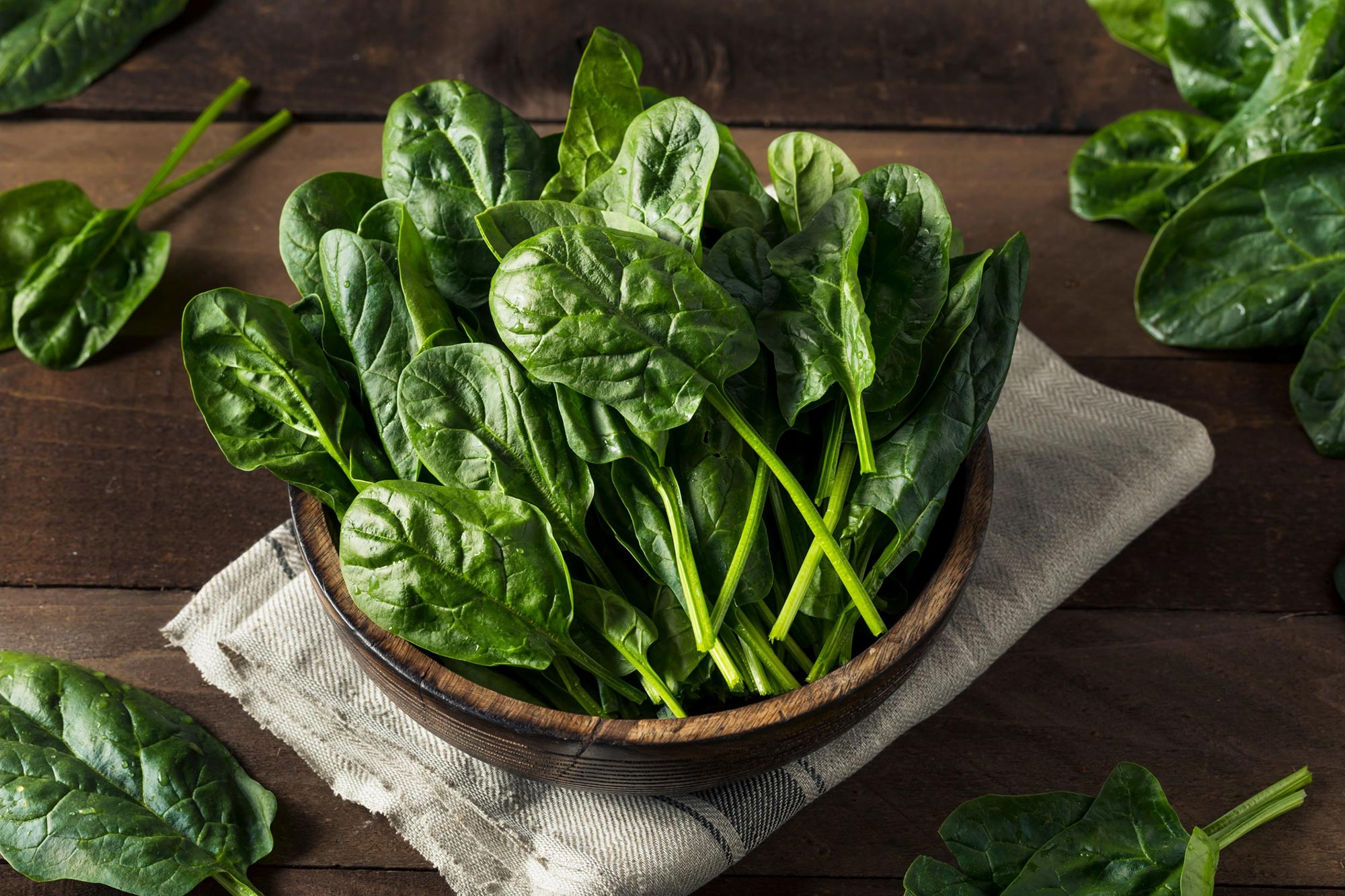
Some of the healthiest foods may quietly fuel gut inflammation in people with inflammatory bowel disease (IBD).
The compound, called oxalate, is abundant in foods such as spinach, almonds, and sweet potatoes. It is best known for contributing to certain kidney stones, but new research suggests that oxalate left inside the digestive tract may also aggravate intestinal inflammation in people with Crohn’s disease or ulcerative colitis.
Published in Cellular and Molecular Gastroenterology and Hepatology (CMGH), the study combined patient data with experiments in mice and cultured immune cells. The work was led by postdoctoral scholar Anna Salvador, PhD, RD, LDN, in the laboratory of Shehzad Z. Sheikh, MD, PhD, professor of medicine and genetics at the UNC School of Medicine.
Why Oxalate Builds Up in IBD
Oxalate occurs naturally in all plant foods, although concentrations vary widely. Most of the oxalate a person consumes eventually leaves the body in stool, even when the digestive system is healthy.
The researchers found evidence that this process is altered in IBD. Two intestinal transporter proteins involved in oxalate absorption, SLC26A2 and SLC26A3, were consistently reduced in tissue from people with Crohn’s disease and ulcerative colitis. The pattern appeared across affected intestinal tissues and was present whether or not the sampled area showed active inflammation.
Transporter levels fell even further as inflammation increased. With fewer of these proteins available, more oxalate may remain in the intestinal environment, where the study indicates it can intensify the immune reactions that damage the gut lining.
The Difference Was Not Diet Alone
People with Crohn’s disease had significantly more oxalate in their stool than non-IBD controls, despite regularly consuming similar amounts of plant-based food. This suggests that elevated oxalate may reflect a defect in intestinal handling rather than simply a diet containing more plants.
The researchers assessed food intake using the validated Diet History Questionnaire III and DNA metabarcoding, a technique that detects plant species through genetic material recovered from stool. According to the team, this was the first time metabarcoding had been used to investigate diet in an IBD population.
“For the first time, we observed that IBD patients and healthy controls were eating similar amounts of plant-based foods, yet CD patients still had more oxalate in their stool,” Salvador said. “That told us this isn’t just about what patients eat. Something is fundamentally different about how their gut handles oxalate.”
Oxalate Worsened Colitis in Mice
Experiments in animals provided stronger evidence that oxalate can actively worsen disease. Mice given an oxalate-supplemented diet together with a colitis-inducing agent were 60 percent less likely to survive than animals that did not receive dietary oxalate.
Oxalate also caused inflammation to appear sooner and become more severe in two genetically susceptible mouse models that spontaneously develop colitis. These animals already had reduced expression of oxalate transporter genes before oxalate was added to their diets, closely matching the biological pattern observed in people with IBD.
Laboratory experiments revealed another part of the possible mechanism. Oxalate heightened inflammatory responses in macrophages and dendritic cells, immune cells that help monitor threats and coordinate defenses in the intestine.
A Possible Signal of Severe Crohn’s Disease
An exploratory analysis also connected low expression of a third transporter, SLC26A6, with stricturing Crohn’s disease. In this aggressive form of the condition, repeated inflammation and fibrosis cause scar tissue to build up, narrowing sections of the intestine.
Nearly 75 percent of patients with low SLC26A6 expression had stricturing disease. Larger studies will be needed to confirm the association, but the finding raises the possibility that transporter levels could one day help identify patients at greater risk of developing intestinal narrowing.
“Dr. Salvador really conceptualized and drove this work from the beginning,” Sheikh said. “She asked a question that hadn’t been asked before: What if a specific dietary molecule is an active driver of gut inflammation in IBD, not just a bystander? The rigor she brought to answering it is what makes these findings so compelling.”
Lower Oxalate Without Abandoning Plants
The findings are not a recommendation for people with IBD to eliminate plant foods. Plants provide fiber, vitamins, minerals, and other compounds important to health, and a nutritionally complete plant-based diet can be designed with a lower overall oxalate content.
Instead, the results suggest that people with impaired oxalate transport may react differently to the same amount of dietary oxalate. This biological variation may also help explain why previous studies of diet and IBD have sometimes produced inconsistent findings.
The human results do not yet establish that reducing oxalate will ease symptoms or prevent flare-ups. They provide a biological explanation worth testing in clinical studies, supported by evidence from animal and cell experiments.
Gut Bacteria Could Offer Another Approach
Changing the microbiome may eventually provide an alternative to restricting food. Oxalate-degrading bacteria such as Oxalobacter formigenes are depleted in people with IBD, potentially leaving the gut with less capacity to break down the compound.
Restoring these microbes or otherwise improving bacterial oxalate degradation could reduce exposure inside the intestine while preserving a varied diet. Such microbiome-based treatments remain experimental, however, and require further investigation.
Before formal dietary recommendations can be developed, researchers need larger studies that follow patients over time. Those studies should combine stool oxalate measurements with carefully documented diets, molecular profiles, microbiome analyses, and clinical outcomes.
“For patients living with Crohn’s disease or ulcerative colitis, this research opens a genuinely new therapeutic angle, one that connects the food on their plate to the inflammation in their gut,” Sheikh said. “Diet is one of the most powerful, modifiable levers we have in medicine, and this study gives us a molecular framework to start using it more precisely.”
Reference: “Dietary Oxalate and Intestinal Inflammation: Evidence From Experimental Colitis and Inflammatory Bowel Disease Patient Cohorts” by Anna C. Salvador, Zena Khaled, Ayesh Awad, Benjamin Huan, Gwen Lau, Sophie Silverstein, David Weaver, Lee-Ching Zhu, Surekha Bantumilli, Viguna Thomas, Emanuele Baldassarri, Jace McGovern, Ezan Chaudhry, Nathan VanLandingham, Dorothy K. Superdock, Brady Furey, Gloria Hayun Lee, Benjamin McMichael, Samantha Hicks, Erin C. Steinbach, Matthew R. Schaner, Jeremy Herzog, Leslie Garry Adams, W. June Brickley, P. Y. Jenny Ting, Lawrence A. David, David W. Threadgill, Terrance S. Furey and Shehzad Z. Sheikh, 13 August 2026, Cellular and Molecular Gastroenterology and Hepatology.
DOI: 10.1016/j.jcmgh.2026.101861
The study was supported by the Helmsley Charitable Trust, the National Institute of Diabetes and Digestive and Kidney Diseases (NIDDK), the Chan Zuckerberg Initiative, Schmidt Sciences, the Burroughs Wellcome Fund, and additional National Institutes of Health sources. Co-authors span UNC-Chapel Hill, Texas A&M University and Duke University.
Never miss a breakthrough: Join the SciTechDaily newsletter.
Follow us on Google and Google News.