
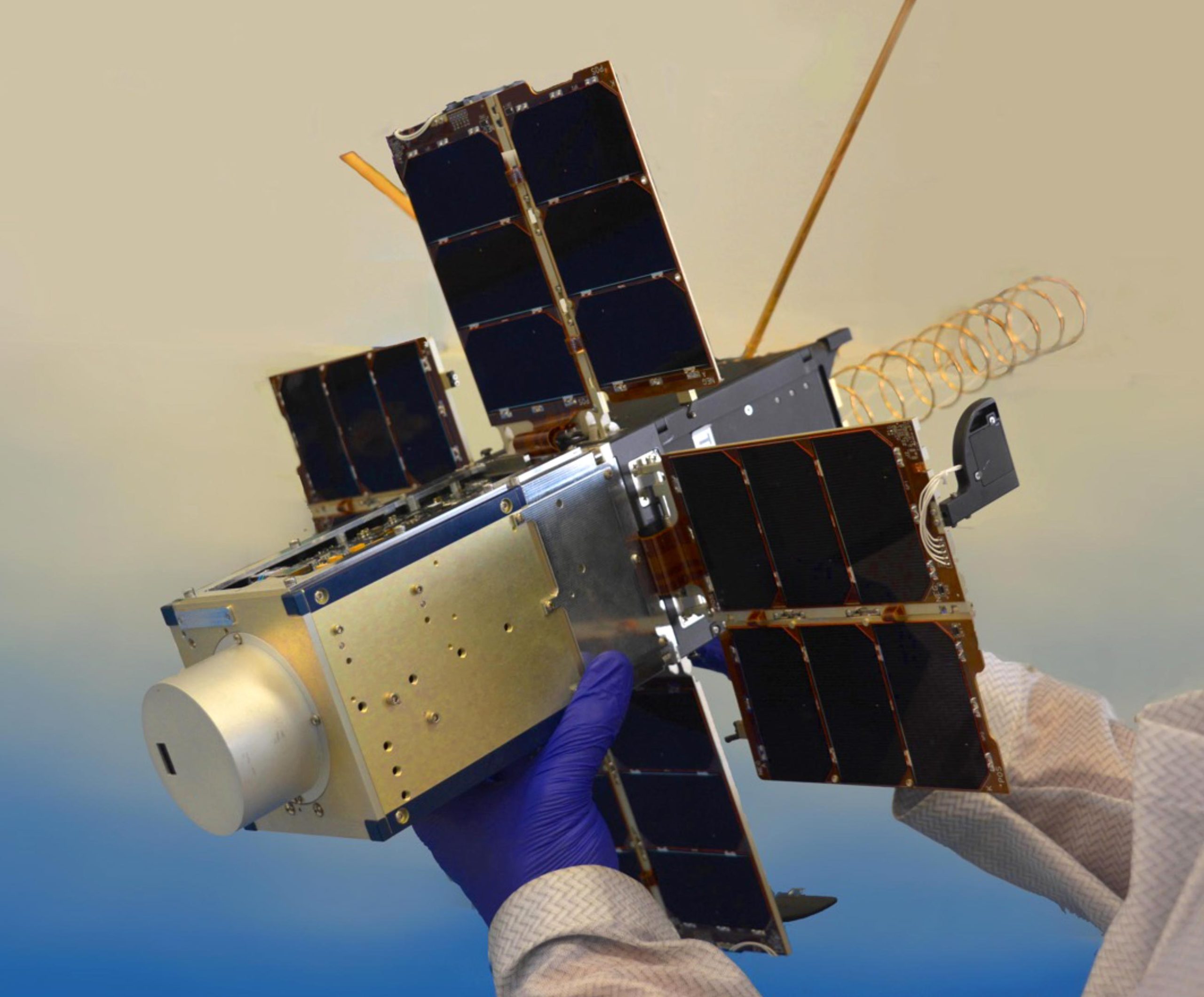
NACHOS is a NASA prototype aboard a CubeSat, designed to monitor trace gases like sulfur dioxide and nitrogen dioxide, helping to predict volcanic eruptions and assess air quality. Its compact design makes it a cost-effective alternative to larger satellites.
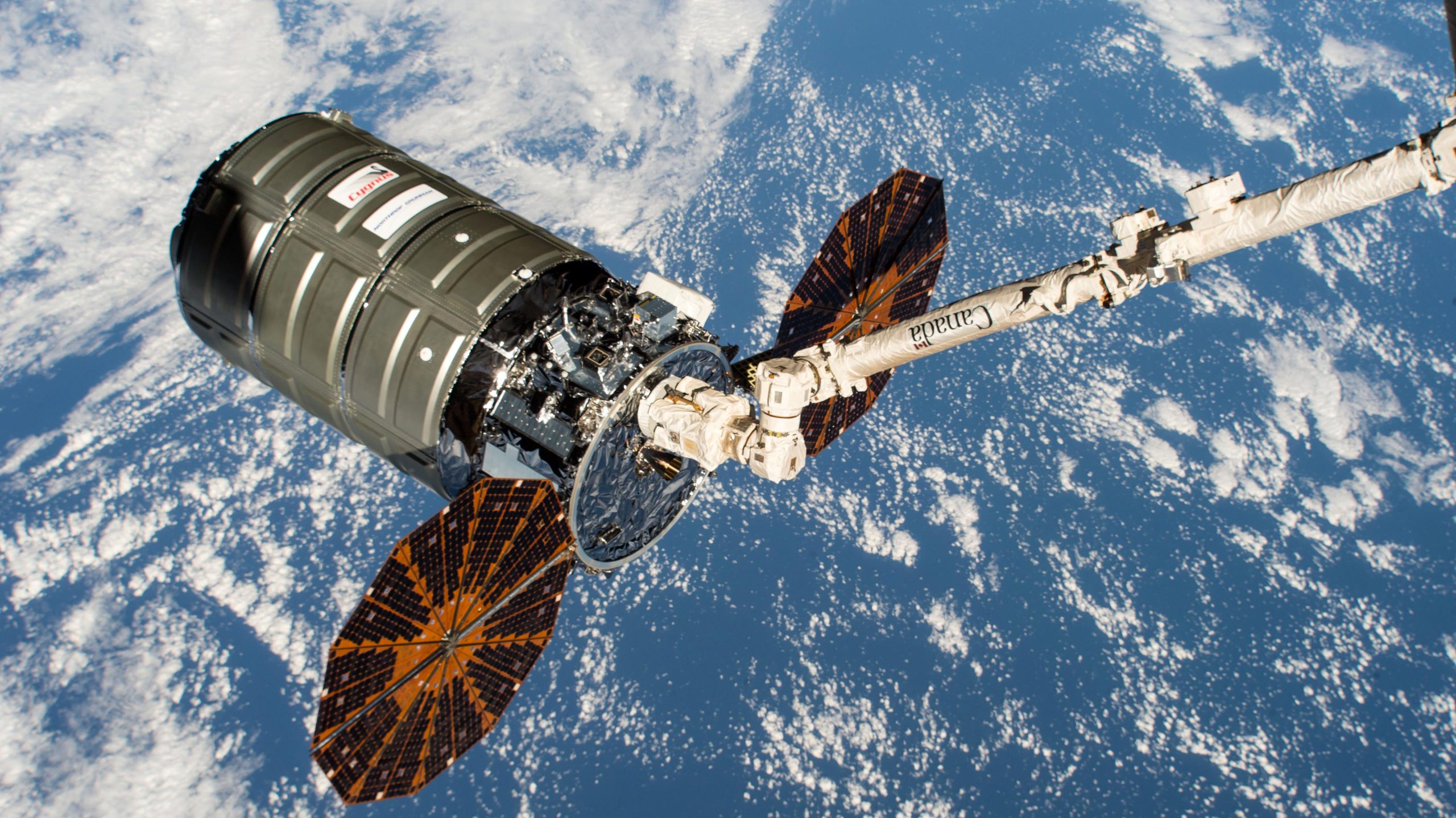
NASA is launching a prototype instrument that could make it easier to monitor volcanic activity and air quality. Perched aboard a CubeSat about 300 miles (480 kilometers) above Earth’s surface, the “Nanosat Atmospheric Chemistry Hyperspectral Observation System,” or NACHOS, will use a compact hyperspectral imager to locate sources of trace gases in areas as small as 0.15 square miles (0.4 square kilometers) – about the size of the Mall of America in Minnesota. NACHOS is part of Northrop Grumman’s 17th resupply mission to the International Space Station from NASA’s Wallops Flight Facility on Wallops Island, Virginia.
If successful, NACHOS will be the smallest, highest resolution space-based instrument dedicated to monitoring atmospheric trace gases like sulfur dioxide (SO2) and nitrogen dioxide, paving the way for future Earth-observing systems that will not only help predict volcanic eruptions, but also monitor air quality around specific cities, neighborhoods, and even individual power plants.
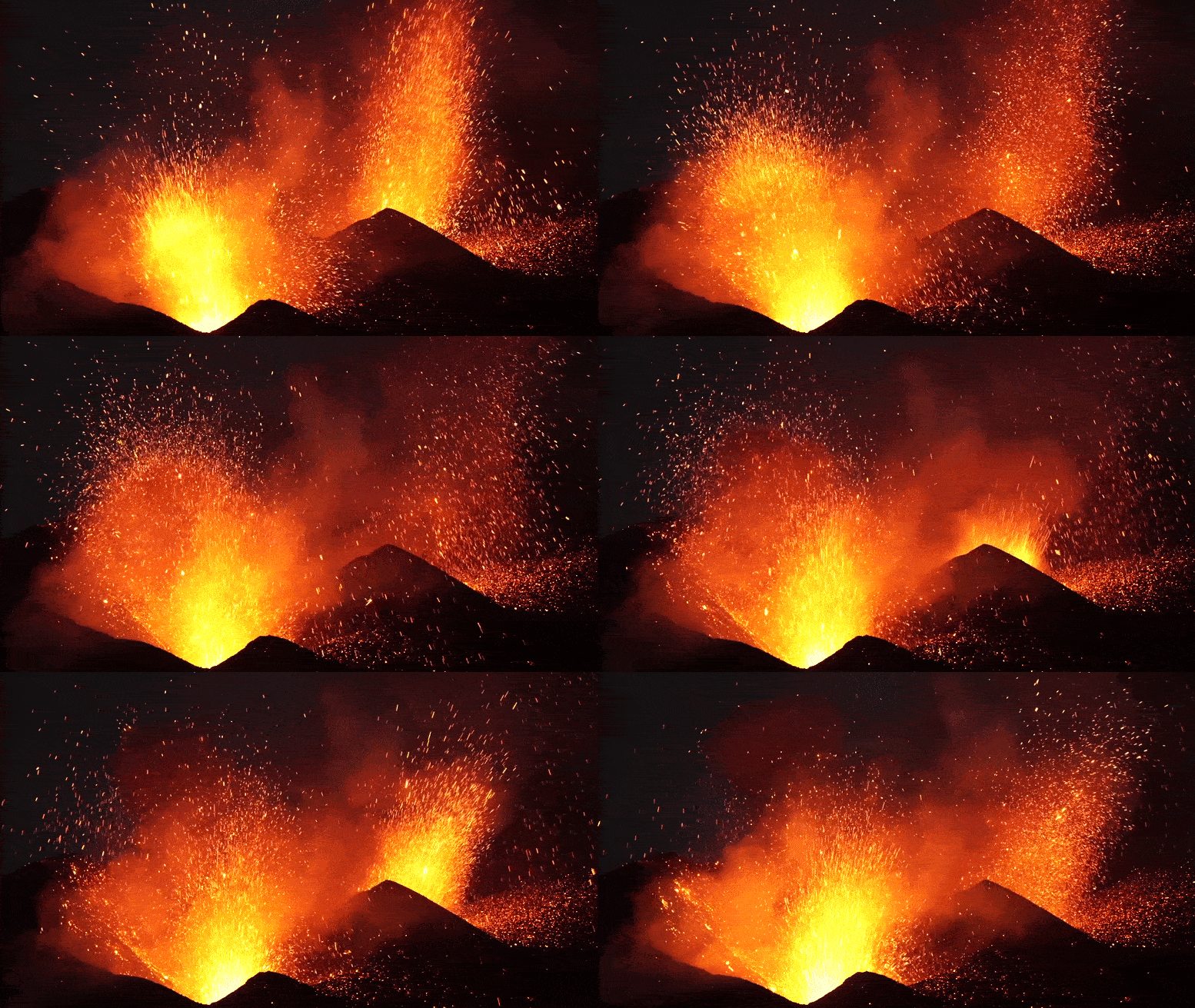
“A dormant volcano just waking up may emit SO2 before there is any detectable seismic activity. That gives us a chance to identify a potentially erupting volcano before it actually blows,” said Steve Love, a researcher and task lead with the Space and Remote Sensing Group at the Department of Energy’s Los Alamos National Laboratory (LANL).
Atmospheric trace gases from natural and human-made sources provide scientists with unique insights into a wide variety of Earth systems. For example, nitrogen dioxide, often produced by burning fossil fuels, negatively impacts human health and can serve as a tracer for carbon dioxide (a greenhouse gas that contributes to climate change) that results from human activity.
“When we recognize that these gases are present and can localize their sources on a sub-kilometer scale, we have the opportunity to take action and minimize negative health outcomes,” said Love.
But monitoring trace gases requires instruments sensitive enough to gather high-resolution data; traditionally, that’s meant creating larger satellites equipped with a full suite of powerful sensors.
“There are excellent instruments in orbit gathering data on atmospheric trace gases, but they are expensive to produce and maintain. If we want to expand this scientific capability, we’ll need a more cost-effective solution,” said Love.
Small, Cost-Effective Design with Advanced Capabilities
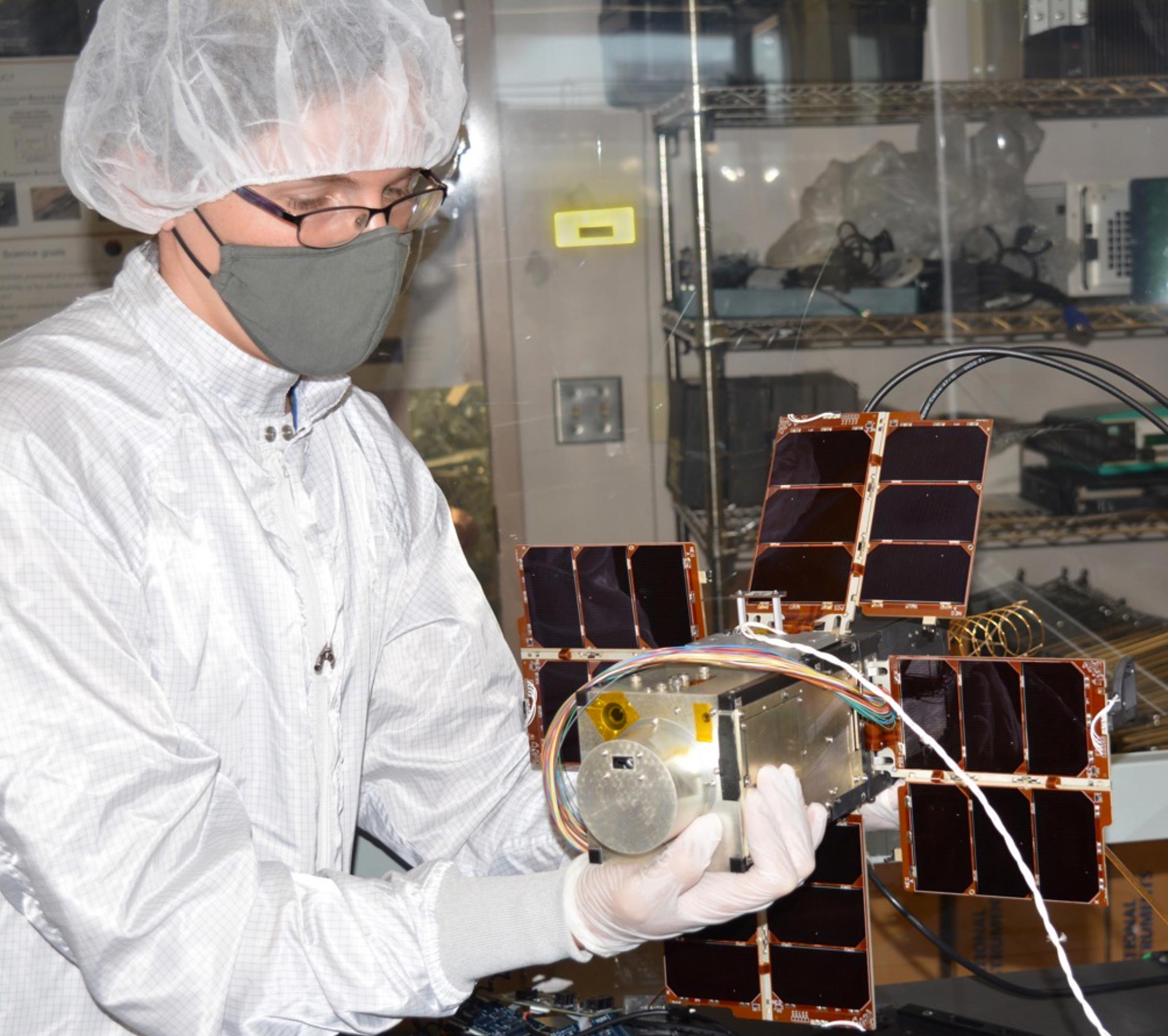
At just 13 pounds (6 kilograms) and 18 cubic inches (300 centimeters cubed), NACHOS is well qualified to become that solution. In addition to an ultra-compact hyperspectral imager capable of gathering high-resolution data, NACHOS also uses onboard processing algorithms, which reduce both the size of its data transmissions and the amount of time it takes to relay those transmissions back to Earth.
These algorithms run particularly well on small computers, giving NACHOS large amounts of computational power without increasing the instrument’s size or weight.
“More power and less weight set NACHOS apart and make it an excellent candidate for future atmospheric trace gas missions,” said Love.
NACHOS will remain aboard Northrop Grumman’s Cygnus spacecraft until May 2022, when the spacecraft will unberth from the International Space Station and place NACHOS in low-Earth orbit before the cargo spacecraft reenters Earth’s atmosphere. Love and his team will spend three months commissioning NACHOS before it begins its technology validation and science mission. He expects NACHOS to remain in orbit for about one year.
“That will give us enough time to verify our instrument design and gather enough test data to ensure our technology concept is feasible,” said Love.
A second NACHOS instrument will head to low-Earth orbit in winter of 2022 as part of the U.S. Department of Defense’s Space Test Program.
The prototype is funded through the InVEST program in NASA’s Earth Science Technology Office.
Never miss a breakthrough: Join the SciTechDaily newsletter.
Follow us on Google and Google News.