
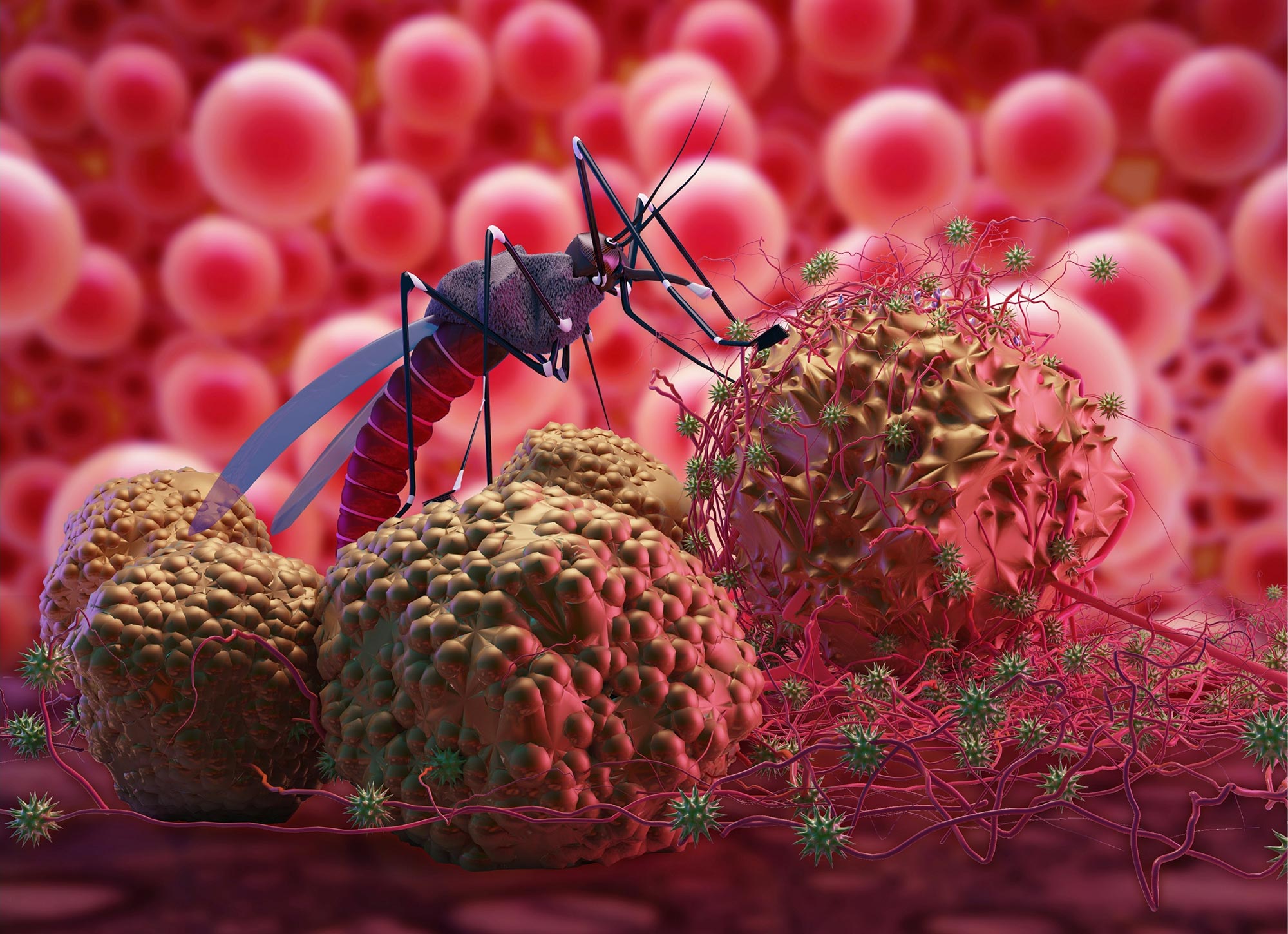
Zika virus, infamous for causing microcephaly, manipulates a host protein called ANKLE2 to assist its replication, which also affects brain development.
This process differs from other mosquito-borne viruses like dengue and yellow fever, as Zika uniquely crosses the placental barrier to harm fetuses.
Zika Virus and Microcephaly: A Dangerous Connection
The mosquito-borne Zika virus is infamous for causing microcephaly, a birth defect where abnormal brain development leads to an unusually small head. A recent study published today (January 13) in mBio reveals that Zika exploits a host protein called ANKLE2 — critical for brain development — to enhance its own reproduction. Unlike most related viruses, Zika can cross the placenta, leading to potentially devastating effects during pregnancy.
“It’s a case of Zika being in the wrong place at the wrong time,” explained Priya Shah, associate professor in the departments of Microbiology and Molecular Genetics and of Chemical Engineering at the University of California, Davis and senior author on the paper.
ANKLE2: The Host Protein Hijacked by Zika
The study also found that other mosquito-borne viruses, like dengue and yellow fever, use ANKLE2 in a similar way. This breakthrough opens up new possibilities for developing vaccines or treatments targeting these viruses.
Viruses carry only a limited set of instructions in their own genetic material, so to reproduce they rely on taking over host cell proteins and functions. Shah’s laboratory studies these interactions between virus and host.
Shah and her research team previously found that a Zika virus protein called NS4A interacts with ANKLE2 in host cells. Working in Drosophila fruit flies, they showed that this could lead to microcephaly.
ANKLE2 is known to be involved in brain development in the fetus, but is found in cells throughout the body.
Forming Virus Factories
In the new study, led by recent Ph.D. graduate Adam Fishburn, Shah’s team grew the Zika virus in human cells. Knocking out the ANKLE2 gene in these cells reduced the ability of the Zika virus to grow.
In Zika-infected cells, ANKLE2 clusters in pockets around the endoplasmic reticulum, a network used for protein production within the cell.
Viral NS4A interacts with ANKLE2 to form pockets off the endoplasmic reticulum that act as virus factories, Shah said. Bringing all the components to make viruses in one place makes replication more efficient and also helps hide the virus from the immune system.
A Clever Hiding Strategy for Viral Replication
“Our current model is that ANKLE2 is really important, but not essential, for forming these replication pockets,” Shah said.
Our cells are well equipped to fight off these viruses, but only if they can find them, Fishburn said.
“Zika and related viruses have evolved strategies to hide themselves in these replication pockets to avoid detection. We believe that ANKLE2 is hijacked to help facilitate this process, and without it the pockets don’t form as well and the immune system can keep virus replication in check,” Fishburn said.
Mosquito and Human Hosts: A Shared Target
Working with Claudia Rückert at the University of Nevada, Reno, they found that Zika virus also uses ANKLE2 when it infects mosquito cells, meaning that this interaction is important in both human and insect hosts. Finally, they showed that NS4A from other, related mosquito-borne viruses, including dengue virus and yellow fever virus, interacts with ANKLE2 in the same way. This all suggests that NS4A/ANKLE2 interaction is important for replication across a broad group of mosquito-borne viruses, opening possible routes to new drugs and vaccines for these diseases.
Why Zika Virus Causes Microcephaly While Others Don’t
If much more common viruses like dengue virus also target ANKLE2, why don’t they also cause the microcephaly seen in Zika virus infection? It’s probably all down to location. Zika virus is unusual in that it can cross the placenta and enter the fetus, where ANKLE2 is known to play a big role in brain development. Most other viruses are kept out of the fetus by the placental barrier.
Reference: “Microcephaly protein ANKLE2 promotes Zika virus replication” by Adam T. Fishburn, Cole J. Florio, Thomas N. Klaessens, Brian Prince, Neil A. B. Adia, Nicholas J. Lopez, Nitin Sai Beesabathuni, Sydney S. Becker, Liubov Cherkashchenko, Sophia T. Haggard Arcé, Vivian Hoang, Traci N. Shiu, R. Blake Richardson, Matthew J. Evans, Claudia Rückert and Priya S. Shah, 13 January 2025, mBio.
DOI: 10.1128/mbio.02683-24
The work was supported by grants from the National Institutes of Health and the W. M. Keck Foundation. Additional authors on the paper are: Cole Florio, Thomas Klaessens, Neil Alvin Adia, Nicholas Lopez, Nitin Sai Beesabathuni, Sydney Becker, Liubov Cherkaschenko, Sophia Haggard Arcé, Vivian Hoang and Traci Shiu at UC Davis; Brian Prince, University of Nevada, Reno; and Blake Richardson and Matthew Evans at Icahn School of Medicine at Mount Sinai, New York.
Never miss a breakthrough: Join the SciTechDaily newsletter.
Follow us on Google and Google News.