
Close Menu
    Facebook X (Twitter) Instagram
    SciTechDaily
    • Biology
    • Chemistry
    • Earth
    • Health
    • Physics
    • Science
    • Space
    • Technology
    Facebook X (Twitter) Pinterest YouTube RSS
    SciTechDaily
    Home»Space»Hubble Telescope Image of the Week – Rings Upon Rings
    Space

    Hubble Telescope Image of the Week – Rings Upon Rings

    By Mathias Jäger, ESA/HubbleOctober 8, 2018No Comments2 Mins Read
    Facebook Twitter Pinterest Telegram LinkedIn WhatsApp Email Reddit
    Share
    Facebook Twitter LinkedIn Pinterest Telegram Email Reddit
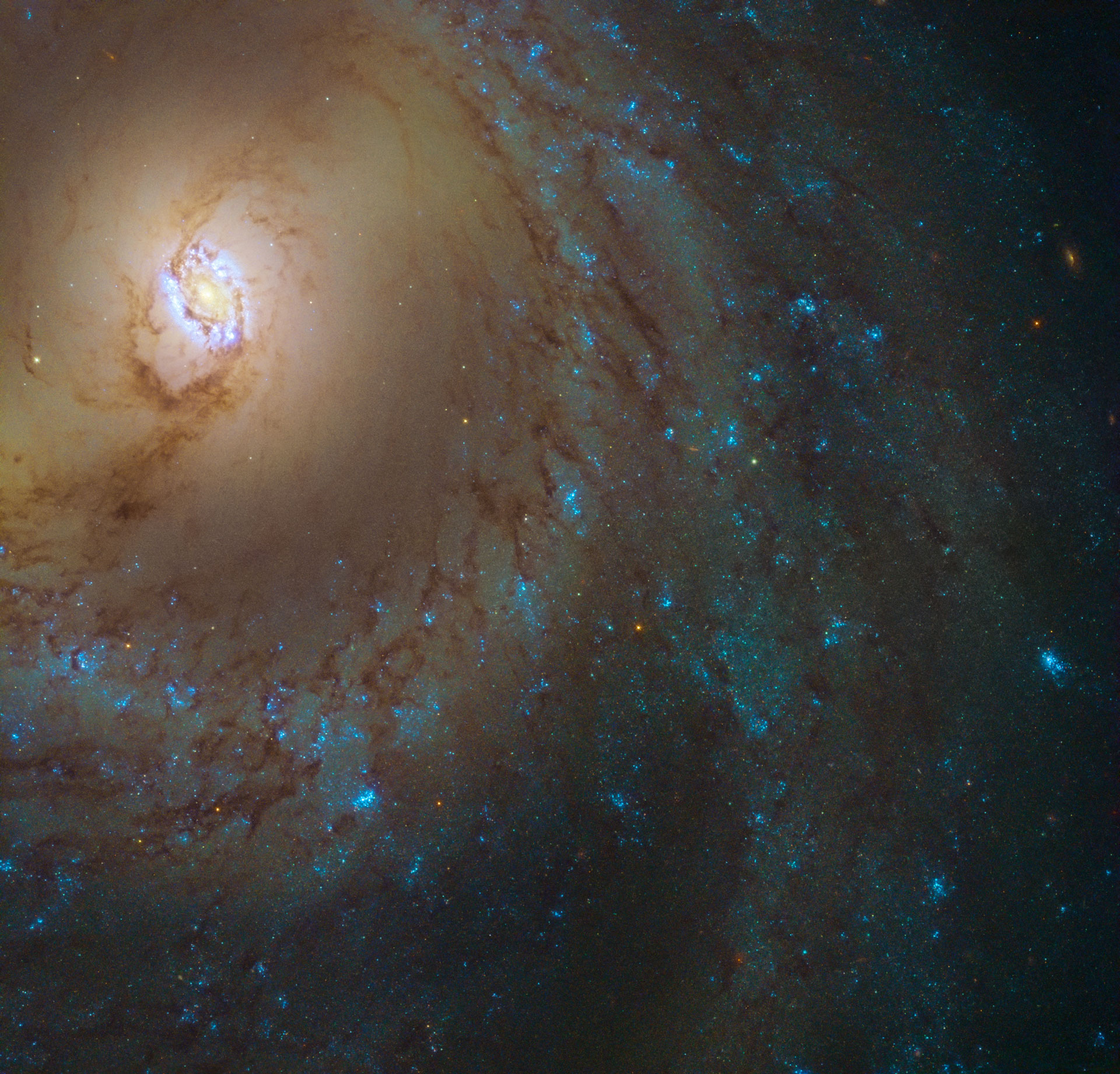
    Hubble Space Telescope Reveals Spiral Galaxy Messier 95
    This image from the NASA/ESA Hubble Space Telescope reveals a barred spiral galaxy named Messier 95 (also known as M95 or NGC 3351). Located about 35 million light-years away in the constellation of Leo (The Lion). Credit: ESA/Hubble & NASA

    This image from the NASA/ESA Hubble Space Telescope reveals a spiral galaxy named Messier 95 (also known as M95 or NGC 3351). Located about 35 million light-years away in the constellation of Leo (The Lion), this swirling spiral was discovered by astronomer Pierre Méchain in 1781, and cataloged by French astronomer Charles Messier just four days later. Messier was primarily a comet hunter, and was often left frustrated by objects in the sky that resembled comets but turned out not to be. To help other astronomers avoid confusing these objects in the future, he created his famous catalog of Messier objects.

    Most definitely not a comet, Messier 95 is actually a barred spiral galaxy. The galaxy has a bar cutting through its center, surrounded by an inner ring currently forming new stars. Also, our own Milky Way is a barred spiral.

    As well as hosting this stellar nursery, Messier 95 is a known host of the dramatic and explosive final stages in the lives of massive stars: supernovae. In March 2016 a spectacular supernova named SN 2012aw was observed in the outer regions of one of Messier 95’s spiral arms. Once the light from the supernova had faded, astronomers were able to compare observations of the region before and after the explosion to find out which star had “disappeared” — the progenitor star. In this case, the star was an especially huge red supergiant up to 26 times more massive than the Sun.

    Never miss a breakthrough: Join the SciTechDaily newsletter.
    Follow us on Google and Google News.

    Astronomy Hubble Space Telescope
    Share. Facebook Twitter Pinterest LinkedIn Email Reddit

    Related Articles

    A Morphing Spiral Galaxy Amongst Friends

    Hubble Views Magnificent Lopsided Galaxy NGC 2276

    Hubble Captures Fantastic Detail of Eponymous Spiral Galaxy NGC 691

    Spectacular Image Captured by Hubble Shows a Strangely Contorted Spiral Galaxy

    A Distant Spiral in Virgo: Extraordinary Detail Seen in a Galaxy 150 Million Light-Years Away From Earth

    Magnetic Monsters: Hubble Tracks Down Location of Mysterious Radio Signals From Intergalactic Space

    A Menagerie of Galaxies: Hubble Captures a Cluster With Galaxies of All Shapes and Sizes

    How Habitable Are Planets That Orbit Red Dwarfs – The Most Common Type of Stars in the Galaxy?

    Cosmic Silver Lining: Hubble Spots V565 Surrounded by Four Prominent Diffraction Spikes

    Leave A Reply Cancel Reply

    • Facebook
    • Twitter
    • Pinterest
    • YouTube

    Don't Miss a Discovery

    Subscribe for the Latest in Science & Tech!

    Trending News

    New “Nanozyme Hypothesis” Could Rewrite the Story of Life’s Origins

    Anatomy Isn’t Finished: The Human Body Still Holds Secrets

    “Pretty Close to Home”: The Hidden Earthquake Threat Beneath Seattle

    The Surprising Reason You Might Want To Sleep Without a Pillow

    Scientists Say This Natural Hormone Reverses Obesity by Targeting the Brain

    35-Million-Year-Old Mystery: Strange Arachnid Discovered Preserved in Amber

    Is AI Really Just a Tool? It Could Be Altering How You See Reality

    JWST Reveals a “Forbidden” Planet With a Baffling Composition

    Follow SciTechDaily
    • Facebook
    • Twitter
    • YouTube
    • Pinterest
    • Newsletter
    • RSS
    SciTech News
    • Biology News
    • Chemistry News
    • Earth News
    • Health News
    • Physics News
    • Science News
    • Space News
    • Technology News
    Recent Posts
    • Scientists Finally Crack the 100-Million-Year Evolutionary Mystery of Squid and Cuttlefish
    • This Algae Could One Day Pull Microplastics out of Your Drinking Water
    • Scientists Can Now Read Your Body Clock From a Single Hair
    • Beyond “Safe Levels”: Study Challenges What We Know About Pesticides and Cancer
    • Researchers Have Found a Dietary Compound That Increases Longevity
    Copyright © 1998 - 2026 SciTechDaily. All Rights Reserved.
    • Science News
    • About
    • Contact
    • Editorial Board
    • Privacy Policy
    • Terms of Use

    Type above and press Enter to search. Press Esc to cancel.