
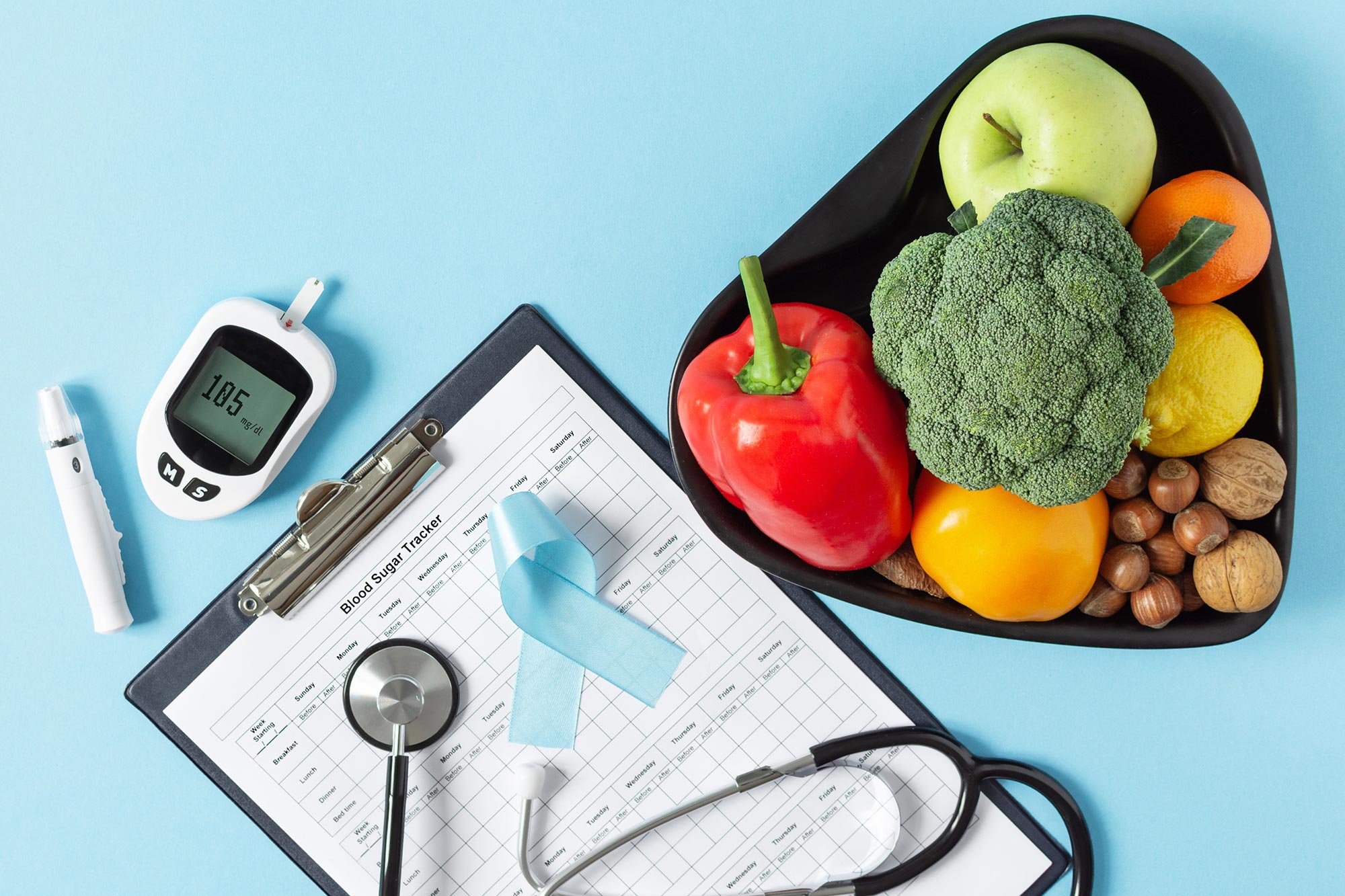
Study of rigorous trial shows mixed results, suggests need to keep examining how nutrition can combat a pervasive disease.
How much can healthy eating improve a case of diabetes? A new healthcare program attempting to treat diabetes by means of improved nutrition shows a very modest impact, according to the first fully randomized clinical trial on the subject.
The study, co-authored by MIT health care economist Joseph Doyle of the MIT Sloan School of Management, tracks participants in an innovative program that provides healthy meals in order to address diabetes and food insecurity at the same time. The experiment focused on Type 2 diabetes, the most common form.
Clinical Trial Findings and Implications
The program involved people with high blood sugar levels, in this case an HbA1c hemoglobin level of 8.0 or more. Participants in the clinical trial who were given food to make 10 nutritious meals per week saw their hemoglobin A1c levels fall by 1.5 percentage points over six months. However, trial participants who were not given any food had their HbA1c levels fall by 1.3 percentage points over the same time. This suggests the program’s relative effects were limited and that providers need to keep refining such interventions.
“We found that when people gained access to [got food from] the program, their blood sugar did fall, but the control group had an almost identical drop,” says Doyle, the Erwin H. Schell Professor of Management at MIT Sloan.
Food Insecurity and Health Outcomes
Given that these kinds of efforts have barely been studied through clinical trials, Doyle adds, he does not want one study to be the last word, and hopes it spurs more research to find methods that will have a large impact. Additionally, programs like this also help people who lack access to healthy food in the first place by dealing with their food insecurity.
“We do know that food insecurity is problematic for people, so addressing that by itself has its own benefits, but we still need to figure out how best to improve health at the same time if it is going to be addressed through the health care system,” Doyle adds.
Research Methodology and Participant Demographics
The paper, “The Effect of an Intensive Food-as-Medicine Program on Health and Health Care Use: A Randomized Clinical Trial,” was published recently in JAMA Internal Medicine.
The authors are Doyle; Marcella Alsan, a professor of public policy at Harvard Kennedy School; Nicholas Skelley, a predoctoral research associate at MIT Sloan Health Systems Initiative; Yutong Lu, a predoctoral technical associate at MIT Sloan Health Systems Initiative; and John Cawley, a professor in the Department of Economics and the Department of Policy Analysis and Management at Cornell University and co-director of Cornell’s Institute on Health Economics, Health Behaviors and Disparities.
Study Execution and Results
To conduct the study, the researchers partnered with a large health care provider in the Mid-Atlantic region of the U.S., which has developed food-as-medicine programs. Such programs have become increasingly popular in health care, and could apply to treating diabetes, which involves elevated blood sugar levels and can create serious or even fatal complications. Diabetes affects about 10 percent of the adult population.
The study consisted of a randomized clinical trial of 465 adults with Type 2 diabetes, centered in two locations within the network of the health care provider. One location was part of an urban area, and the other was rural. The study took place from 2019 through 2022, with a year of follow-up testing beyond that. People in the study’s treatment group were given food for 10 healthy meals per week for their families over a six-month period, and had opportunities to consult with a nutritionist and nurses as well. Participants from both the treatment and control groups underwent periodic blood testing.
Analyzing the Program’s Effectiveness
Adherence to the program was very high. Ultimately, however, the reduction in blood sugar levels experienced by people in the treatment group was only marginally bigger than that of people in the control group.
Those results leave Doyle and his co-authors seeking to explain why the food intervention didn’t have a bigger relative impact. In the first place, he notes, there could be some basic reversion to the mean in play — some people in the control group with high blood sugar levels were likely to improve that even without being enrolled in the program.
Future Directions and the Role of Meal Preparation
“If you examine people on a bad health trajectory, many will naturally improve as they take steps to move away from this danger zone, such as moderate changes in diet and exercise,” Doyle says.
Moreover, because the healthy eating program was developed by a health care provider staying engaged with all the participants, people in the control group may have still benefitted from medical engagement and thus fared better than a control group without such health care access.
It is also possible the COVID-19 pandemic, unfolding during the experiment’s time frame, affected the outcomes in some way, although results were similar when they examined outcomes prior to the pandemic. Or it could be that the intervention’s effects might appear over a still-longer time frame.
And while the program provided food, it left it to participants to prepare meals, which might be a hurdle for program compliance. Potentially, premade meals might have a bigger impact.
“Experimenting with providing those premade meals seems like a natural next step,” says Doyle, who emphasizes that he would like to see more research about food-as-medicine programs aiming at diabetes, especially if such programs evolve and try to some different formats and features.
“When you find a particular intervention doesn’t improve blood sugar, we don’t just say, we shouldn’t try at all,” Doyle says. “Our study definitely raises questions, and gives us some new answers we haven’t seen before.”
Reference: “Effect of an Intensive Food-as-Medicine Program on Health and Health Care Use: A Randomized Clinical Trial” by Joseph Doyle, Marcella Alsan, Nicholas Skelley, Yutong Lu and John Cawley, 26 December 2023, JAMA Internal Medicine.
DOI: 10.1001/jamainternmed.2023.6670
Support for the study came from the Robert Wood Johnson Foundation; the Abdul Latif Jameel Poverty Action Lab (J-PAL); and the MIT Sloan Health Systems Initiative. Outside the submitted work, Cawley has reported receiving personal fees from Novo Nordisk, Inc, a pharmaceutical company that manufactures diabetes medication and other treatments.
Never miss a breakthrough: Join the SciTechDaily newsletter.
Follow us on Google and Google News.
1 Comment
I thought food and diet was the primary cause of type 2 diabetes.
How in the heck would it be considered “medicine” to treat it?
Eat right and you wont ever get type 2 diabetes.