
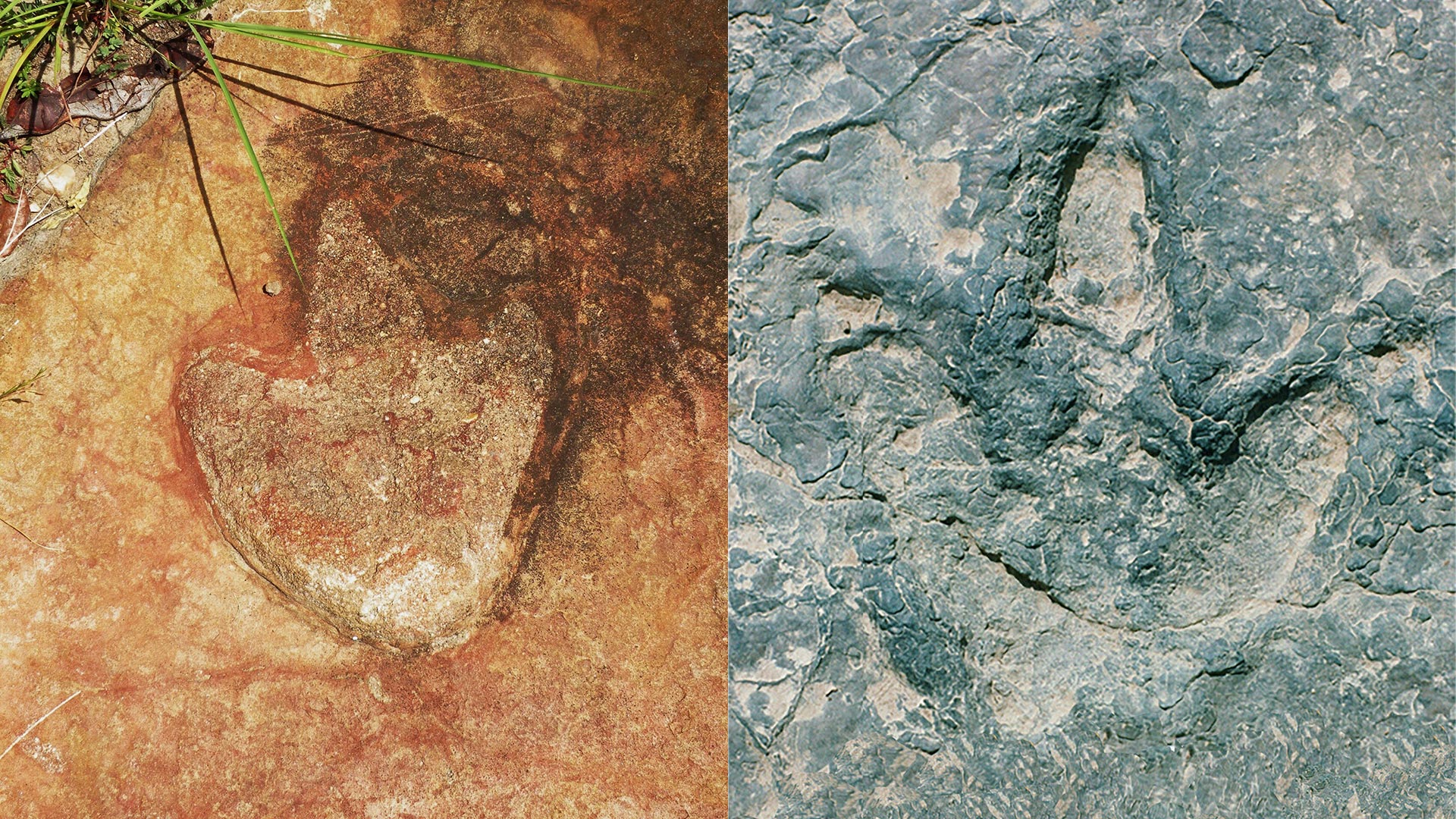
A groundbreaking study has unveiled a set of nearly identical Early Cretaceous dinosaur footprints on two separate continents, illustrating a prehistoric connection between South America and Africa.
These findings provide compelling evidence of a narrow land bridge that allowed dinosaurs to migrate between these continents before they drifted apart, forming the South Atlantic Ocean.
Discovery of Dinosaur Footprints Links Continents
An international team of researchers led by Southern Methodist University (SMU) paleontologist Louis L. Jacobs has found matching sets of Early Cretaceous dinosaur footprints on what are now two different continents.
More than 260 footprints were discovered in Brazil and in Cameroon, showing where land-dwelling dinosaurs were last able to freely cross between South America and Africa millions of years ago before the two continents split apart.
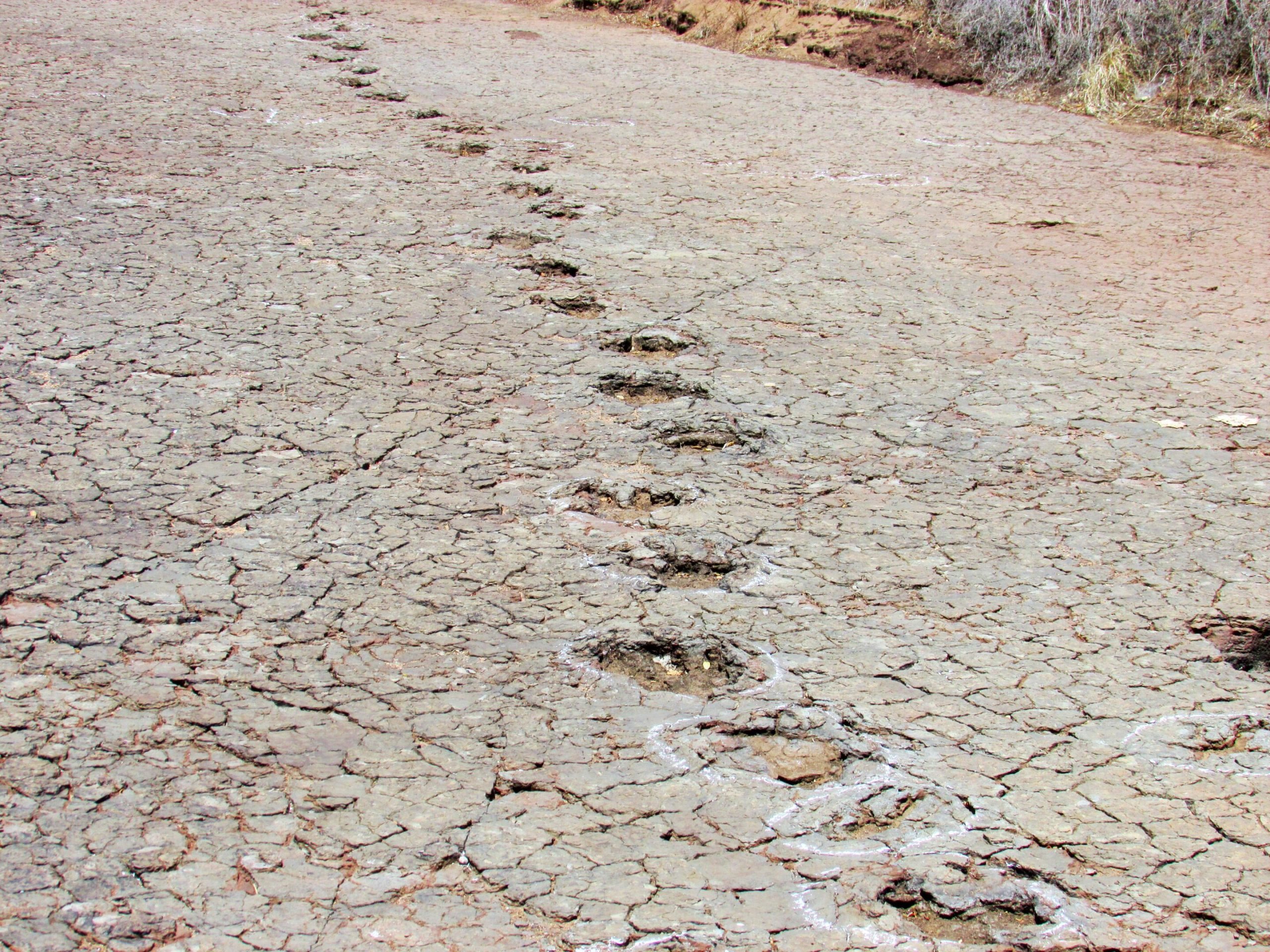
Basin preserved in floodplain deposits of Lower Cretaceous. Credit: Ismar de Souza Carvalho
“We determined that in terms of age, these footprints were similar,” Jacobs said. “In their geological and plate tectonic contexts, they were also similar. In terms of their shapes, they are almost identical.”
The footprints, impressed into mud and silt along ancient rivers and lakes, were found more than 3,700 miles, or 6,000 kilometers, away from each other. Dinosaurs made the tracks 120 million years ago on a single supercontinent known as Gondwana – which broke off from the larger landmass of Pangea, Jacobs said.
Narrow Connection Facilitated Dinosaur Migration
“One of the youngest and narrowest geological connections between Africa and South America was the elbow of northeastern Brazil nestled against what is now the coast of Cameroon along the Gulf of Guinea,” Jacobs explained. “The two continents were continuous along that narrow stretch, so that animals on either side of that connection could potentially move across it.”
Most of the dinosaur fossils were created by three-toed theropod dinosaurs.. A few were also likely made by sauropods or ornithischians, said Diana P. Vineyard, who is a research associate at SMU and co-author of the study.
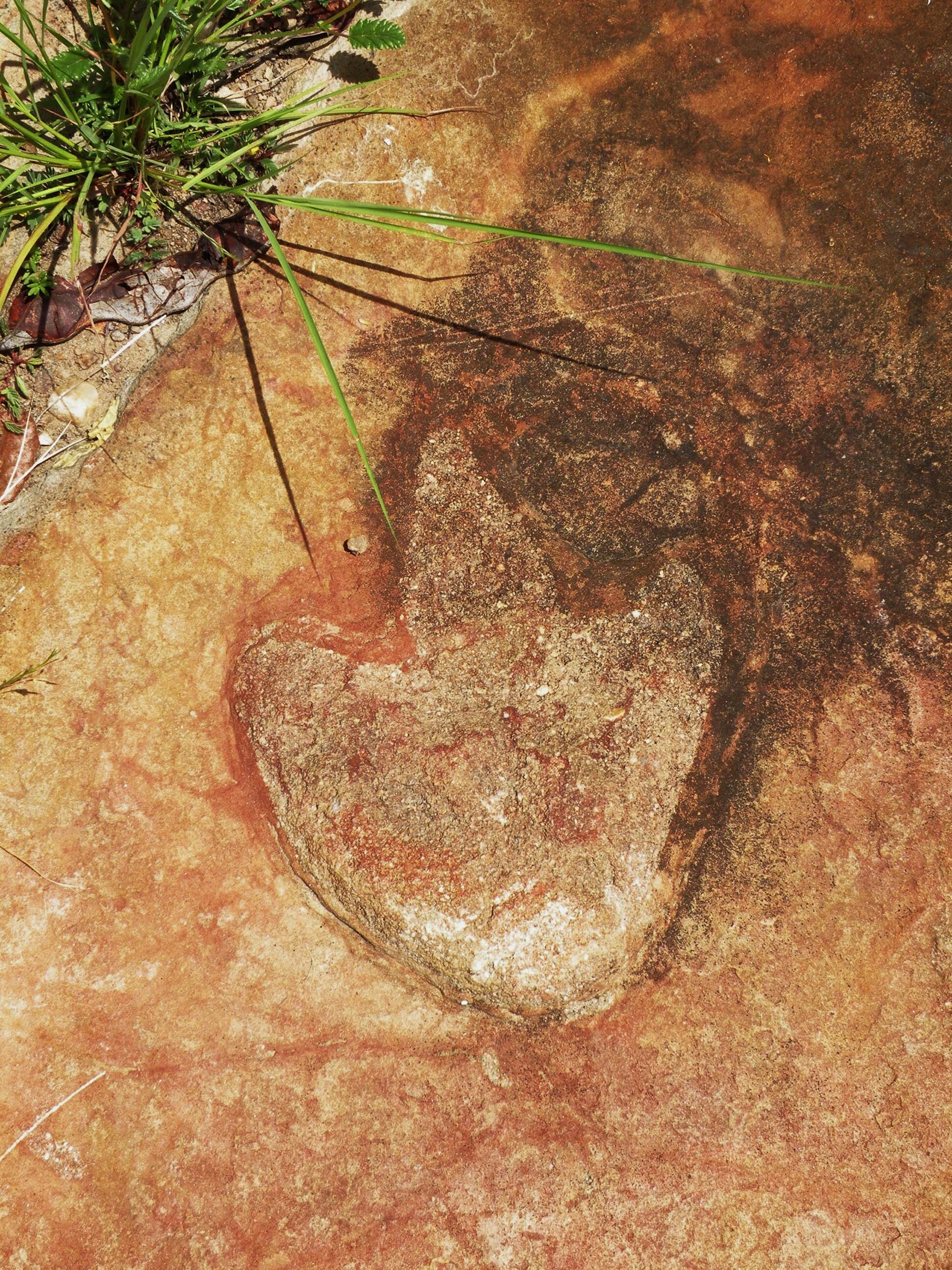
Northeastern Brazil. Credit: Ismar de Souza Carvalho
Other co-authors of the study were Lawrence J. Flynn in the Department of Human Evolutionary Biology at Harvard University, Christopher R. Scotese in the Department of Earth and Planetary Sciences at Northwestern University and Ismar de Souza Carvalho at the Universidade Federal do Rio de Janeiro and Centro de Geociências.
The study was published by New Mexico Museum of Natural History & Science in a tribute to the late paleontologist Martin Lockley, who spent much of his career studying dinosaurs tracks and footprints.
Dinosaur Footprints Tell the Whole Story
Africa and South America started to split around 140 million years ago, causing gashes in Earth’s crust called rifts to open up along pre-existing weaknesses. As the tectonic plates beneath South America and Africa moved apart, magma from the Earth’s mantle rose to the surface, creating new oceanic crust as the continents moved away from each other. And eventually, the South Atlantic Ocean filled the void between these two newly-shaped continents.
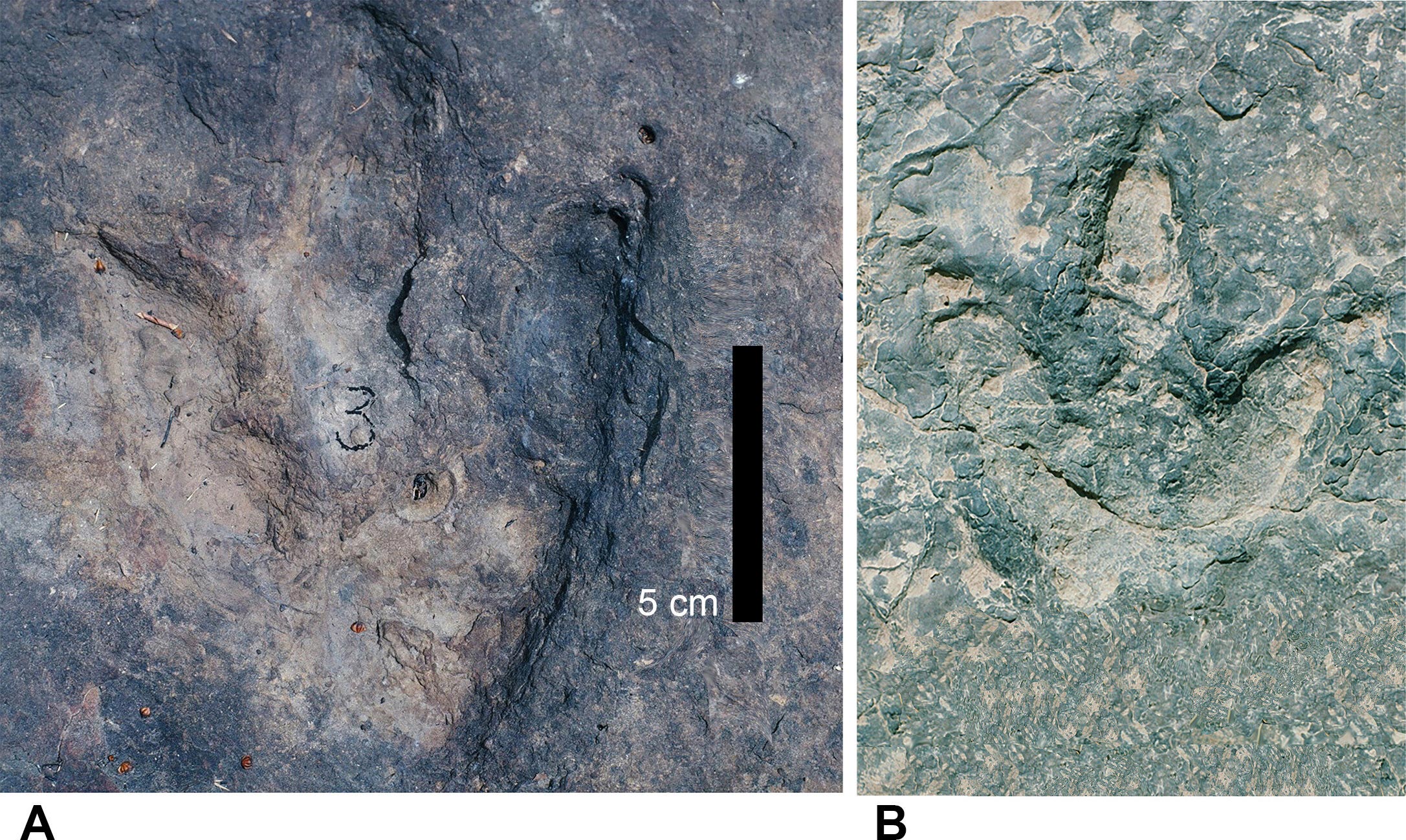
Signs of some of those major events were evident between both locations where the dinosaur footprints were found – at the Borborema region in the northeast part of Brazil and the Koum Basin in northern Cameroon. Half-graben basins – geologic structures formed during rifting as the Earth’s crust pulls apart and faults form – are found in both areas and contain ancient river and lake sediments. Along with dinosaur tracks, these sediments contain fossil pollen that indicate an age of 120 million years.
Before the continental connection between Africa and South America was severed, “rivers flowed and lakes formed in the basins” Jacobs said. “Plants fed the herbivores and supported a food chain. Muddy sediments left by the rivers and lakes contain dinosaur footprints, including those of meat-eaters, documenting that these river valleys could provide specific avenues for life to travel across the continents 120 million years ago.”
Never miss a breakthrough: Join the SciTechDaily newsletter.
Follow us on Google and Google News.
1 Comment
In 1951 I was in third grade, and Mrs. Daily didn’t agree with me that continental drift had occurred, causing any bright, bored child contemplating the ubiquitous World Map on every grade school wall to conclude the two continents had been connected. Thus was born my healthy cynicism on the subject of “adults”; knowledge and Science that I retain to this day. Equally clear to me is this thought:
WE ARE ALL EARTHLINGS AND NOBODY IS AN ALIEN.
PUT THAT IN YOUR PIPE AND SMOKE IT..