
Close Menu
    Facebook X (Twitter) Instagram
    SciTechDaily
    • Biology
    • Chemistry
    • Earth
    • Health
    • Physics
    • Science
    • Space
    • Technology
    Facebook X (Twitter) Pinterest YouTube RSS
    SciTechDaily
    Home»Space»NASA’s Cassini Spacecraft Views Dione for the Last Time
    Space

    NASA’s Cassini Spacecraft Views Dione for the Last Time

    By Preston Dyches, Jet Propulsion LaboratoryAugust 21, 2015No Comments4 Mins Read
    Facebook Twitter Pinterest Telegram LinkedIn WhatsApp Email Reddit
    Share
    Facebook Twitter LinkedIn Pinterest Telegram Email Reddit
    Cassini's Fina View of Dione
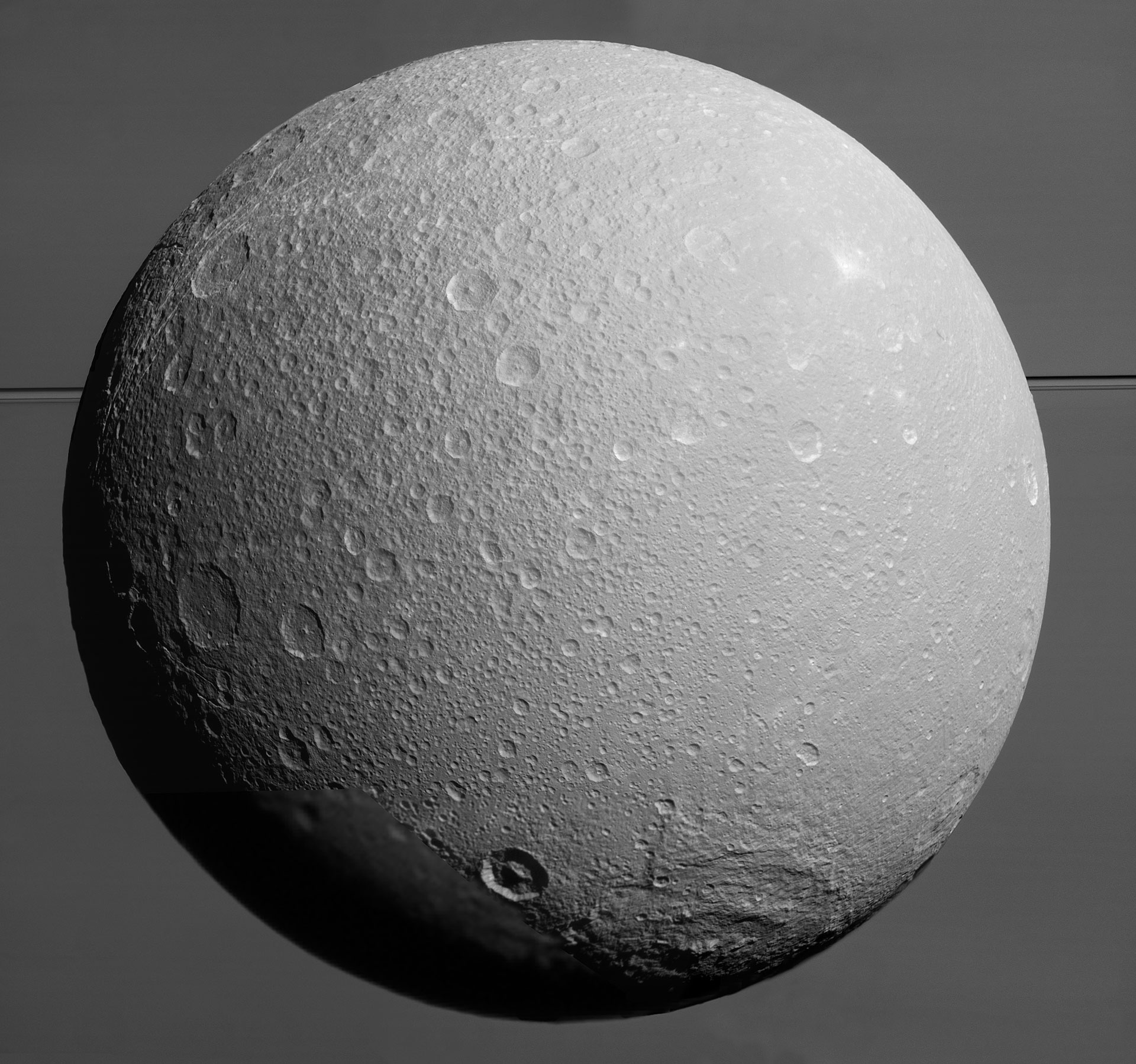
    This view from NASA’s Cassini spacecraft looks toward Saturn’s icy moon Dione, with giant Saturn and its rings in the background, just prior to the mission’s final close approach to the moon on August 17, 2015. Credit: NASA/JPL-Caltech/Space Science Institute

    NASA’s Cassini Spacecraft has captured new images of Saturn’s moon Dione during its last close approach to the small, icy world. Two of the new images show the surface of Dione at the best resolution ever.

    Cassini passed 295 miles (474 kilometers) above Dione’s surface at 11:33 a.m. PDT (2:33 p.m. EDT) on August 17. This was the fifth close encounter with Dione during Cassini’s long tour at Saturn. The mission’s closest-ever flyby of Dione was in December 2011, at a distance of 60 miles (100 kilometers).

    The full set of images released today is available at: http://photojournal.jpl.nasa.gov/keywords/flyby

    “I am moved, as I know everyone else is, looking at these exquisite images of Dione’s surface and crescent, and knowing that they are the last we will see of this far-off world for a very long time to come,” said Carolyn Porco, Cassini imaging team lead at the Space Science Institute, Boulder, Colorado. “Right down to the last, Cassini has faithfully delivered another extraordinary set of riches. How lucky we have been.”

    Raw, unprocessed images from the flyby are available at: http://saturn.jpl.nasa.gov/mission/flybys/dione20150817/
    Cassini's Closest Views of Dione II
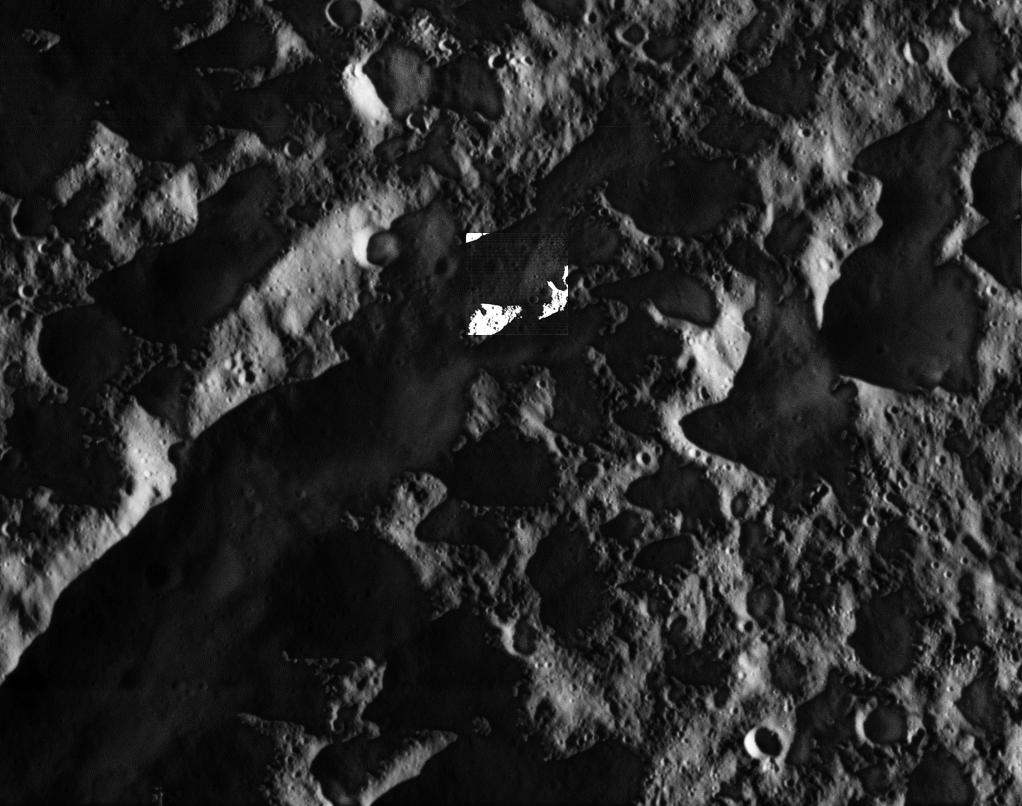
    As Cassini soared above high northern latitudes on Saturn’s moon Dione, the spacecraft looked down at a region near the day-night boundary. This view shows the region as a contrast-enhanced image in which features in shadow are illuminated by reflected light from Saturn. Credit: NASA/JPL-Caltech/Space Science Institute

    The main scientific focus of this flyby was gravity science, not imaging. This made capturing the images tricky, as Cassini’s camera was not controlling where the spacecraft pointed.

    “We had just enough time to snap a few images, giving us nice, high resolution looks at the surface,” said Tilmann Denk, a Cassini participating scientist at Freie University in Berlin. “We were able to make use of reflected sunlight from Saturn as an additional light source, which revealed details in the shadows of some of the images.”

    Cassini scientists will study data from the gravity science experiment and magnetosphere and plasma science instruments over the next few months as they look for clues about Dione’s interior structure and processes affecting its surface.

    Only a handful of close flybys of Saturn’s large, icy moons remain for Cassini. The spacecraft is scheduled to make three approaches to the geologically active moon Enceladus on October 14 and 28, and December 19. During the October 28 flyby, the spacecraft will come dizzyingly close to Enceladus, passing a mere 30 miles (49 kilometers) from the surface. Cassini will make its deepest-ever dive through the moon’s plume of icy spray at this time, collecting valuable data about what’s going on beneath the surface. The December Enceladus encounter will be Cassini’s final close pass by that moon, at an altitude of 3,106 miles (4,999 kilometers).

    After December, and through the mission’s conclusion in late 2017, there are a handful of distant flybys planned for Saturn’s large, icy moons at ranges of less than about 30,000 miles (50,000 kilometers). Cassini will, however, make nearly two dozen passes by a menagerie of Saturn’s small, irregularly shaped moons — including Daphnis, Telesto, Epimetheus, and Aegaeon — at similar distances during this time. These passes will provide some of Cassini’s best-ever views of the little moons.

    During the mission’s final year – called its Grand Finale – Cassini will repeatedly dive through the space between Saturn and its rings.

    Never miss a breakthrough: Join the SciTechDaily newsletter.
    Follow us on Google and Google News.

    Astronomy Cassini-Huygens Mission Dione NASA Planetary Science Saturn
    Share. Facebook Twitter Pinterest LinkedIn Email Reddit

    Related Articles

    Dione Divided – Dione Appears Cut in Two By Saturn’s Rings

    Cassini Views Dione and Enceladus

    Cassini Spacecraft Will Make Last Close Flyby of Dione in August

    NASA Detects Ocean Inside Saturn’s Moon Enceladus

    Cassini Reveals Clues about Saturn’s Moon Titan

    Massive Saturn Storm Churns Up Water Ice from Great Depths

    Cassini Views a Spinning Vortex at Saturn’s North Pole

    Cassini Observes Meteors Colliding With Saturn’s Rings

    Storm Spawns the Largest Tropospheric Vortex Ever Seen on Saturn

    Leave A Reply Cancel Reply

    • Facebook
    • Twitter
    • Pinterest
    • YouTube

    Don't Miss a Discovery

    Subscribe for the Latest in Science & Tech!

    Trending News

    One of the Universe’s Largest Stars May Be Getting Ready To Explode

    Scientists Discover Enzyme That Could Supercharge Ozempic-Like Weight Loss Drugs

    Popular Sweetener Linked to DNA Damage – “It’s Something You Should Not Be Eating”

    Ancient “Rock” Microbes May Reveal How Complex Life Began

    Researchers Capture Quantum Interference in One of Nature’s Rarest Atoms

    “A Plague Is Upon Us”: The Mass Death That Changed an Ancient City Forever

    Scientists Discover Game-Changing New Way To Treat High Cholesterol

    This Small Change to Your Exercise Routine Could Be the Secret to Living Longer

    Follow SciTechDaily
    • Facebook
    • Twitter
    • YouTube
    • Pinterest
    • Newsletter
    • RSS
    SciTech News
    • Biology News
    • Chemistry News
    • Earth News
    • Health News
    • Physics News
    • Science News
    • Space News
    • Technology News
    Recent Posts
    • New Study Challenges 40-Year Puzzle About Childhood Body Fat
    • 20-Year Study Finds Daily Multivitamins Don’t Extend Lifespan
    • Landmark Study Links Never Marrying to Significantly Higher Cancer Risk
    • Revolutionary Imaging Technique Unlocks Secrets of Matter at Extreme Speeds
    • Where Does Mass Come From? Scientists Find Evidence of a New Exotic Nuclear State
    Copyright © 1998 - 2026 SciTechDaily. All Rights Reserved.
    • Science News
    • About
    • Contact
    • Editorial Board
    • Privacy Policy
    • Terms of Use

    Type above and press Enter to search. Press Esc to cancel.