

Close Menu
    Facebook X (Twitter) Instagram
    SciTechDaily
    • Biology
    • Chemistry
    • Earth
    • Health
    • Physics
    • Science
    • Space
    • Technology
    Facebook X (Twitter) Pinterest YouTube RSS
    SciTechDaily
    Home»Health»New Hope in Alzheimer’s Fight: Researchers Identify Unique Early Biomarker
    Health

    New Hope in Alzheimer’s Fight: Researchers Identify Unique Early Biomarker

    By Institute for Bioengineering of Catalonia (IBEC)June 8, 2024No Comments4 Mins Read
    Facebook Twitter Pinterest Telegram LinkedIn WhatsApp Email Reddit
    Share
    Facebook Twitter LinkedIn Pinterest Telegram Email Reddit
    Old Man Alzheimer's Treatment Brain
    Researchers have identified miR-519a-3p as a potential early biomarker for Alzheimer’s, linked to prion protein expression, promising improvements in diagnosis and treatment for millions worldwide.

    This molecule is directly associated with the expression of the cellular prion protein located on the surface of nerve cells. The research, conducted by the Institute for Bioengineering of Catalonia, paves the way for early detection of Alzheimer’s disease.

    A new study conducted by the Molecular and Cellular Neurobiotechnology group at the Institute for Bioengineering of Catalonia (IBEC) and the University of Barcelona has discovered a novel biomarker for Alzheimer’s disease in its asymptomatic stages. The biomarker, miR-519a-3p, is a microRNA that is closely associated with the regulation of the cellular prion protein (PrPC). This protein is known to be deregulated in individuals afflicted with neurodegenerative conditions including Alzheimer’s disease.

    The search for biomarkers that are stable and easily detectable in biofluids, such as microRNAs, offers hope for detecting Alzheimer’s disease in its early, asymptomatic stages. Early detection could significantly improve the diagnosis and treatment of this disease, which affects more than 35 million people worldwide.
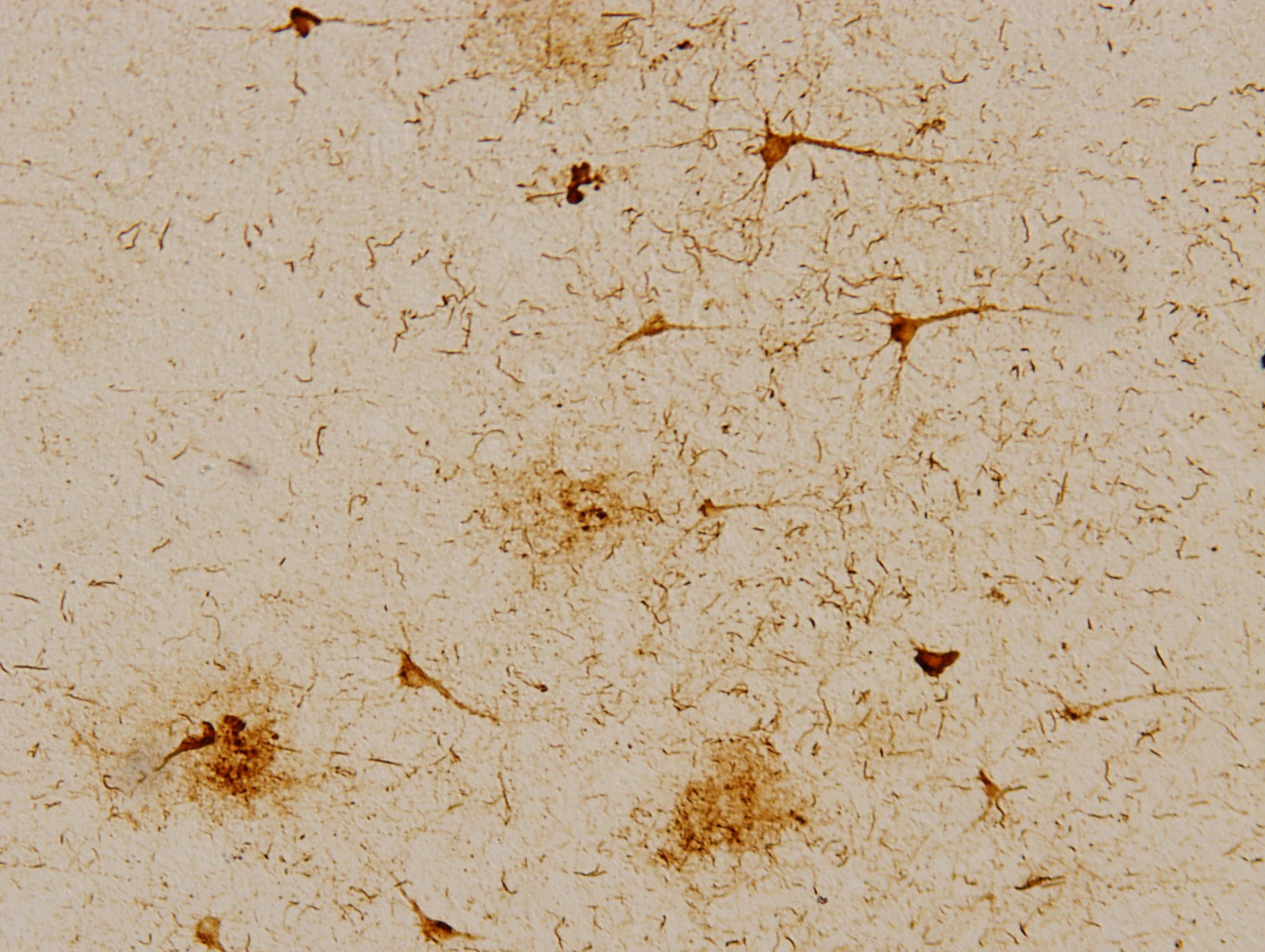
    Frontal Cortex From a Patient With Alzheimer’s Disease
    Light microscopy image of a section of post-mortem human frontal cortex from a patient with Braak grade VI (most advanced) Alzheimer’s disease. Neurons with high levels of tau protein can be seen. Credit: Institute for Bioengineering of Catalonia (IBEC)

    First link between miR-519a-3p and PrPC in Alzheimer’s disease

    The expression of some microRNAs is known to be deregulated in Alzheimer’s patients. However, this is the first time that this microRNA has been specifically linked to the decrease in cellular prion protein production during disease progression.

    “Currently, tests to diagnose Alzheimer’s disease are usually carried out after the onset of symptoms, when there is already underlying cognitive impairment. We believe that the detection of this microRNA may help to establish additional criteria for a more accurate diagnosis in the early stages of the disease,” explains IBEC principal investigator José Antonio del Río, full professor at the Faculty of Biology and the Institute of Neurosciences of the University of Barcelona (UB) and co-leader of the study.
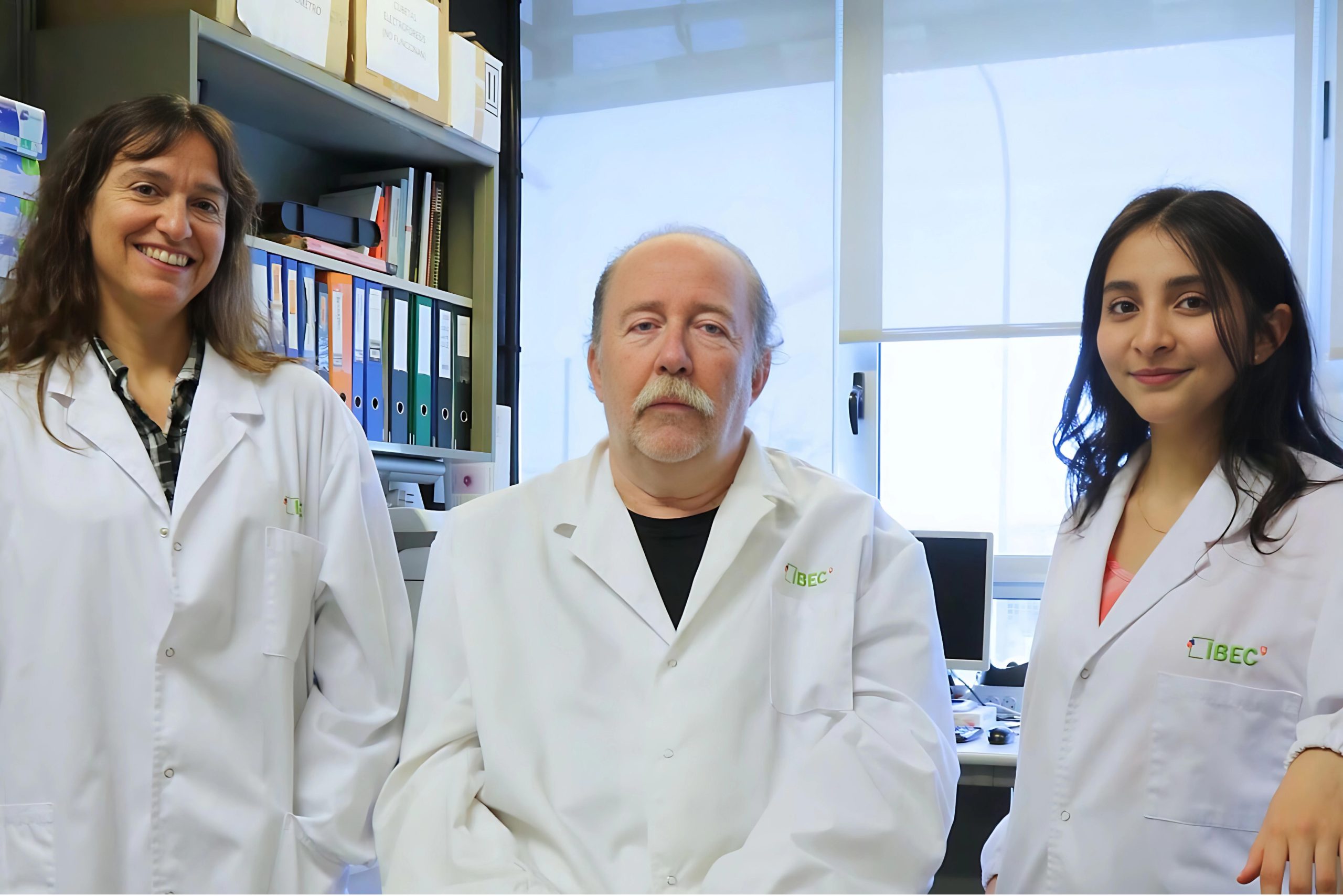
    Rosalina Gavín, José Antonio del Río and Dayaneth Jácome
    From left to right: Rosalina Gavín, José Antonio del Río and Dayaneth Jácome at IBEC laboratories. Credit: Institute for Bioengineering of Catalonia (IBEC)

    The study also comparatively analyses the presence of the biomarker in samples from other neurodegenerative diseases: “If our goal is to use miR-519a-3p as a biomarker to detect Alzheimer’s dementia in hypothetically healthy people, it is essential to ensure that its levels are not altered in other neurodegenerative diseases. In our study, we compared the levels of this biomarker in samples from other tauopathies and Parkinson’s disease, confirming that the changes in miR-519a-3p are specific to Alzheimer’s disease,” said IBEC senior researcher Rosalina Gavín, UB associate professor and co-leader of the study.

    Dayaneth Jácome, a researcher in del Río’s group and first author of the study, says that the team is making progress: The next step is to validate miR-519a-3p as a biomarker in blood samples from different cohorts of patients, in order to start using it in the clinical diagnosis of Alzheimer’s disease in peripheral samples.

    The researchers are members of the Center for Networked Biomedical Research in Neurodegenerative Diseases, CIBERNED.

    MicroRNAs: gene silencers

    The amount of cellular prion protein changes over the course of Alzheimer’s disease, with higher levels in the early stages of the disease and lower levels as the disease progresses. Although the mechanism responsible for these changes is not known in detail, it has been observed that certain microRNAs bind to a specific region of the PRNP gene that controls PrPC expression, reducing it. For this reason, and based on comparisons of previous studies and computational analyses in various genomic databases, the researchers selected the microRNA miR-519a-3p for their study.

    Reference: “miR-519a-3p, found to regulate cellular prion protein during Alzheimer’s disease pathogenesis, as a biomarker of asymptomatic stages” by Dayaneth Jácome, Tiziana Cotrufo, Pol Andrés-Benito, Laia Lidón, Eulàlia Martí, Isidre Ferrer, José Antonio del Río and Rosalina Gavín, 21 April 2024, Biochimica et Biophysica Acta (BBA) – Molecular Basis of Disease.
    DOI: 10.1016/j.bbadis.2024.167187

    Never miss a breakthrough: Join the SciTechDaily newsletter.
    Follow us on Google and Google News.

    Alzheimer's Disease Biomarkers Brain Dementia
    Share. Facebook Twitter Pinterest LinkedIn Email Reddit

    Related Articles

    New Blood Test Detects Alzheimer’s With Over 90% Accuracy

    Blood Test Predicts Dementia up to 10 Years in Advance, Study Finds

    USC Researchers Uncover Hidden “Brain Drain” Responsible for Vascular Dementia

    Scientists Have Discovered New Pathways of Alzheimer’s Disease

    Statins Used to Lower Cholesterol Linked to Doubled Risk of Developing Dementia

    “Cognitive Clock” – Researchers Develop New Measure of Brain Health

    Eating Just One Serving of Processed Meat a Day Could Increase Dementia Risk by 44%

    Identifying “The Terrorist Inside My Husband’s Brain” – Living Brain Imaging Can Clearly Differentiate Between Types of Dementia

    Promising Dementia Vaccine Draws Closer

    Leave A Reply Cancel Reply

    • Facebook
    • Twitter
    • Pinterest
    • YouTube

    Don't Miss a Discovery

    Subscribe for the Latest in Science & Tech!

    Trending News

    Mezcal “Worm” in a Bottle Mystery: DNA Testing Reveals a Surprise

    New Research Reveals That Your Morning Coffee Activates an Ancient Longevity Switch

    This Is What Makes You Irresistible to Mosquitoes

    Shockingly Powerful Giant Octopuses Ruled the Seas 100 Million Years Ago

    Scientists Stunned by New Organic Molecules Found on Mars

    Rewriting Dinosaur Evolution: Scientists Unearth Remarkable 150-Million-Year-Old Stegosaur Skull

    Omega-3 Supplements Linked to Cognitive Decline in Surprising New Study

    First-of-Its-Kind Discovery: Homer’s Iliad Found Embedded in a 1,600-Year-Old Egyptian Mummy

    Follow SciTechDaily
    • Facebook
    • Twitter
    • YouTube
    • Pinterest
    • Newsletter
    • RSS
    SciTech News
    • Biology News
    • Chemistry News
    • Earth News
    • Health News
    • Physics News
    • Science News
    • Space News
    • Technology News
    Recent Posts
    • Male Birth Control Breakthrough: Scientists Find Way To Turn Sperm Production Off and Back On
    • A Common Vitamin Could Hold the Key to Treating Fatty Liver Disease
    • New Research Shows Vitamin B12 May Hold the Key to Healthy Aging
    • Scientists Map Thousands of Brain Connections With RNA Barcodes
    • This Gene Tweak Turns Strawberries Into Healthier, Tastier Superfruit
    Copyright © 1998 - 2026 SciTechDaily. All Rights Reserved.
    • Science News
    • About
    • Contact
    • Editorial Board
    • Privacy Policy
    • Terms of Use

    Type above and press Enter to search. Press Esc to cancel.