
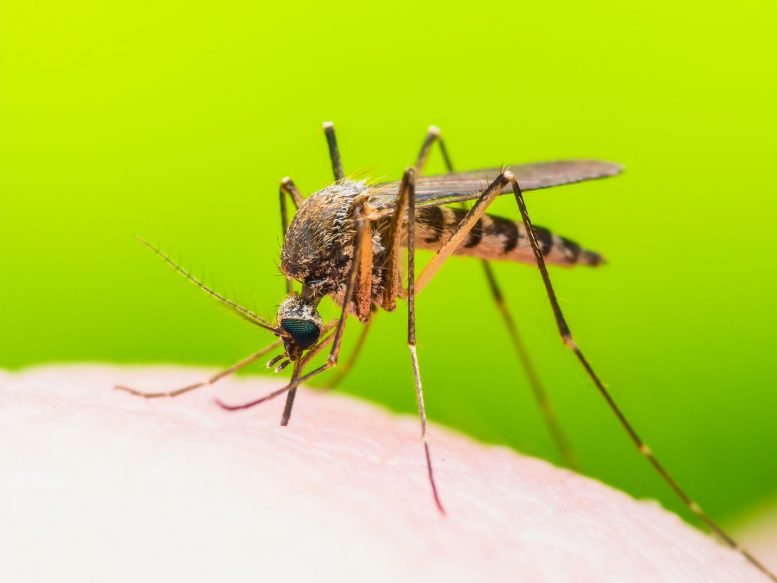
Recent advancements allow for novel approaches against an old enemy.
Scientists from the Walter Reed Army Institute of Research and Naval Medical Research Center partnered with researchers at the University of Pennsylvania and Acuitas Therapeutics to develop a novel vaccine based on mRNA technology that protects against malaria in animal models, publishing their findings in npj Vaccines.
In 2019, there were an estimated 229 million cases of malaria and 409,000 deaths globally, creating an extraordinary cost in terms of human morbidity, mortality, economic burden, and regional social stability. Worldwide, Plasmodium falciparum is the parasite species that causes the vast majority of deaths. Those at the highest risk of severe disease include pregnant women, children, and malaria naïve travelers. Malaria countermeasures development has historically been a priority research area for the Department of Defense as the disease remains a top threat to U.S. military forces deployed to endemic regions.
A safe, effective malaria vaccine has long been an elusive target for scientists. The most advanced malaria vaccine is RTS,S, a first-generation product developed in partnership with WRAIR. RTS,S is based on the circumsporozoite protein of P. falciparum, the most dangerous and widespread species of malaria parasite. While RTS,S is an impactful countermeasure in the fight against malaria, field studies have revealed limited sterile efficacy and duration of protection. The limitations associated with RTS,S and other first-generation malaria vaccines have led scientists to evaluate new platforms and second-generation approaches for malaria vaccines.
mRNA Technology Offers a New Path Forward
“Recent successes with vaccines against COVID-19 highlight the advantages of mRNA-based platforms — notably highly targeted design, flexible and rapid manufacturing, and ability to promote strong immune responses in a manner not yet explored,” said Dr. Evelina Angov, a researcher at WRAIR’s Malaria Biologics Branch and senior author on the paper. “Our goal is to translate those advances to a safe, effective vaccine against malaria.”
Like RTS,S, the vaccine relies on P. falciparum’s circumsporozoite protein to elicit an immune response. However, rather than administering a version of the protein directly, this approach uses mRNA — accompanied by a lipid nanoparticle that protects from premature degradation and helps stimulate the immune system — to prompt cells to code for circumsporozoite protein themselves. Those proteins then trigger a protective response against malaria but cannot actually cause infection.
“Our vaccine achieved high levels of protection against malaria infection in mice,” said Katherine Mallory, a WRAIR researcher at the time of the article’s submission and lead author on the paper. “While more work remains before clinical testing, these results are an encouraging sign that an effective, mRNA-based malaria vaccine is achievable.”
Reference: “Messenger RNA expressing PfCSP induces functional, protective immune responses against malaria in mice” by Katherine L. Mallory, Justin A. Taylor, Xiaoyan Zou, Ishita N. Waghela, Cosette G. Schneider, Michael Q. Sibilo, Neeraja M. Punde, Leah C. Perazzo, Tatyana Savransky, Martha Sedegah, Sheetij Dutta, Chris J. Janse, Norbert Pardi, Paulo J. C. Lin, Ying K. Tam, Drew Weissman and Evelina Angov, 18 June 2021, npj Vaccines.
DOI: 10.1038/s41541-021-00345-0
Research was conducted under an approved animal use protocol in an AAALAC International- accredited facility in compliance with the Animal Welfare Act and other federal statutes and regulations relating to animals and experiments involving animals and adheres to principles stated in the Guide for the Care and Use of Laboratory Animals, NRC Publication, 2011 edition.
Never miss a breakthrough: Join the SciTechDaily newsletter.
Follow us on Google and Google News.