
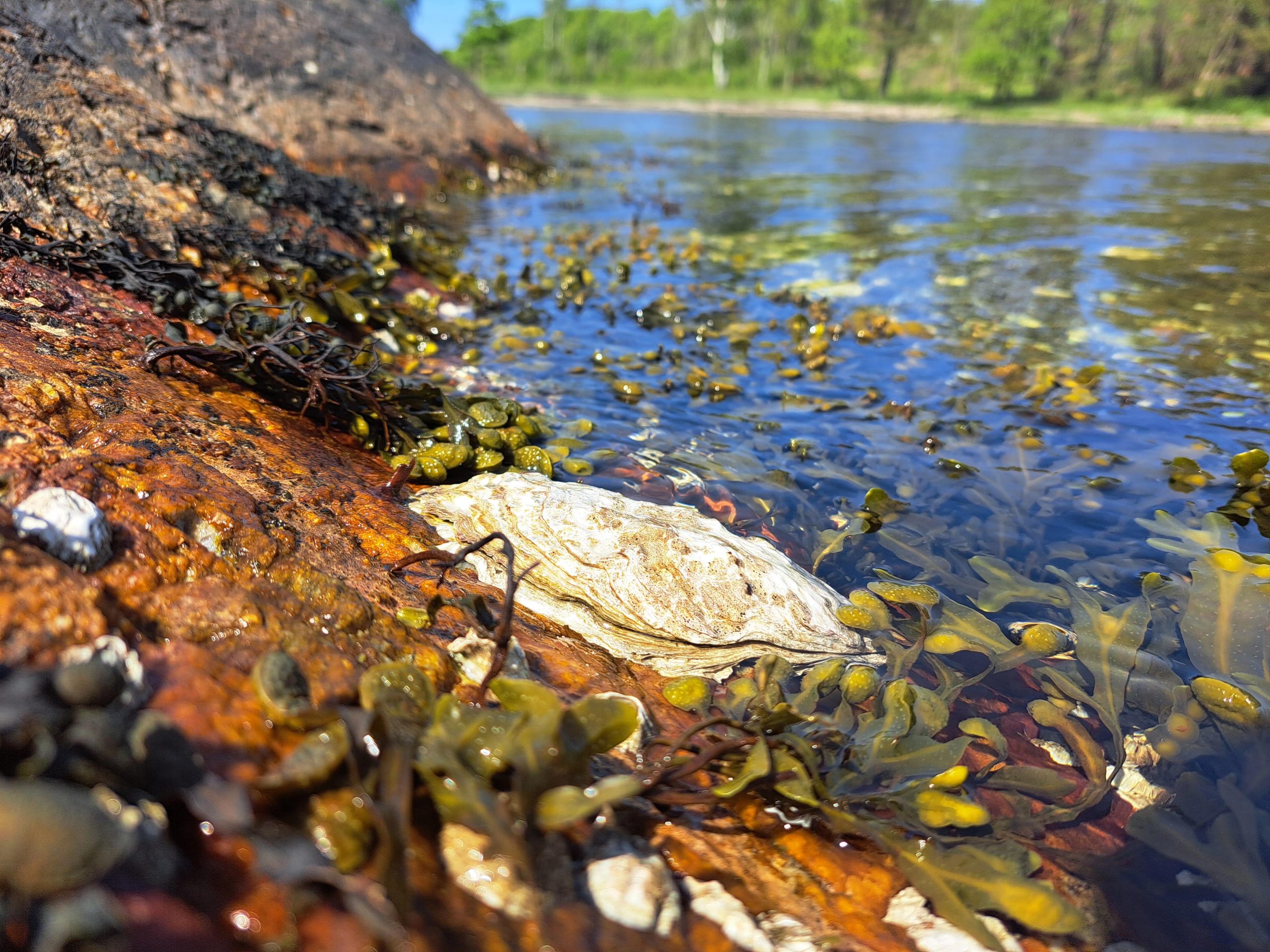
Pacific oysters are adapting to less salty waters and may soon spread into the Baltic Sea, aided by warmer seas and genetic traits.
Pacific oysters, an invasive species, have successfully adapted to the lower salinity of waters off the coast of Skåne and are now reproducing there, despite having been present for less than a decade. This finding, reported by researchers at the University of Gothenburg, suggests the species could potentially colonize the western Baltic Sea.
Originally introduced to European oyster farms in the 1970s to replace declining native oyster populations, Pacific oysters soon began spreading beyond aquaculture facilities. They reached northern Bohuslän, Sweden, by 2006 and have since migrated south along the Swedish west coast, now appearing as far south as the Öresund (the Sound).
Until recently, scientists believed that the Baltic Sea’s low salinity would act as a natural barrier to the species’ further spread. However, the new study indicates that Pacific oysters can adapt quickly to brackish conditions, raising the possibility of continued expansion into the Baltic.
“We know today that the oysters in the Sound are able to reproduce and that their larvae can be transported into the Baltic Sea by ocean currents, but we don’t know if they also can adapt to the brackish living conditions there,” says Pierre De Wit, researcher in marine biology at the University of Gothenburg.

Spreading helped by warmer seas
As early as the 1970s, attempts were made to cultivate Pacific oysters in Sweden, but they failed to reproduce, probably due to the water being too cold. Pacific oysters need water temperatures above 20 degrees Celsius during a period of time to reach maturity, and it was only in the 2000s that this became regular in Swedish waters.
Now, oysters reproduce every summer in Sweden. A single female can release hundreds of millions of eggs, and the larvae drift with ocean currents for 2-3 weeks, allowing them to spread very quickly.
A combination of environment and genetics
The authors of the study crossbred female and male oysters in waters with different salinities, from Baltic Sea salinity (8 parts per thousand) to full marine salinity (33 parts per thousand).
Oysters collected from the waters of Hallands Väderö in Skåne were able to reproduce well down to 13 parts per thousand, while oysters from Bohuslän could not cope with salinities lower than 18 parts per thousand. The study showed that the oysters’ ability to reproduce depends on a combination of the oysters’ breeding habitat and their genetics. In the lowest salinities, genetics was the most important factor.
“We don’t know how low salinity a Pacific oyster will need to reproduce in the future. But much suggests that they have genes that allow them to tolerate even more brackish water than today,” says Alexandra Kinnby, researcher in marine biology at the University of Gothenburg and first author of the study.
Sperms are important
Pacific oysters have external fertilization – eggs and sperm are released in open water by the adults, and the sperm must then find the eggs and fertilize them. But the sperms are sensitive to factors such as temperature and salinity. In the new study, the researchers show that the genetic diversity of sperm in certain key genes determines whether oysters can reproduce in low salinity.
“It’s still unclear whether the oysters will be able to establish in the Baltic Sea, or what will happen to the larvae when they drift in that direction. Will they drift back towards land again with the currents or will they remain far at sea? We don’t have those answers yet,” says Pierre De Wit.
Reference: “The Roles of Plasticity and Selection in Rapid Phenotypic Changes at the Pacific Oyster Invasion Front in Europe” by Alexandra Kinnby, Chloé Robert, Jonathan N. Havenhand, Göran Broström, Luc Bussière and Pierre De Wit, 7 February 2025, Molecular Ecology.
DOI: 10.1111/mec.17684
Never miss a breakthrough: Join the SciTechDaily newsletter.
Follow us on Google and Google News.