
Close Menu
    Facebook X (Twitter) Instagram
    SciTechDaily
    • Biology
    • Chemistry
    • Earth
    • Health
    • Physics
    • Science
    • Space
    • Technology
    Facebook X (Twitter) Pinterest YouTube RSS
    SciTechDaily
    Home»Health»Research Shows High Effectiveness of Mix-and-Match COVID-19 Vaccines
    Health

    Research Shows High Effectiveness of Mix-and-Match COVID-19 Vaccines

    By Umea UniversityOctober 17, 2021No Comments3 Mins Read
    Facebook Twitter Pinterest Telegram LinkedIn WhatsApp Email Reddit
    Share
    Facebook Twitter LinkedIn Pinterest Telegram Email Reddit
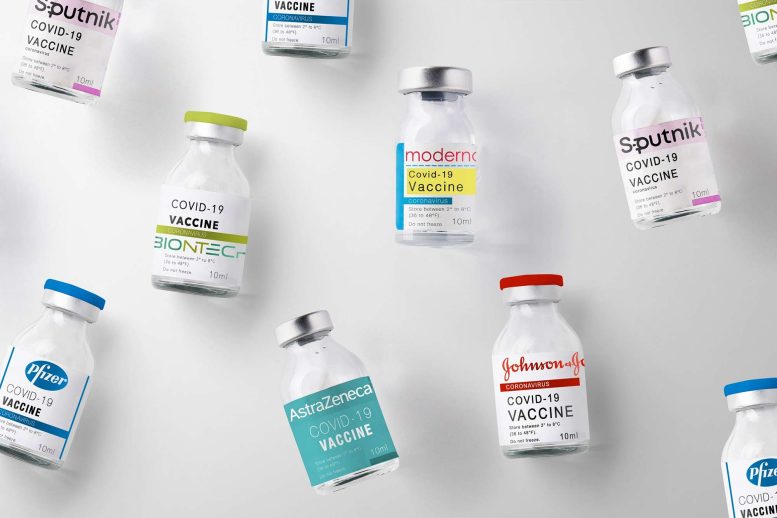
    Compare Different COVID Vaccines
    Mix-and-match COVID-19 vaccine schedules produce a strong immune response.

    People who had received a first dose of the Oxford-AstraZeneca COVID-19 vaccine and received an mRNA vaccine for their second dose had a lower risk of infection compared to people who had received both doses of the Oxford-AstraZeneca vaccine. This is shown in a nationwide study performed by researchers at Umeå University, Sweden.

    “Having received any of the approved vaccines is better compared to no vaccine, and two doses are better than one,” says Peter Nordström, professor of geriatric medicine at Umeå University. “However, our study shows a greater risk reduction for people who received an mRNA vaccine after having received a first dose of a vector-based, as compared to people having received the vector-based vaccine for both doses.”

    Since the use of Oxford-AstraZeneca’s vector-based vaccine against COVID-19 was halted for people younger than 65 years of age, all individuals who had already received their first dose of this vaccine were recommended an mRNA vaccine as their second dose.

    Peter Nordström
    Professor and senior consultant (attending) physician Department of Community Medicine and Rehabilitation, Unit of Geriatric Medicine Umeå University. Credit: Mattias Pettersson

    During a 2.5-month average follow-up period after the second dose, the study showed a 67% lower risk of infection for the combination of Oxford-AstraZeneca + Pfizer-BioNTech, and a 79% lower risk for Oxford/AstraZeneca + Moderna, both compared to unvaccinated individuals. For people having received two doses of the Oxford-AstraZeneca vaccine, the risk reduction was 50%.

    These risk estimates were observed after accounting for differences regarding date of vaccination, age of the participants, socioeconomic status, and other risk factors for COVID-19. Importantly, the estimates of effectiveness apply to infection with the Delta variant, which was dominating the confirmed cases during the follow-up period.

    There was a very low incidence of adverse thromboembolic events for all vaccine schedules. The number of COVID-19 cases severe enough to result in inpatient hospitalization was too low for the researchers to be able to calculate the effectiveness against this outcome.

    Marcel Ballin
    Marcel Ballin Doctoral student Department of Community Medicine and Rehabilitation, Unit of Geriatric Medicine Umeå University. Credit: Mattias Pettersson

    Previous research has demonstrated that mix-and-match vaccine schedules generate a robust immune response. However, it has been unclear to which extent these schedules may reduce the risk of clinical infection. This is the knowledge gap which the new study conducted by the Umeå researchers aimed to fill. The study is based on nationwide registry data from the Public Health Agency of Sweden, the National Board of Health and Welfare, and Statistics Sweden. In the main analysis, about 700,000 individuals were included.

    “The results of the study may have implications for vaccination strategies in different countries,” says Marcel Ballin, doctoral student in geriatric medicine at Umeå University and co-author of the study. “The World Health Organization has stated that despite the promising results from previous studies regarding immune response from mix-and-match vaccination, there is a need for larger studies to investigate their safety and effectiveness against clinical outcomes. Here we now have one such study.”

    Reference: “Effectiveness of heterologous ChAdOx1 nCoV-19 and mRNA prime-boost vaccination against symptomatic Covid-19 infection in Sweden: A nationwide cohort study” by Peter Nordström, Marcel Ballin and Anna Nordström, 18 October 2021, The Lancet Regional Health – Europe.
    DOI: 10.1016/j.lanepe.2021.100249

    Never miss a breakthrough: Join the SciTechDaily newsletter.
    Follow us on Google and Google News.

    COVID-19 Immunology Infectious Diseases Public Health Umea University Vaccine
    Share. Facebook Twitter Pinterest LinkedIn Email Reddit

    Related Articles

    Vaccinated? Here’s How Your Life May Change After Getting the COVID-19 Vaccine

    Experts Warn: Vaccines Alone May Not Be Enough to End COVID-19 Pandemic

    Single Dose of Pfizer RNA Vaccine Acts As “Booster” in Those With Prior COVID-19 Infection

    New Results From Monkeys Infected With SARS-CoV-2 Suggest COVID-19 Vaccines Will Be Successful

    Why Declining Antibodies Don’t Spell Disaster for Long-Lasting COVID-19 Immunity

    Real Hope for Vaccine Longevity: New Data Reveals COVID Immunity Lasts Up to 8 Months

    Long-Lived Antibodies Detected in Both Blood and Saliva of Patients With COVID-19

    Research Shows Exposure to Common Cold Coronaviruses Can Teach the Immune System to Recognize SARS-CoV-2

    Common Molecular Feature of Antibodies That Neutralize SARS-CoV-2 Discovered, Boosting COVID-19 Vaccine Prospects

    Leave A Reply Cancel Reply

    • Facebook
    • Twitter
    • Pinterest
    • YouTube

    Don't Miss a Discovery

    Subscribe for the Latest in Science & Tech!

    Trending News

    Monster Storms on Jupiter Unleash Lightning Beyond Anything on Earth

    Scientists Create “Liquid Gears” That Spin Without Touching

    The Simple Habit That Could Help Prevent Cancer

    Millions Take These IBS Drugs, But a New Study Finds Serious Risks

    Scientists Unlock Hidden Secrets of 2,300-Year-Old Mummies Using Cutting-Edge CT Scanner

    Bread Might Be Making You Gain Weight Even Without Eating More Calories

    Scientists Discover Massive Magma Reservoir Beneath Tuscany

    Europe’s Most Active Volcano Just Got Stranger – Here’s Why Scientists Are Rethinking It

    Follow SciTechDaily
    • Facebook
    • Twitter
    • YouTube
    • Pinterest
    • Newsletter
    • RSS
    SciTech News
    • Biology News
    • Chemistry News
    • Earth News
    • Health News
    • Physics News
    • Science News
    • Space News
    • Technology News
    Recent Posts
    • Scientists Were Wrong About This Strange “Rule-Breaking” Particle
    • Webb Space Telescope Uncovers Unexpected Ice Clouds on a Jupiter-Like World
    • 289-Million-Year-Old Reptile Mummy Reveals Origin of Human Breathing System
    • New Brain Discovery Challenges Long-Held Theory of Teenage Brain Development
    • Sharks Are Overheating as Warming Oceans Push Them to the Edge
    Copyright © 1998 - 2026 SciTechDaily. All Rights Reserved.
    • Science News
    • About
    • Contact
    • Editorial Board
    • Privacy Policy
    • Terms of Use

    Type above and press Enter to search. Press Esc to cancel.