

Homo bodoensis is a newly named ancestor species aimed at resolving confusion in Middle Pleistocene human evolution. The species, based on fossils from Africa and Southeast Europe, is proposed to be a direct ancestor of modern humans.
An international team of researchers, led by University of Winnipeg paleoanthropologist Dr. Mirjana Roksandic, has announced the naming of a new species of human ancestor, Homo bodoensis. This species lived in Africa during the Middle Pleistocene, around half a million years ago, and was the direct ancestor of modern humans.
The Middle Pleistocene (now renamed Chibanian and dated to 774,000-129,000 years ago) is important because it saw the rise of our own species (Homo sapiens) in Africa, our closest relatives, and the Neanderthals (Homo neanderthalensis) in Europe.
However, human evolution during this age is poorly understood, a problem that paleoanthropologists call “the muddle in the middle.” The announcement of Homo bodoensis hopes to bring some clarity to this puzzling but important chapter in human evolution.
The new name is based on a reassessment of existing fossils from Africa and Eurasia from this time period. Traditionally, these fossils have been variably assigned to either Homo heidelbergensis or Homo rhodesiensis, both of which carried multiple, often contradictory definitions.

“Talking about human evolution during this time period became impossible due to the lack of proper terminology that acknowledges human geographic variation,” according to Roksandic, lead author on the study.
Recently, DNA evidence has shown that some fossils in Europe called H. heidelbergensis were actually early Neanderthals, making the name redundant. For the same reason, the name needs to be abandoned when describing fossil humans from East Asia, according to co-author Xiu-Jie Wu (Institute of Vertebrate Paleontology and Paleoanthropology, Beijing, China).
Why “Rhodesiensis” Is Abandoned
Further muddling the narrative, African fossils dated to this period have been called at times both H. heidelbergensis and H. rhodesiensis. H. rhodesiensis is poorly defined and the name has never been widely accepted. This is partly due to its association with Cecil Rhodes and the horrendous crimes carried out during colonial rule in Africa – an unacceptable honor in light of the important work being done toward decolonizing science.
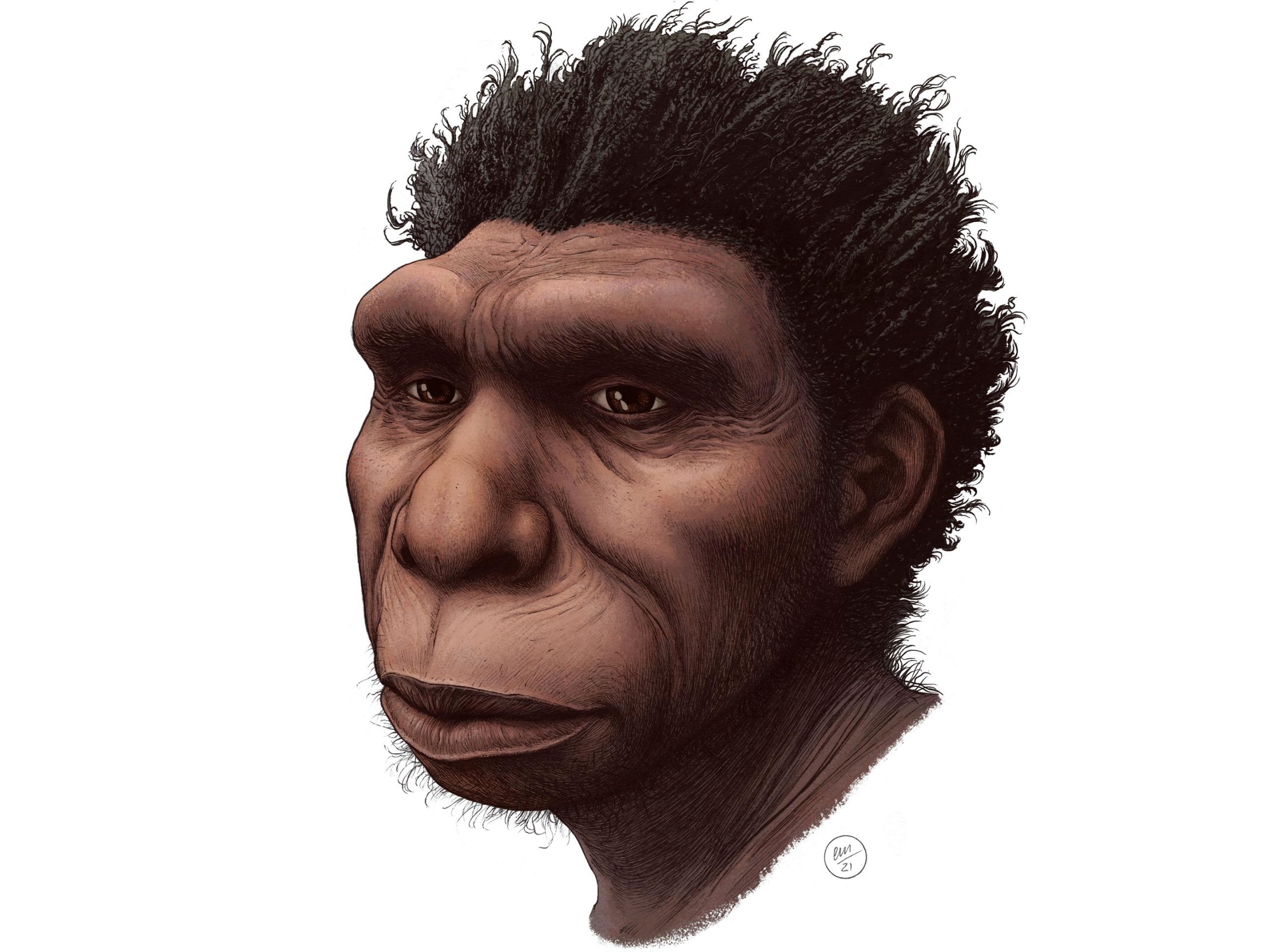
The name “bodoensis” derives from a skull found in Bodo D’ar, Ethiopia, and the new species is understood to be a direct human ancestor. Under the new classification, H. bodoensis will describe most Middle Pleistocene humans from Africa and some from Southeast Europe, while many from the latter continent will be reclassified as Neanderthals.
The co-first author Predrag Radović (Faculty of Philosophy, University of Belgrade, Serbia) says, “Terms need to be clear in science, to facilitate communication. They should not be treated as absolute when they contradict the fossil record.”
Cutting Through Evolutionary Confusion
The introduction of H. bodoensis is aimed at “cutting the Gordian knot and allowing us to communicate clearly about this important period in human evolution” according to one of the co-authors Christopher Bae (Department of Anthropology, University of Hawai’i at Manoa).
Roksandic agrees: “Naming a new species is a big deal, as the International Commission on Zoological Nomenclature allows name changes only under very strictly defined rules. We are confident that this one will stick around for a long time, a new taxon name will live only if other researchers use it.”
Reference: “Resolving the “muddle in the middle”: The case for Homo bodoensis sp. nov” by Mirjana Roksandic, Predrag Radović, Xiu-Jie Wu and Christopher J. Bae, 28 October 2021, Evolutionary Anthropology Issues News and Reviews.
DOI: 10.1002/EVAN.21929
Never miss a breakthrough: Join the SciTechDaily newsletter.
Follow us on Google and Google News.
9 Comments
Really? You had to censor out the drawn paleo-boobs? Glad we’re all adults here,
Ditto the earlier comment.
Seriously? You blurred the female’s breasts in the artist’s rendition of these ancient ancestors for an audience that presumably has an interest in paleoanthropology and isn’t on your site looking for porn?
OMG – You can go to a main stream news site like “The Guardian” and they don’t bother to censor the artistic rendering of the new species. Is this a science site or not?
Well, to answer the boobz controversy here we have a clue. The author also discussed “decolonizing” science. We can now describe the author as a member of homo sapiens var extreme left. Unlike the standard left, the extreme left think any pictured boobz are objectification and oppressive, they have no sense of humor, and they say “decolonize” a lot.
i thought this was a science website, not a mythology one. If it wasn’t for an priory commitment to supporting evolution, this evidence would be considered a poor joke.
Homo bodoensis boobies? Turns me on.
what are you thinking of its 500,000 years ago
the average temperatures are near freezing +2 degrees celsius maximum
dont you think that they would all be covered up
put more clothes on those naked bodies i say
hardly have time to leave the trees yet alone the cave to poke around looking for some food to get my teeth into
i need warmth furs as i cant throw on a pullover and face the freeze
let me stay here by the fire chattering away with the cold
but really its the 24 latest ancestor of humans long line of development
ooa0020 Migration out of africa migration ooa0020 neandersovans
744,372 Ancestors of Neanderthals and denisovans also bred with a mysterious population of super archaic hominin population ancient humans in Eurasia nicknamed neandersovans
ooa0021 700,000 italy anagni bone and flint stone objects two human molars and incisors belonging to fossil homo erectus
700,000 eh2 the presence of eh2 an extinct hominin can be seen in the genomes of individuals currently living near liang bua cave in flores Indonesia
ooa0022 phylogeny of homo sapiens 19 vareties 600,000
ooa0023 hungary 500,000 veertesszollos oldest known fossil of human mans
ooe00?? last record hominin human lineage homo heidibergensis
and now ethiopia shows itself in the record welcome home to homo bodoensis bbbuuuttt iiitttssss soooooo cooooollllddd cooooouuuullld yyyyoooouuuu nnnoooootttt ppppuuuuttt ooonnnn ssssooooommmeee cccllloootthhheesss
Blur background Photo Editor & Blur image Background Effect on image effective blurry background app to give your picture DSLR blur effect.
Why does the “artist” seem to always draw a black guy?
Looks to me the “artist” needs some CRT. African faces are as diverse as anyone can imagine. The representation used here is as offensive as the old Cleveland Indians logo.
Shame on you.