
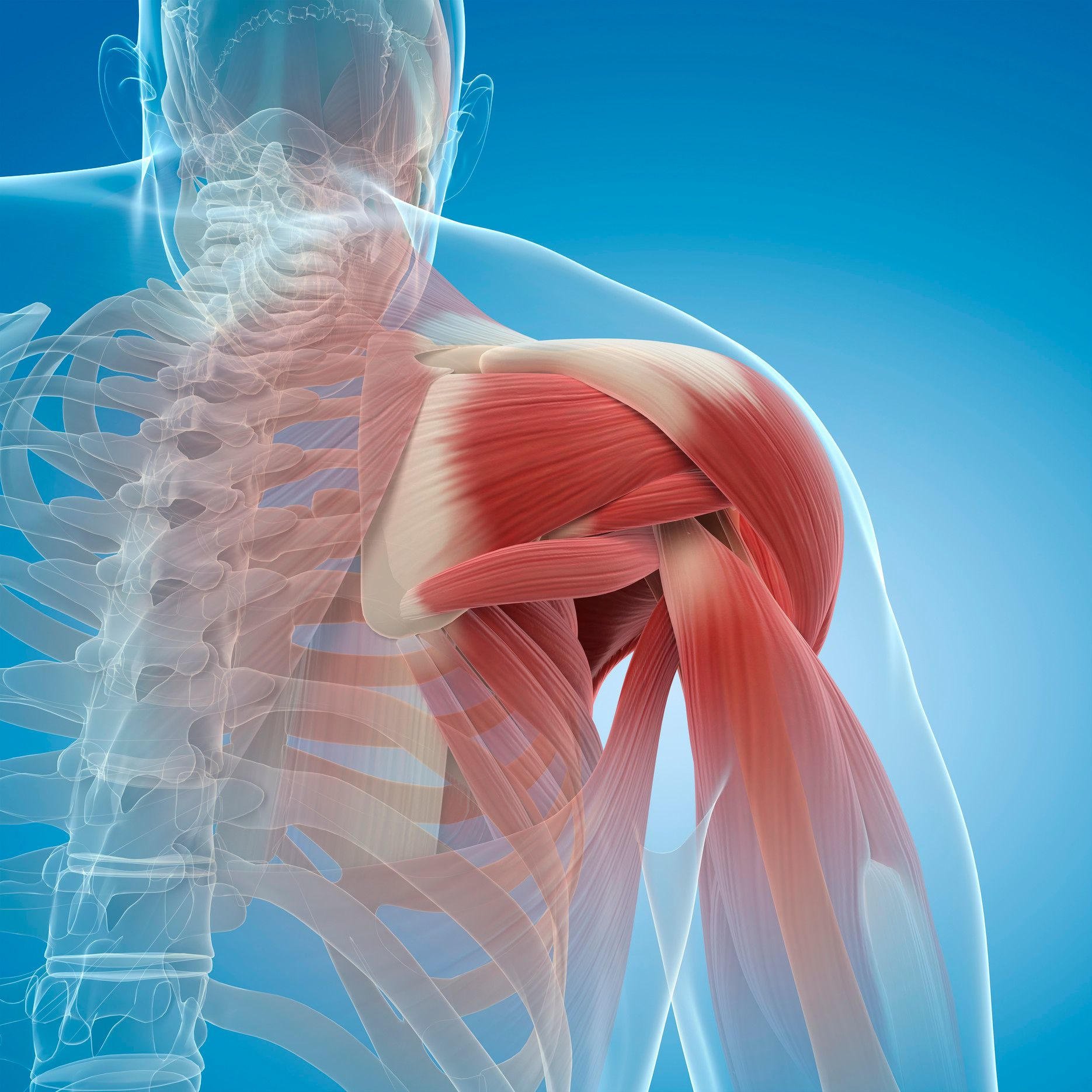
The first detailed cell atlas of aging human muscle uncovers the complex genetic and cellular activities involved in muscle degeneration and identifies ways to mitigate this process.
The cellular and molecular processes by which muscles change and combat the effects of aging are now more clearly understood, thanks to the creation of the first comprehensive atlas of aging muscles in humans.
Researchers from the Wellcome Sanger Institute and their collaborators at Sun Yat-sen University, China applied single-cell technologies and advanced imaging to analyze human skeletal muscle samples from 17 individuals across the adult lifespan. By comparing the results, they shed new light on the many complex processes underlying age-related muscle changes.
The atlas, published in the journal Nature Aging, uncovers new cell populations that may explain why some muscle fibers age faster than others. It also identifies compensatory mechanisms the muscles employ to combat aging.
The findings offer avenues for future therapies and interventions to improve muscle health and quality of life as we age.
This study is part of the international Human Cell Atlas initiative to map every cell type in the human body, to transform understanding of health and disease.
The Impact of Aging on Muscle Function
As we age, our muscles progressively weaken. This can affect our ability to perform everyday activities like standing up and walking. For some people, muscle loss worsens, leading to falls, immobility, a loss of autonomy, and a condition called sarcopenia. The reasons why our muscles weaken over time have remained poorly understood.
In this new study, scientists from the Wellcome Sanger Institute and Sun Yat-sen University, China used both single-cell and single-nucleus sequencing techniques along with advanced imaging to analyze human muscle samples from 17 individuals aged 20 to 75.
The team discovered that genes controlling ribosomes, responsible for producing proteins, were less active in muscle stem cells from aged samples. This impairs the cells’ ability to repair and regenerate muscle fibers as we age. Further, non-muscle cell populations within these skeletal muscle samples produced more of a pro-inflammatory molecule called CCL2, attracting immune cells to the muscle and exacerbating age-related muscle deterioration.
Adaptive Responses in Aging Muscles
Age-related loss of a specific fast-twitch muscle fiber subtype, key for explosive muscle performance, was also observed. However, they discovered for the first time several compensatory mechanisms from the muscles appearing to make up for the loss. These included a shift in slow-twitch muscle fibers to express genes characteristic of the lost fast-twitch subtype, and increased regeneration of remaining fast-twitch fiber subtypes.
The team also identified specialized nuclei populations within the muscle fibers that help rebuild the connections between nerves and muscles that decline with age. Knockout experiments in lab-grown human muscle cells by the team confirmed the importance of these nuclei in maintaining muscle function.
Veronika Kedlian, first author of the study from the Wellcome Sanger Institute, said: “Our unbiased, multifaceted approach to studying muscle aging, combining different types of sequencing, imaging, and investigation reveals previously unknown cellular mechanisms of aging and highlights areas for further study.”
Professor Hongbo Zhang, senior author of the study from Sun Yat-sen University, Guangzhou, China, said: “In China, the UK, and other countries, we have aging populations, but our understanding of the aging process itself is limited. We now have a detailed view into how muscles strive to maintain function for as long as possible, despite the effects of aging.”
Dr Sarah Teichmann, senior author of the study from the Wellcome Sanger Institute, and co-founder of the Human Cell Atlas, said: “Through the Human Cell Atlas, we are learning about the body in unprecedented detail, from the earliest stages of human development through to old age. With these new insights into healthy skeletal muscle aging, researchers all over the world can now explore ways to combat inflammation, boost muscle regeneration, preserve nerve connectivity, and more. Discoveries from research like this have huge potential for developing therapeutic strategies that promote healthier aging for future generations.”
Reference: “Human skeletal muscle aging atlas” by Veronika R. Kedlian, Yaning Wang, Tianliang Liu, Xiaoping Chen, Liam Bolt, Catherine Tudor, Zhuojian Shen, Eirini S. Fasouli, Elena Prigmore, Vitalii Kleshchevnikov, Jan Patrick Pett, Tong Li, John E. G. Lawrence, Shani Perera, Martin Prete, Ni Huang, Qin Guo, Xinrui Zeng, Lu Yang, Krzysztof Polański, Nana-Jane Chipampe, Monika Dabrowska, Xiaobo Li, Omer Ali Bayraktar, Minal Patel, Natsuhiko Kumasaka, Krishnaa T. Mahbubani, Andy Peng Xiang, Kerstin B. Meyer, Kourosh Saeb-Parsy, Sarah A. Teichmann and Hongbo Zhang, 15 April 2024, Nature Aging.
DOI: 10.1038/s43587-024-00613-3
Never miss a breakthrough: Join the SciTechDaily newsletter.
Follow us on Google and Google News.
2 Comments
It is a very interesting to know this,but it would alas being as good to know how one would go about preventing this loss from happening.It is one thing to say that you know something without telling people how to stop it!!!
Thank you George. I was asking myself that same question and then read your comment. I’m going to try and look some more information up. If I find anything, I’ll let you know on this same comment.My email is [email protected] if you want to keep in contact. I’m in Virginia. Thanks Karen