

Chemistry researchers at Case Western Reserve University have identified specific markers that could pave the way for new blood tests to detect diseases.
Almost every disease involves some degree of inflammation, yet standard blood tests cannot precisely identify which organs or tissues are affected.
Now, researchers at Case Western Reserve University have developed an antibody-based method to detect inflammation, which could pave the way for blood tests that identify disease-specific biomarkers. This advancement has potential applications in diagnosing conditions such as heart disease, Alzheimer’s disease, and various cancers. Additionally, it may contribute to drug discovery efforts.
“This research opens up an amazing number of pathways for future studies,” said Greg Tochtrop, professor of chemistry at Case Western Reserve. “It will lead directly to better understanding inflammation and detecting diseases, as well as to discovering new drugs.”

The research, which Tochtrop led, was published in the journal Proceedings of the National Academy of Sciences (PNAS).
Inflammation leaves a trace
Tochtrop discovered that certain compounds formed from the interaction with reactive oxygen species (ROS)—highly reactive oxygen-containing chemicals that can damage DNA, proteins, and lipids—react in a very unique way allowing detection using antibodies.
During inflammation, immune cells produce ROS to kill bacteria and other pathogens. ROS can also be generated by exposure to environmental factors like ultraviolet light, pollution, radiation, and smoking. Excessive ROS can damage cells and tissues.
Tochtrop and colleagues investigated how ROS could react with linoleic acid, a fatty acid found in all cell membranes, forming compounds that can bind to RNA, DNA, and proteins, called epoxyketooctadecanoic acids (EKODEs).
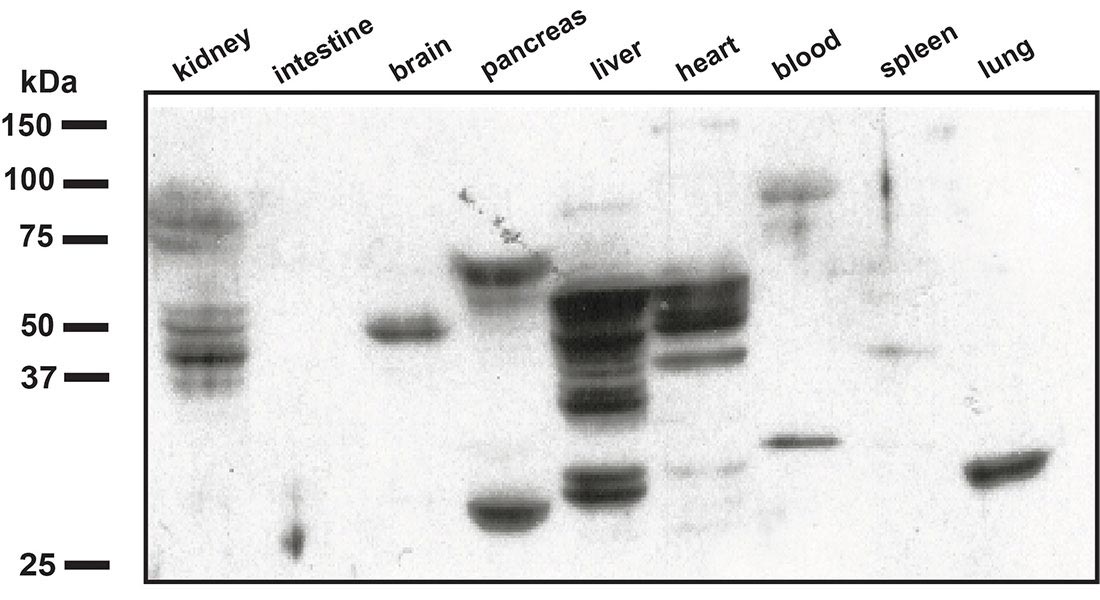
Tochtrop found that EKODEs react with the nucleic acid cysteine in a way that had never been described before, forming a stable bond. These compounds then accumulate in tissues throughout the body suffering from oxidative stress, like the brain, heart, liver, and other organs. Tochtrop developed antibodies to these compounds from mouse models and was able to detect buildup of different types of EKODEs in various tissues, both in mice and humans.
“What makes this so interesting and so potentially valuable,” Tochtrop said, “is that we could detect unique compounds and concentrations in different tissues and organs, which means that you could potentially detect a variety of diseases with a blood test.”
The test could be similar to the A1C test for diabetes, which measures the percentage of hemoglobin in the blood coated with glucose, indicating the level of glucose circulating in the blood over the past three months. An EKODE test could reveal abnormal oxidative stress in specific organs.
Searching for disease-specific biomarkers
The next step, according to Tochtrop, is to identify different EKODE targets in various organs and tissues to correlate biomarkers with specific diseases. He is particularly interested in EKODEs produced in the eye in response to age-related macular degeneration or diabetic retinopathy that affect vision.
Tochtrop explained why these biomarkers had not been identified before: “We had to develop many of the tools in the lab to search for them in the first place,” he said.
The researchers synthesized EKODE model compounds and then studied how they reacted with different amino acids, finding that cysteine is the only one that EKODE bound to for any length of time.
“We looked at the inherent chemistry of the system, predicted what would form, and then searched for them,” he said. “There are very important translational implications, but this is an example of how looking at things from first principles can really inform the next steps to developing clinical tests.”
Potential for discovering new drugs
The research could also aid drug discovery, as drug developers are looking for reactive cysteines.
“Identifying reactive cysteines is central to drug discovery right now,” he said. “This could help uncover many reactive cysteines that could be targeted for drug discovery, which is a valuable offshoot of our research.”
Reference: “The unique reactivity of EKODE lipid peroxidation products allows in vivo detection of inflammation” by Chuan Shi, Roozbeh Eskandari, Jianye Zhang, Guofang Zhang, Li Li, Deandrea Hawkins, Xiongwei Zhu and Gregory P. Tochtrop, 3 February 2025, Proceedings of the National Academy of Sciences.
DOI: 10.1073/pnas.2415039122
Funding: U.S. National Science Foundation
Never miss a breakthrough: Join the SciTechDaily newsletter.
Follow us on Google and Google News.
1 Comment
Cysteine is an amino acid; it is not a nucleic acid.