
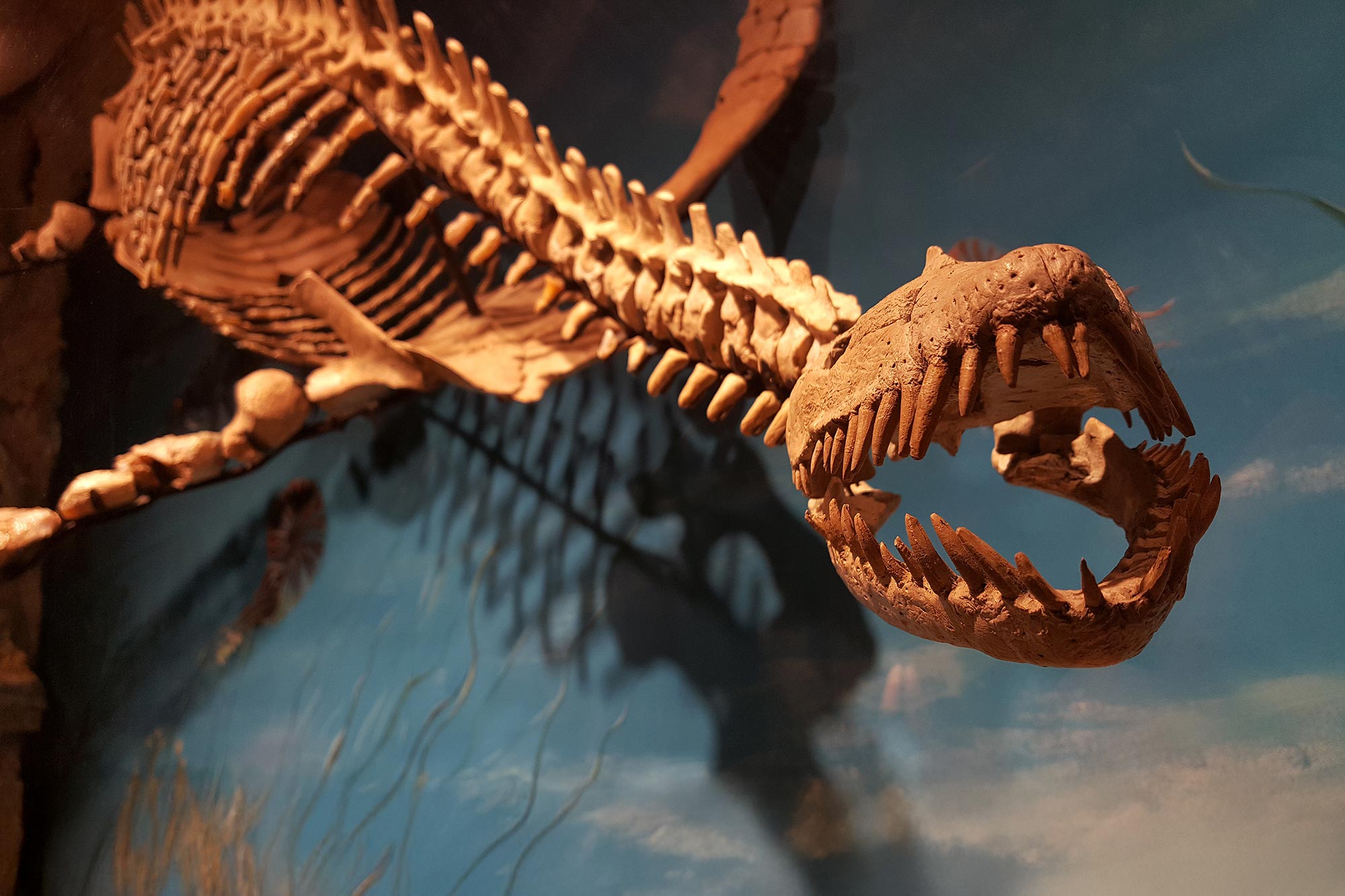
Researchers discovered a prehistoric ecosystem filled with giant marine reptiles, revealing an unparalleled level of food web complexity.
Predators that dominated the oceans 130 million years ago were even more powerful than any species living today, according to new research from McGill University that examined a marine ecosystem dating back to the Cretaceous period.
The study, published in the Zoological Journal of the Linnean Society, reconstructs the ancient environment of Colombia’s Paja Formation and reveals a sea filled with enormous reptiles more than 10 meters long. These ancient creatures occupied a seventh trophic level, one step higher than the top of any modern marine food chain.
Trophic levels refer to the different layers within a food chain, describing how organisms obtain energy and nutrients. In simple terms, they indicate who eats whom within an ecosystem. In today’s oceans, the highest trophic level is the sixth, held by apex predators such as killer whales and great white sharks.
A Food Chain Beyond Anything Seen Today
The identification of massive reptilian predators at a seventh trophic level points to the extraordinary diversity and complexity of the Paja Formation ecosystem. It provides scientists with a rare glimpse into an ancient evolutionary struggle between hunters and their prey.
To piece together this ancient food web, McGill researchers analyzed all known animal fossils from a single geological formation in central Colombia. They built a network based on body size, feeding behavior, and modern analogs of living species. To test its accuracy, the team compared their reconstruction to one of the most detailed existing models of a modern marine ecosystem, drawn from studies of Caribbean marine life.
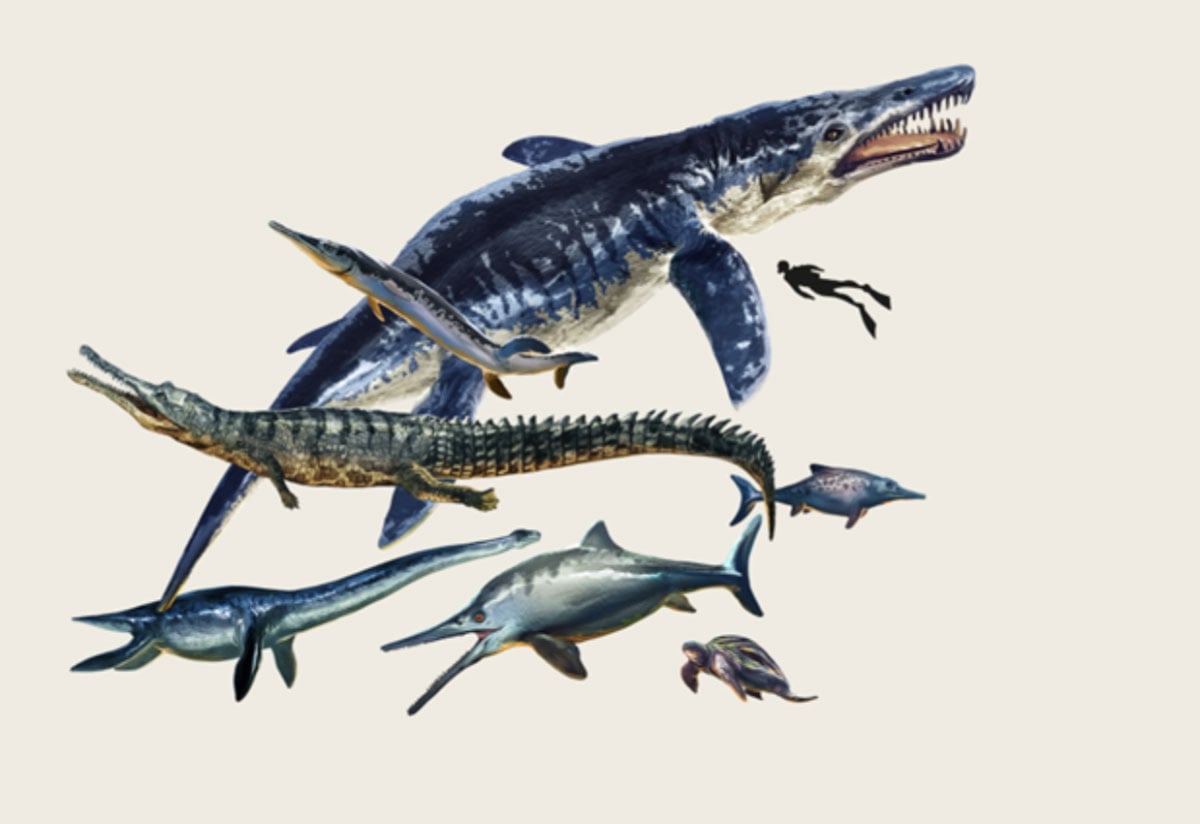
The ancient food web of the Paja Formation began with the smallest life forms, including phytoplankton, bacterioplankton, algae, and organic debris on the sea floor. These primary producers supported tiny grazers and filter feeders such as zooplankton, bivalves, and a few types of gastropods. Slightly higher in the chain were small omnivores and carnivores, including crabs like Bellcarsinus aptiensis and Planocarcinus olssoni, which helped transfer energy up through the ecosystem.
In the middle layers, the system was dominated by ammonites (and possibly belemnites). These cephalopods formed a busy, central link between lower and higher feeders, hinting at a missing variety of small creatures in the fossil record or a feeding structure unlike anything seen today.
At the top of the pyramid were the largest and most powerful hunters. These Level 7 hyper-apex predators included the immense pliosaurs Monquirasaurus boyacensis and Sachicasaurus vitae, along with a giant teleosaur. Each reached lengths of around ten meters and occupied a higher feeding tier than any marine predator alive today
The Mesozoic era, which included the Cretaceous period, was marked by rising sea levels and warmer climates, leading to an explosion of biodiversity in marine life. The Paja ecosystem thrived with plesiosaurs, ichthyosaurs, and abundant invertebrates, giving rise to one of history’s most intricate marine food webs.
Insights Into Evolutionary Complexity
“Our study is the first to examine these possible ecological interactions,” said Dirley Cortés, lead author and doctoral student in the Department of Biology. “Understanding this complexity helps us trace how ecosystems evolve over time, shedding light on the structures that support today’s biodiversity.”
“These findings illuminate how marine ecosystems developed through intense trophic competition and shaped the diversity we see today,” said Hans Larsson, co-author of the study and Professor in the Department of Biology.
This research is just the beginning, the researchers said, as few fossil ecosystems have had their food webs reconstructed. There is potential for new comparisons across time and space, advancing our understanding of ancient marine life and its impact on today’s oceans.
Reference: “Top of the food chains: an ecological network of the marine Paja Formation biota from the Early Cretaceous of Colombia reveals the highest trophic levels ever estimated” by Dirley Cortés and Hans C E Larsson, 16 September 2023, Zoological Journal of the Linnean Society.
DOI: 10.1093/zoolinnean/zlad092
The research was supported by funding from the McGill-STRI Neotropical Environment Option (NEO) and the Natural Sciences and Engineering Research Council of Canada (NSERC).
Never miss a breakthrough: Join the SciTechDaily newsletter.
Follow us on Google and Google News.
9 Comments
What is the dinosaur name I couldn’t find it I love reading about dinosaurs
Earl
Plesiosaurus
Something needs to snack on them there’s too many of them…there’s nothing hunting them
They probably snacked on each other, newly born, juveniles, injured, as with lion prides today, removing any competition.
Certain whales do and only in certain situations.. Orcas in particular don’t “cannibalize their own pod,” but they do kill and eat other whale species.
Plesiosaurus
Mosasaur?
Plesiosaurus was one of the longest necked dinosaurs to live in the ocean. I feel like this is just a hey don’t forget about pleasio. And that was like dozens of years ago.