
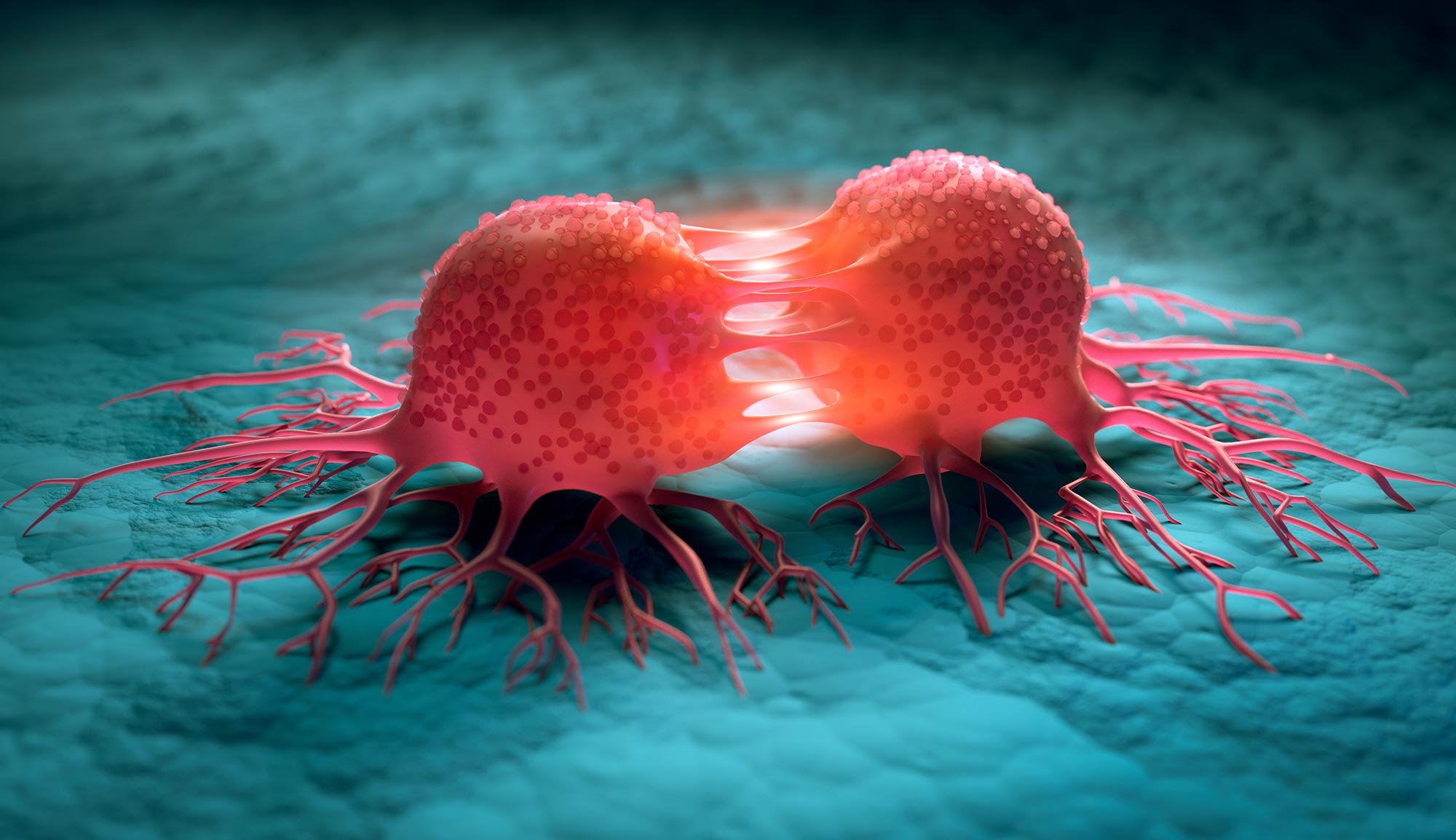
A new study reveals how a single cancer protein may simultaneously drive tumor survival and metabolic control, uncovering a hidden link between two core features of cancer.
Scientists have uncovered a shared molecular process that connects two defining features of cancer. These include the ability of cancer cells to avoid apoptosis (a form of programmed cell death) and their tendency to rewire how they generate and use energy.
The research centers on MCL1, a protein that is produced at unusually high levels in many types of tumors. Until now, MCL1 was mainly known as a member of the Bcl-2 protein family that helps cancer cells evade cell death.
The Dresden research team has now shown that MCL1 also plays a direct role in regulating mTOR, a key controller of cellular metabolism. Through this interaction, MCL1 helps govern how cancer cells manage their energy supply. This marks the first time MCL1 has been identified as an active driver of major signaling and metabolic processes.
“Our findings show that MCL1 is much more than just a survival factor for tumor cells,” says Dr. Mohamed Elgendy. “The protein actively intervenes in key metabolic and growth signaling pathways, thereby linking two fundamental cancer mechanisms.”
A Newly Identified Signaling Pathway
By examining the underlying biology, the researchers uncovered a direct functional connection between MCL1 and the mTORC1 complex across several cancer models.
This previously unrecognized signaling route significantly broadens the scientific understanding of what MCL1 does inside cancer cells and points toward new possibilities for therapeutic intervention.
In addition to genetic analyses, the study also investigated the effect of MCL1 inhibitors, which are currently undergoing clinical development as promising new cancer therapeutics. The study showed that these agents also inhibit mTOR signaling. This finding is of high clinical relevance, as mTOR inhibitors are already routinely used in cancer therapy.
Solving the Cardiotoxicity Challenge
Another particularly significant finding is the resolution of a previously unsolved problem: several clinical trials with MCL1 inhibitors had to be discontinued due to severe cardiotoxic side effects. The Dresden researchers identified an underlying molecular mechanism for the first time and, based on this, developed a dietary approach that can significantly reduce cardiac toxicity. This protective effect was confirmed in an innovative humanized mouse model.
“This work represents a significant advance in our understanding of the molecular basis of cancer,” says Prof. Esther Troost, Dean of the Carl Gustav Carus Faculty of Medicine at TU Dresden. “This high-ranking publication with enormous clinical potential once again demonstrates that the targeted support of outstanding young scientists, as carried out at the Mildred Scheel Center for Young Scientists, is a prerequisite for innovations and the cancer therapy of tomorrow.”
Prof. Uwe Platzbecker, Chief Medical Officer of the University Hospital Dresden, adds: “This outstanding research work exemplifies how excellent basic research can create direct benefits for our cancer patients. Particularly significant from a clinical perspective is the solution to the cardiotoxicity problem of MCL1 inhibitors. The identification of the underlying mechanism and the development of a dietary protective approach can now pave the way for safer therapies.”
Reference: “MCL1 modulates mTORC1 signaling to promote bioenergetics and tumorigenesis” by Wentao Gui, Petr Paral, Bhavuk Dhamija, Eman Hagag, Martin Dusa, Jana Humajova, Pavla V. Francova, Jan Kucka, Jan Pankrac, Caroline Schütz, Vasileios Armenis, Filippo Ferrucci, Mario Schubert, Kaomei Guan, Franziska Baenke, Daniel E. Stange, Lorenz H. Lehmann, Wolfram Weckwerth, Peter Mirtschink, Sofia Traikov, Belmonte Giuseppe, Clelia Miracco, Martin Bornhäuser, Saverio Minucci, Ludek Sefc, Libor Macurek and Mohamed Elgendy, 31 November 2025, Nature Communications.
DOI: 10.1038/s41467-025-66831-4
The study is the result of interdisciplinary collaboration between various research groups and institutions. Dr. Mohamed Elgendy’s working group in Dresden acted as the lead partner and was supported by experts from national and international partner institutes in Czechia, Austria, and Italy.
Never miss a breakthrough: Join the SciTechDaily newsletter.
Follow us on Google and Google News.