

Researchers have discovered and functionally characterized the myokine CLCF1, which declines with age but is released during exercise and helps protect against musculoskeletal aging.
Everyone knows that “exercise is good for your health,” but not many can actually explain why that’s the case.
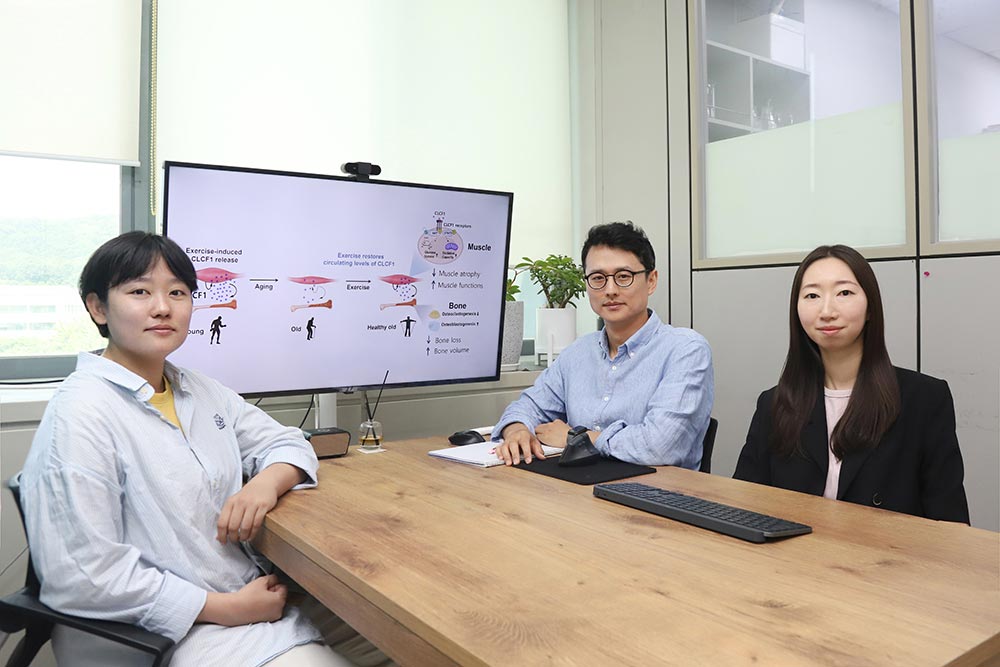
A joint research team led by Dr. Yong Ryoul Yang of the Aging Convergence Research Group at the Korea Research Institute of Bioscience and Biotechnology (KRIBB) and Professor Nak-Sung Kim of Chonnam National University has identified a key protein called CLCF1 (cardiotrophin-like cytokine factor 1). This protein plays a central role in delivering the health benefits of physical activity.
The researchers found that CLCF1 is released by muscles during exercise, where it supports muscle and bone strength and helps slow musculoskeletal aging.
How CLCF1 responds to aging and exercise
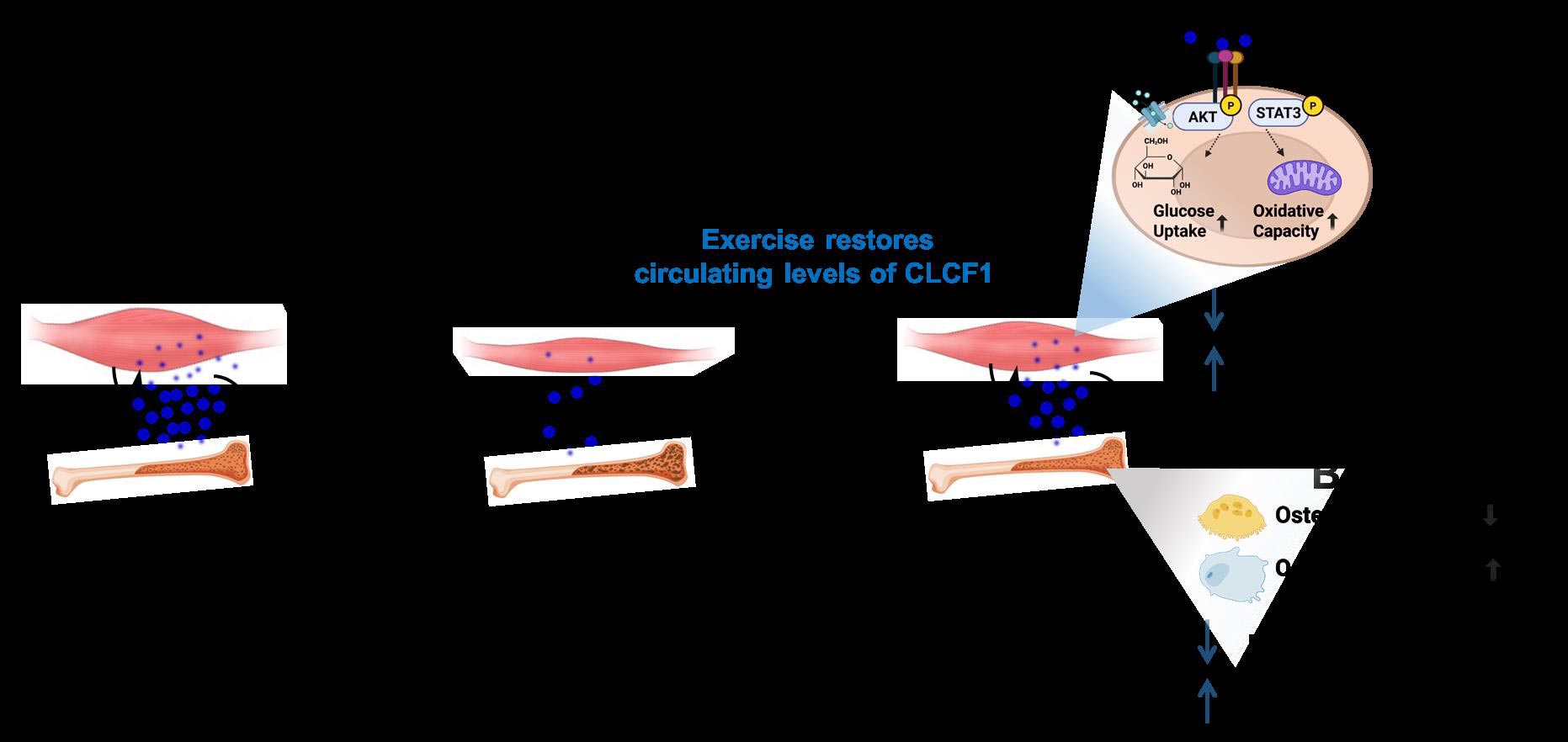
To examine how CLCF1 responds to exercise and aging, the researchers divided participants into two groups: young and elderly. They measured blood levels of CLCF1 after physical activity and found that levels rose significantly after a single exercise session in younger participants. In contrast, older adults only showed increased CLCF1 levels after more than 12 weeks of consistent exercise.
The researchers also tested CLCF1 in aged mice. When the protein was administered, the mice experienced greater muscle strength and higher bone density. However, when CLCF1 activity was blocked, exercise had no positive effect, confirming that the protein is essential for the body’s adaptive response to physical activity.
Molecular mechanisms and therapeutic potential
Further analysis showed that CLCF1 enhances mitochondrial function in muscle cells, inhibits the formation of bone-resorbing osteoclasts, and promotes the differentiation of bone-forming osteoblasts. This is the first scientific evidence identifying changes in protein secretion as a major reason for the reduced efficacy of exercise in aging individuals.
Dr. Yong Ryoul Yang from KRIBB said, “This research provides a biological basis for why exercise becomes less effective with age, and it lays the groundwork for developing new therapeutic strategies for healthy aging. In particular, the findings offer new directions for treating age-related sarcopenia and osteoporosis.”
Reference: “Exercise-induced CLCF1 attenuates age-related muscle and bone decline in mice” by Jae Sook Kang, Jung Ha Kim, Min Ju Kim, Byungkuk Min, Seung-Min Lee, Ga-Yeon Go, Ji-Won Kim, Seongwan Kim, Ju Yeon Kwak, Sung-Wook Chun, Wook Song, Hyo Youl Moon, Sun Gun Chung, Dong-Ho Park, Ji Hoon Park, Chuna Kim, Kwang-Pyo Lee, Eun-Soo Kwon, Nacksung Kim, Ki-Sun Kwon and Yong Ryoul Yang, 22 May 2025, Nature Communications.
DOI: 10.1038/s41467-025-59959-w
This research was supported by the National Research Foundation of Korea (NRF) Individual Basic Science Program, the Regional Science & Technology Innovation Project, the Convergence Research Program of NST, and KRIBB’s core R&D program.
Never miss a breakthrough: Join the SciTechDaily newsletter.
Follow us on Google and Google News.