
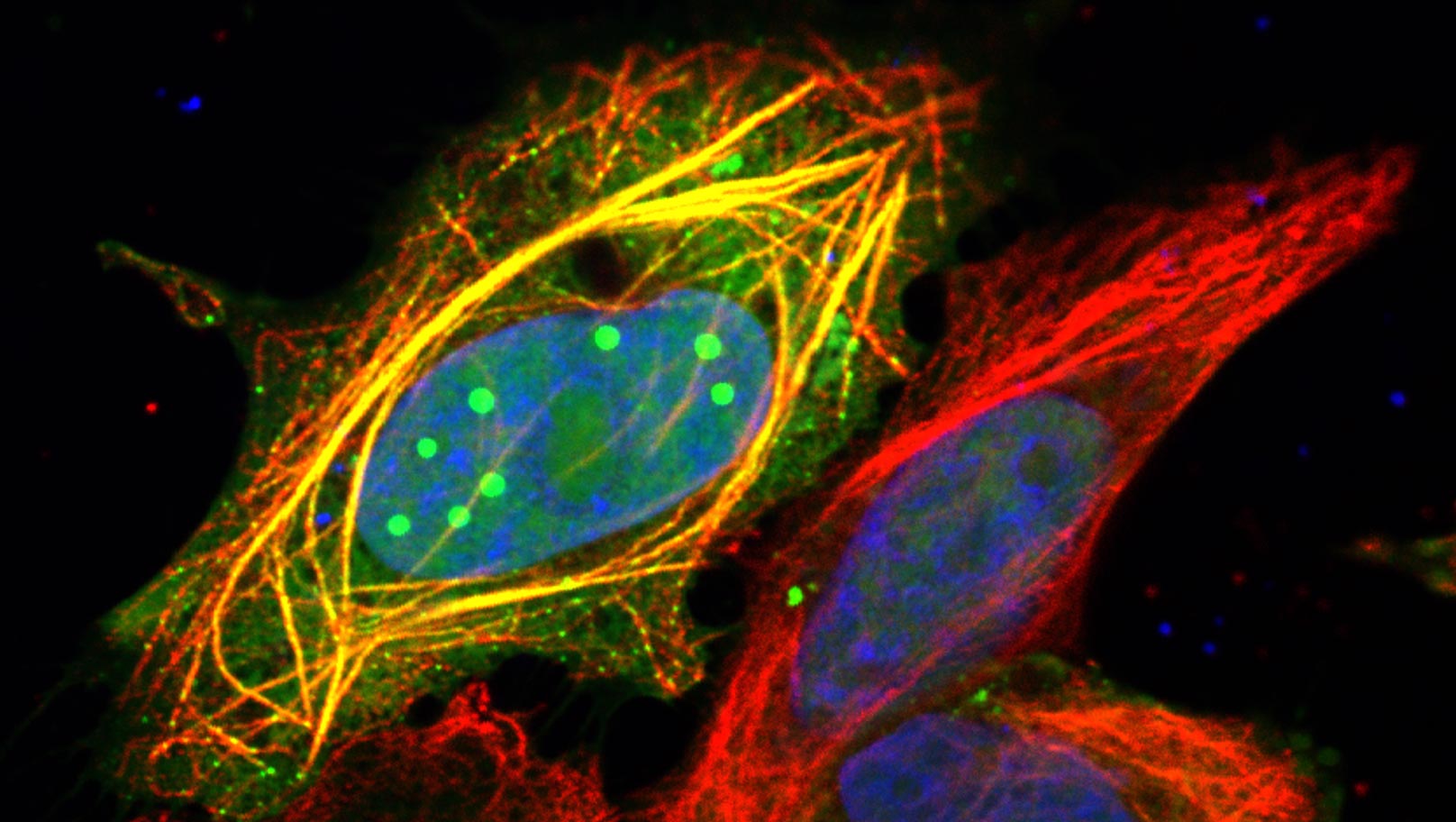
Researchers found that rabies virus uses a shape-shifting protein to hijack RNA and control vital cell functions.
- Viruses are astonishingly efficient, able to take over our cells and control essential processes using only a tiny amount of genetic material.
- Scientists have long wondered how such small viruses manage to achieve so many complex tasks inside the body.
- Researchers now have a clear explanation, and this new insight could reshape our understanding of how viruses function.
Rabies Virus Reveals Its Hidden Strategy
Australian scientists have identified how certain viruses are able to take control of human cells, a breakthrough that could lead to new antivirals and vaccines.
The research team, led by Monash University and the University of Melbourne, and published in Nature Communications, found that the rabies virus can direct a wide range of cellular activities even though it produces only a small number of proteins.
Experts suggest that other highly dangerous viruses, including Nipah and Ebola, may rely on the same approach. If this is confirmed, it could open the door to treatments designed to block these shared viral tactics.
The Remarkable Efficiency of Viral Design
Co-senior author Associate Professor Greg Moseley, who leads the Monash Biomedicine Discovery Institute’s (BDI) Viral Pathogenesis Laboratory, highlighted how effective viruses are at using very limited genetic material.
“Viruses such as rabies can be incredibly lethal because they take control of many aspects of life inside the cells they infect,” Associate Professor Moseley said. “They hijack the machinery that makes proteins, disrupt the ‘postal service’ that sends messages between different parts of the cell, and disable the defences that normally protect us from infection.
“A major question for scientists has been: how do viruses achieve this with so few genes? Rabies virus, for example, has the genetic material to make only five proteins, compared with about 20,000 in a human cell.”
Unlocking the Secrets of Viral Proteins
Co-first author Dr. Stephen Rawlinson, a research fellow in the BDI’s Moseley Lab, said uncovering how so few viral proteins can perform so many jobs may help scientists develop new ways to interrupt infection.
“Our study provides an answer,” he said. “We discovered that one of rabies virus’s key proteins, called P protein, gains a remarkable range of functions through its ability to change shape and to bind to RNA.
“RNA is the same molecule used in new-generation RNA vaccines, but it plays essential roles inside our cells, carrying genetic messages, coordinating immune responses, and helping make the building blocks of life.”
Shape-Shifting Power: How Rabies Takes Over
Co-senior author Professor Paul Gooley, head of the University of Melbourne’s Gooley Laboratory, said by targeting RNA systems, the viral P protein could switch between different physical ‘phases’ inside the cell.
“This allows it to infiltrate many of the cell’s liquid-like compartments, take control of vital processes, and turn the cell into a highly efficient virus factory,” Professor Gooley said.
“Although this study focused on rabies, the same strategy is likely used by other dangerous viruses such as Nipah and Ebola. Understanding this new mechanism opens exciting possibilities for developing antivirals or vaccines that block this remarkable adaptability.”
A New Paradigm for Multifunctional Proteins
Dr. Rawlinson said the study should change how scientists think about multifunctional viral proteins. “Until now, these proteins were often viewed like trains made up of several carriages, with each carriage (or module) responsible for a specific task,” he said.
“According to this view, shorter versions of a protein should simply lose functions as carriages are removed. However, this simple model could not explain why some shorter viral proteins actually gain new abilities. We found that multifunctionality can also arise from the way the ‘carriages’ interact and fold together to create different overall shapes, as well as forming new abilities such as binding to RNA.”
Viruses Reimagined: Flexibility as the Ultimate Weapon
Associate Professor Moseley said this RNA binding allowed the protein to move between different physical ‘phases’ within the cell.
“In doing so, it can access and manipulate many of the cell’s own liquid-like compartments that control key processes, such as immune defence and protein production,” he said. “By revealing this new mechanism, our study provides a fresh way of thinking about how viruses use their limited genetic material to create proteins that are flexible, adaptable, and able to take control of complex cellular systems.”
Reference: “Conformational dynamics, RNA binding, and phase separation regulate the multifunctionality of rabies virus P protein” by Stephen M. Rawlinson, Shatabdi Chakraborty, Ashish Sethi, Cassandra T. David, Angela R. Harrison, Lauren E. Bird, Ashley M. Rozario, Sanjeev Uthishtran, Katie Ardipradja, Tianyue Zhao, Sibil Oksayan, David A. Jans, Ching-Seng Ang, Zhi Hui Lu, Fei Yan, Nicholas A. Williamson, Senthil Arumugam, Vinod Sundaramoorthy, Toby D. M. Bell, Paul R. Gooley and Gregory W. Moseley, 29 October 2025, Nature Communications.
DOI: 10.1038/s41467-025-65223-y
This research brought together experts from several major Australian institutions, including Monash University, the University of Melbourne, the Australian Nuclear Science and Technology Organisation (Australian Synchrotron), the Peter Doherty Institute for Infection and Immunity, the Commonwealth Scientific and Industrial Research Organisation (CSIRO), the Australian Centre for Disease Preparedness (ACDP), and Deakin University.
Never miss a breakthrough: Join the SciTechDaily newsletter.
Follow us on Google and Google News.