
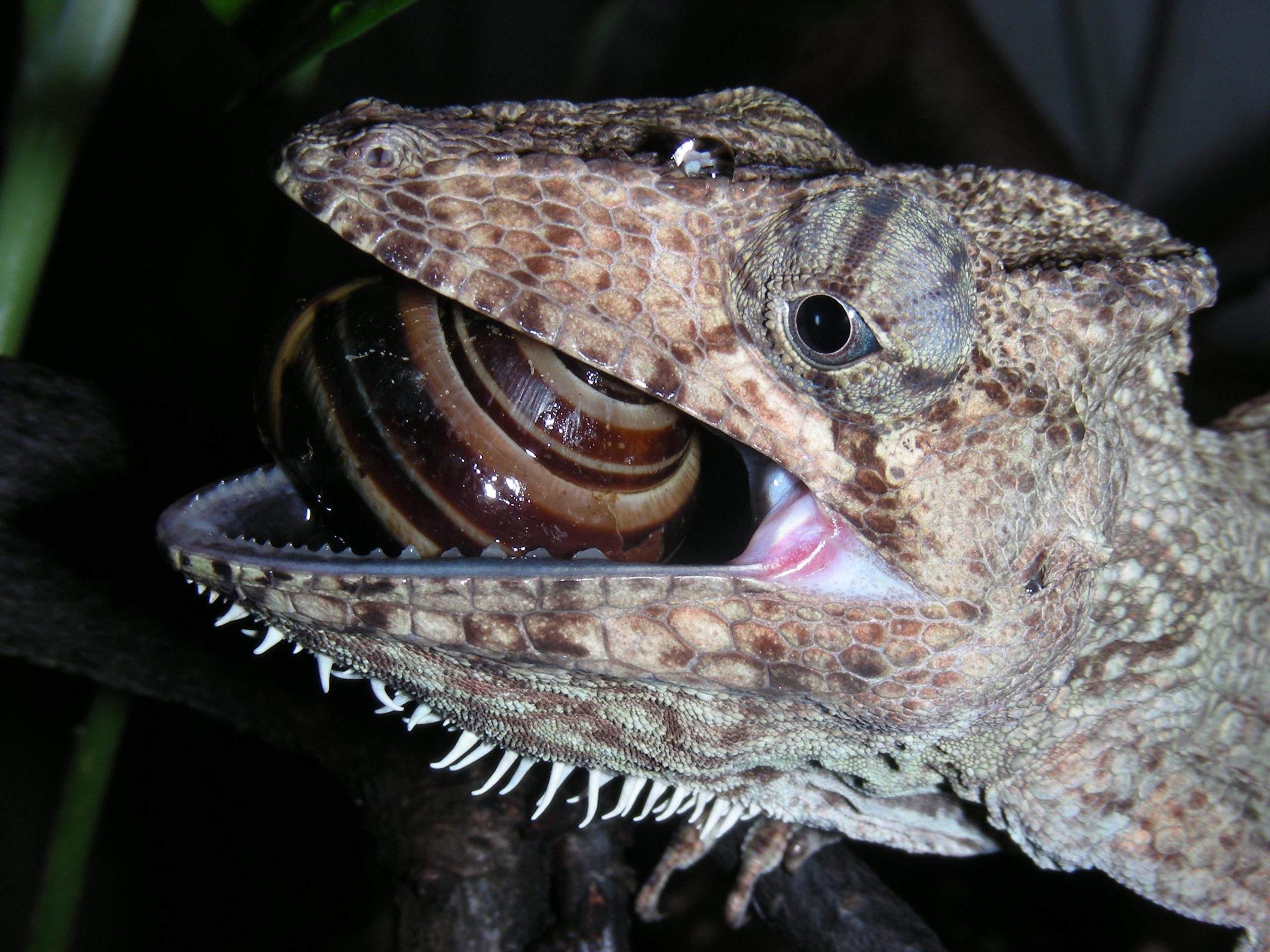
University of Bristol researchers reveal key drivers behind diverse jaw shapes in lizards and snakes, focusing on ecological and evolutionary influences.
Researchers from the University of Bristol have uncovered new insights into how lizards and snakes—the most diverse group of land vertebrates, with nearly 12,000 species—have evolved a remarkable variety of jaw shapes, driving their extraordinary ecological success.
Published in the Proceedings of the Royal Society B, this study offers a new understanding of the intricate factors influencing the evolution of lower jaw morphology in these animals, collectively known as lepidosaurs.
Factors Influencing Jaw Shape Evolution in Lepidosaurs
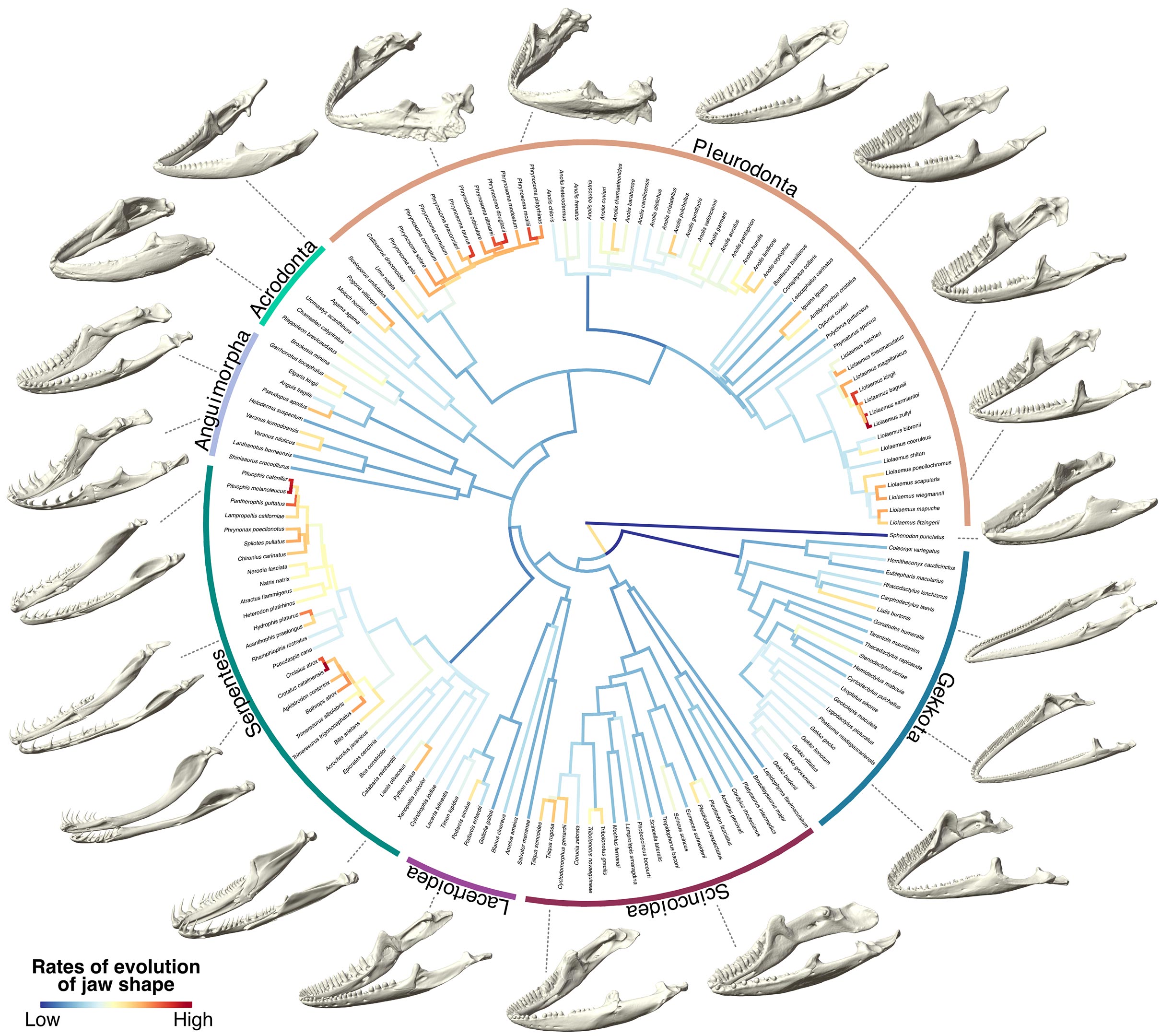
The researchers discovered that jaw shape evolution in lepidosaurs is influenced by a complex interplay of factors beyond ecology, including phylogeny (evolutionary relatedness) and allometry (the scaling of shape with size).
In terms of jaw shape, the team found that snakes are morphological outliers, exhibiting unique jaw morphologies, likely due to their highly flexible skulls and extreme mechanics that enable them to swallow prey many times larger than their heads.
“Interestingly, we found that jaw shape evolves particularly fast in ecologically specialized groups, such as in burrowing and aquatic species, and in herbivorous lizards, suggesting that evolutionary innovation in the lower jaw was key to achieve these unique ecologies,” explained Dr. Antonio Ballell Mayoral based in Bristol’s School of Earth Sciences.
“Our study shows how lizards and snakes evolved their disparate jaw shapes which adapted to their wide range of ecologies, diets, and habitats, driving their extraordinary diversity.”
Role of Morphological Innovation
This work underscores the critical role of morphological innovation in promoting the diversification of highly biodiverse groups like lepidosaurs. The lower jaw – a vital component of the vertebrate feeding apparatus – has been a key element in their ecological experimentation and adaptation.
Looking ahead, the team plans to delve deeper into the evolution of the lepidosaur head.
“Lower jaws are important, but they work together with the jaw closing muscles to support essential functions like feeding and defense,” Dr. Ballell Mayoral added.
“We are exploring the relationship between skull shape and the arrangement of the jaw closing musculature through evolution, and how it has impacted the diversification of feeding mechanics and habits.”
Reference: “Ecological drivers of jaw morphological evolution in lepidosaurs” by Antonio Ballell, Hugo Dutel, Matteo Fabbri, Elizabeth Martin-Silverstone, Aleksandra Kersley, Chrissy L. Hammond, Anthony Herrel and Emily J. Rayfield, 30 November 2024, Proceedings of the Royal Society B.
DOI: 10.1098/rspb.2024.2052
Never miss a breakthrough: Join the SciTechDaily newsletter.
Follow us on Google and Google News.
3 Comments
Creation. God, the Lord God whom many of do not believe in, created all these things. Question: how could things come about without influence from a greater ‘thing’ unless it had been created by an influence of creation: I mean by One who has earned the title Creator? But i see: when we reject God, we have always to been doing so: we bring about self- destruction of the soul. We can either get it saved, or cast it (ourselves) aside but the experience will be devastating, and will never be reversed. The Creator is the One who kbows all things: seek Him, ask Him.
A bit of a goofy comment. But, you do you
I do not have to convince you there is a God,God does that.The Bible says,many are called,but few are chosen.God has never called all men.The Bible also says,man without God,is like the beast that perish.Men that God does not,make alive to Him,are as beast.