

Scientists Capture Sharpest-Ever Image of the Sun, Revealing Magnetic “Stripes”
In a stunning new breakthrough, scientists from the U.S. National Science Foundation’s National Solar Observatory have captured the most detailed view of the Sun’s surface ever recorded. Using the powerful Daniel K. Inouye Solar Telescope in Hawaii, the team spotted ultra-thin magnetic “stripes” just 20 kilometers wide—about the length of Manhattan.
These bright and dark bands, known as striations, ripple along the edges of solar granules and are created by delicate, curtain-like magnetic fields. As sunlight passes through these magnetic structures, it shifts in brightness, similar to how light changes when shining through a billowing curtain.
The discovery reveals a hidden layer of complexity in the Sun’s magnetic landscape and showcases the Inouye Telescope’s incredible ability to detect features once thought invisible from Earth. It opens the door to a deeper understanding of how solar magnetism drives powerful events like flares and storms in space.
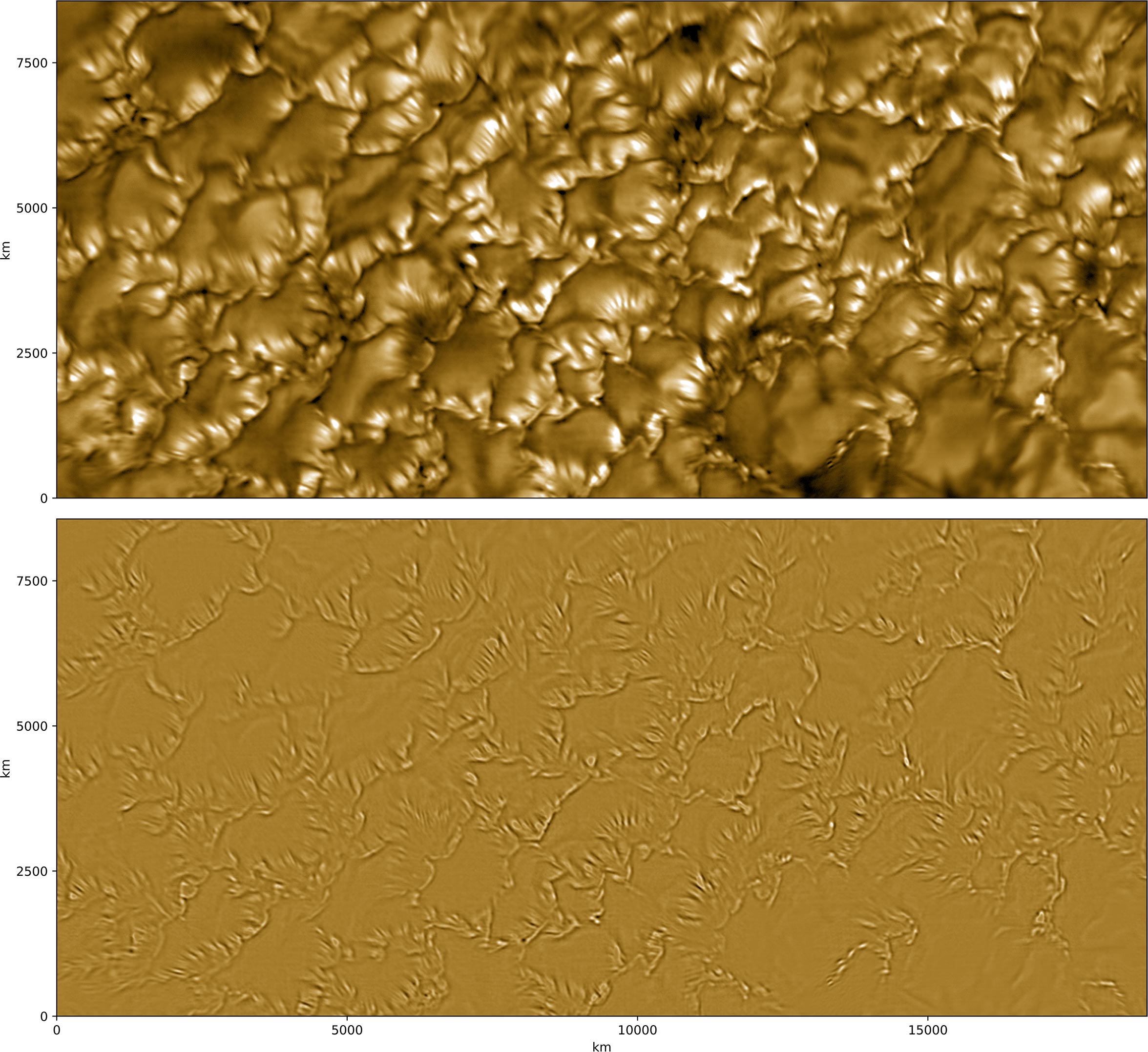
Unveiling the Sun’s Hidden Stripes With Breakthrough Resolution
A team of solar physicists has made a remarkable discovery, revealing intricate magnetic patterns on the surface of the Sun. Using the unmatched power of the Daniel K. Inouye Solar Telescope in Hawaii, scientists have captured the most detailed images of the solar surface ever recorded. For the first time, they observed ultra-thin bright and dark stripes on the Sun, just 20 kilometers wide, about the length of Manhattan.
These stripes, known as striations, appear along the edges of solar convection cells called granules. They are caused by delicate, sheet-like magnetic fields that ripple and sway like fabric in the wind. As light from the hot granule walls passes through these magnetic “curtains,” it creates a striped pattern that reflects subtle changes in the Sun’s magnetic field. Brighter areas show stronger fields, while darker ones show weaker regions.
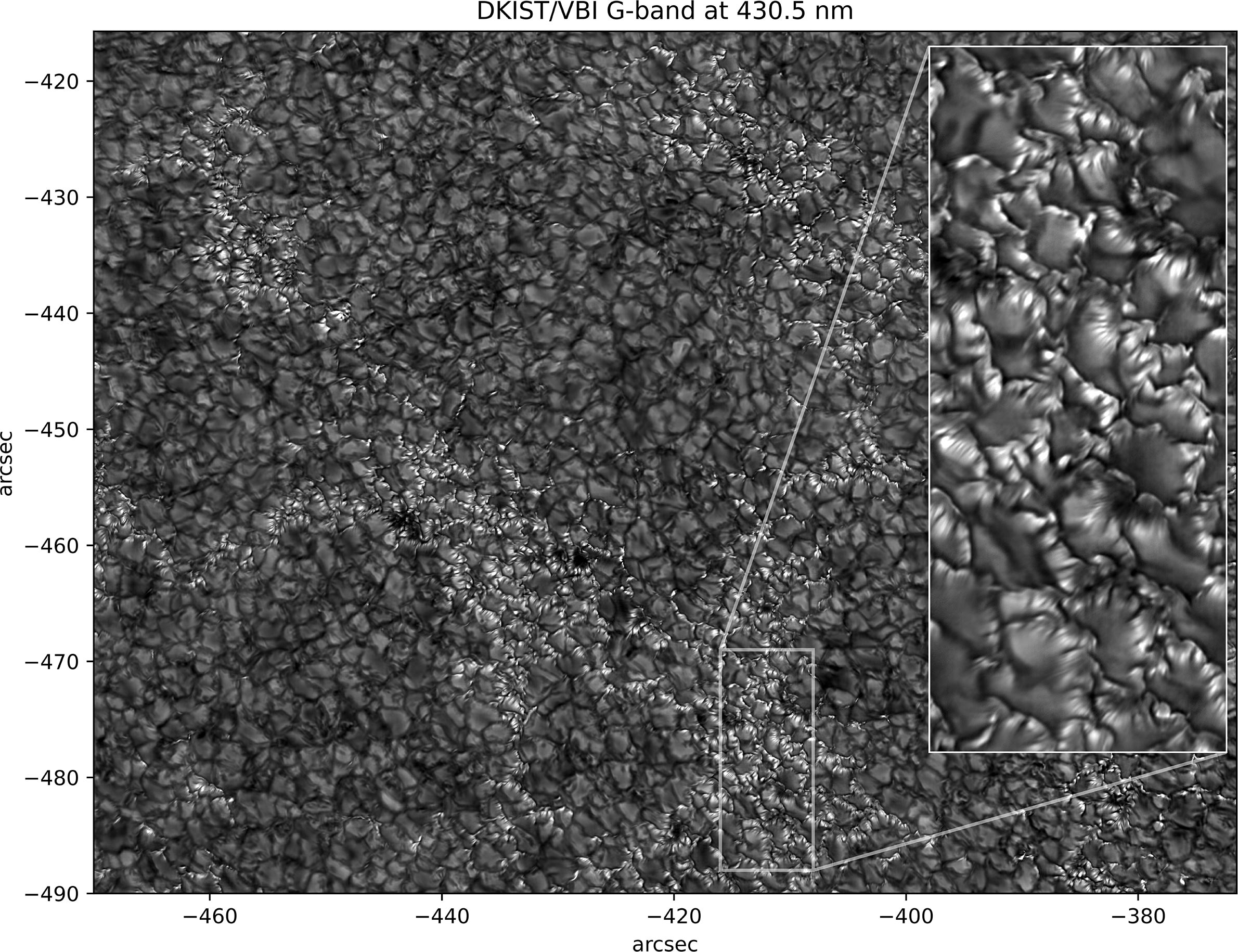
The Sharpest View of the Sun—Ever
“In this work, we investigate the fine-scale structure of the solar surface for the first time with an unprecedented spatial resolution of just about 20 kilometers, or the length of Manhattan Island,” says NSO scientist Dr. David Kuridze, the study’s lead author. “These striations are the fingerprints of fine-scale magnetic field variations.”
The findings were not anticipated and were only possible because of the Inouye Solar Telescope’s unprecedented abilities. The team used Inouye’s Visible Broadband Imager (VBI) instrument operating in the G-band, a specific range of visible light especially useful for studying the Sun because it highlights areas with strong magnetic activity, making features like sunspots and fine-scale structures like the ones in the study easier to see. The setup allows researchers to observe the solar photosphere at an impressive spatial resolution better than 0.03 arcseconds (i.e., about 20 kilometers on the Sun). This is the sharpest ever achieved in solar astronomy. To interpret their observations, the team compared the images with cutting-edge simulations that recreate the physics of the Sun’s surface.
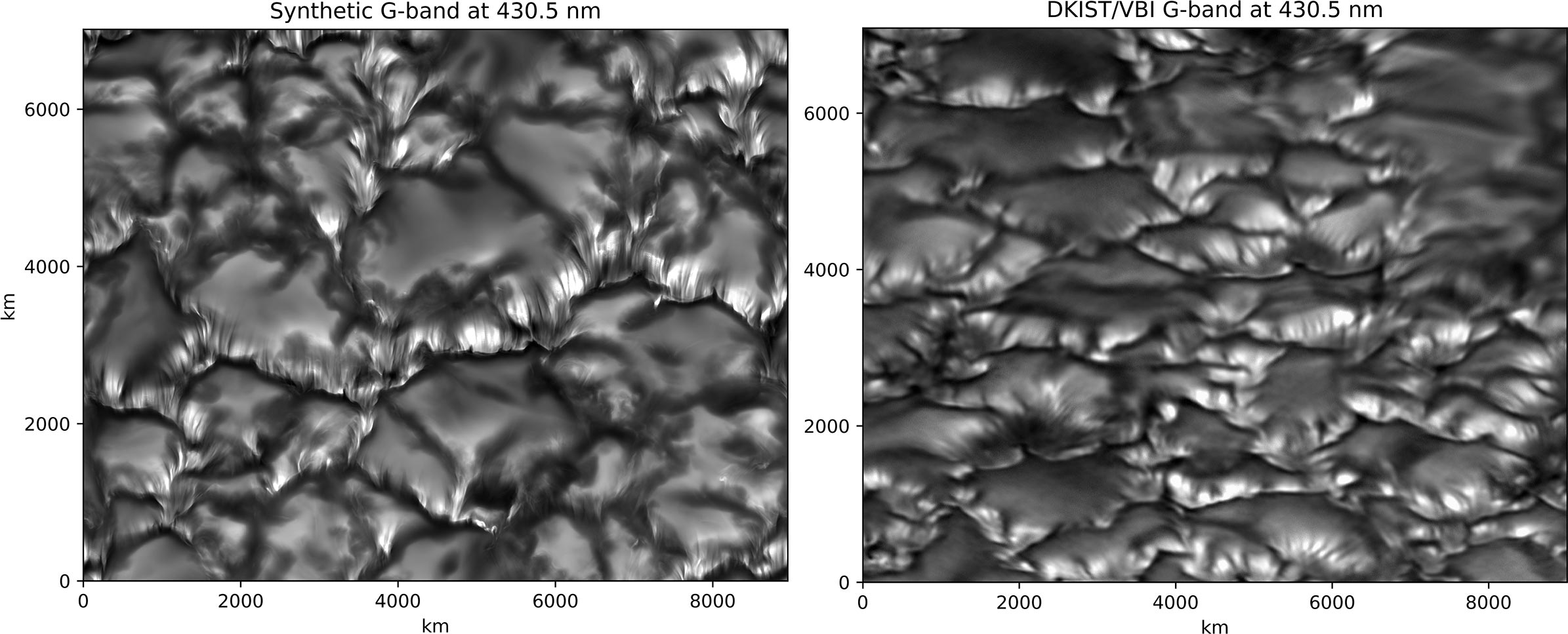
Small Magnetic Twists, Big Insights
The study confirms that these striations are signatures of subtle but powerful magnetic fluctuations—variations of only a hundred gauss, comparable to a typical refrigerator magnet’s strength—that alter the density and opacity of the plasma, shifting the visible surface by mere kilometers. These shifts, known as Wilson depressions, are detectable thanks only to the unique resolving power of the 4-meter primary mirror of the NSF Inouye Solar Telescope, the largest in the world.
“Magnetism is a fundamental phenomenon in the universe, and similar magnetically induced stripes have also been observed in more distant astrophysical objects, such as molecular clouds,” shares NSO scientist and co-author of the study Dr. Han Uitenbroek. “Inouye’s high resolution, in combination with simulations, allows us to better characterize the behavior of magnetic fields in a broad astrophysical context.”

Impacts on Space Weather and Earthly Technology
Studying the magnetic architecture of the solar surface is essential for understanding the most energetic events in the Sun’s outer atmosphere—such as flares, eruptions, and coronal mass ejections—and, consequently, improving space weather predictions. This discovery not only enhances our understanding of this architecture but also opens the door to studying magnetic structures in other astrophysical contexts—and at small scales once thought unachievable from Earth.
“This is just one of many firsts for the Inouye, demonstrating how it continues to push the frontier of solar research,” says NSO Associate Director for the NSF Inouye Solar Telescope, Dr. David Boboltz. “It also underscores Inouye’s vital role in understanding the small-scale physics that drive space weather events that impact our increasingly technological society here on Earth.”
The paper describing this study, titled “The striated solar photosphere observed at 0.03’’ resolution,” is now available in The Astrophysical Journal Letters.
Reference: “The Striated Solar Photosphere Observed at 0.03’’ Resolution” by David Kuridze, Friedrich Wöger, Han Uitenbroek, Matthias Rempel, Alexandra Tritschler, Thomas Rimmele, Catherine Fischer and Oskar Steiner, 20 May 2025, The Astrophysical Journal Letters.
DOI: 10.3847/2041-8213/add470
Never miss a breakthrough: Join the SciTechDaily newsletter.
Follow us on Google and Google News.
1 Comment
Photographs are amazing I just wish I could understand what I’m reading