
Viruses that infect bacteria can still do their job in microgravity, but space changes the rules of the fight.
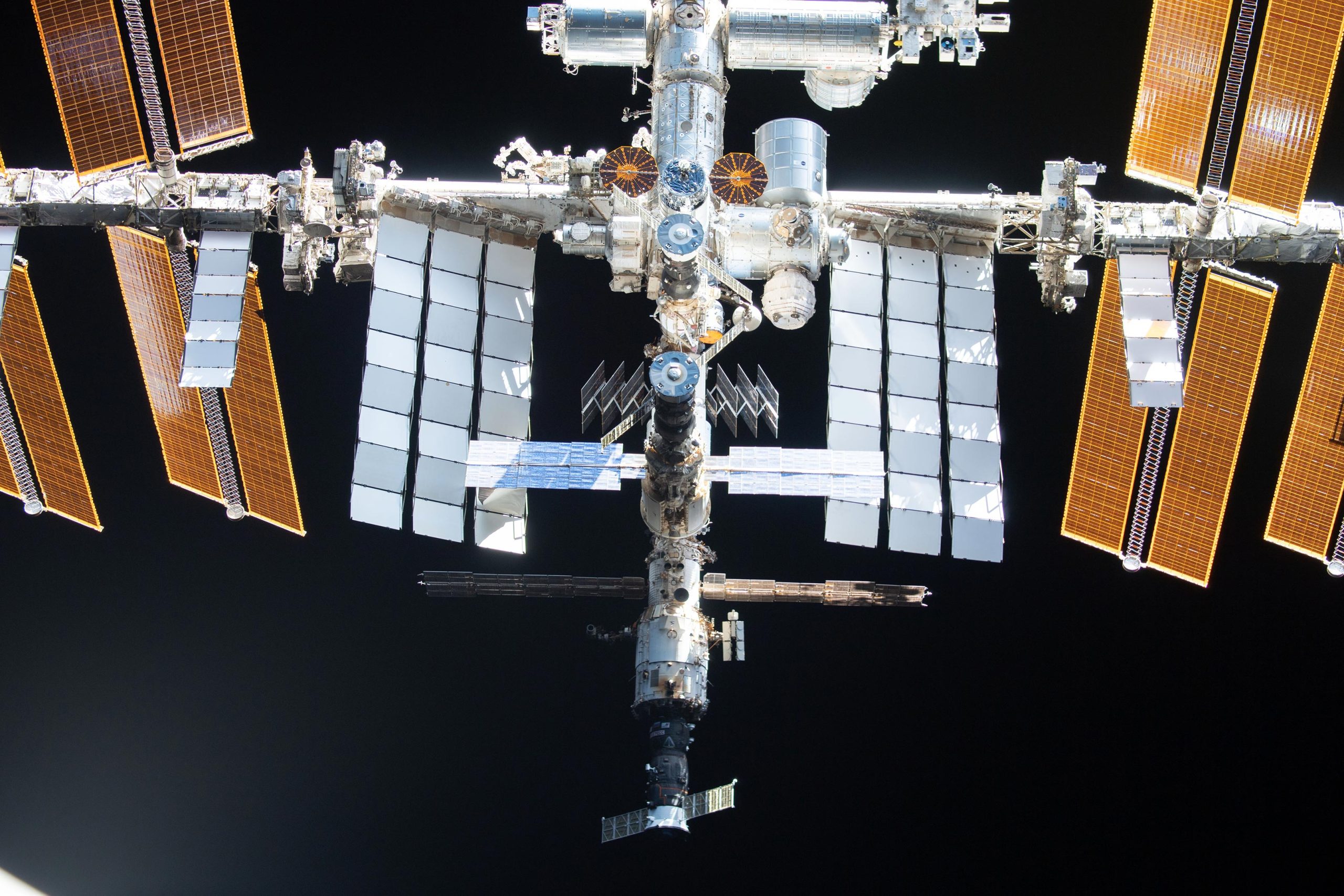
In a new experiment conducted aboard the International Space Station, scientists found that viruses which infect bacteria can still successfully infect E. coli under near-weightless microgravity conditions. While infection still occurred, the interaction between viruses and bacteria unfolded differently than it does on Earth. The research, led by Phil Huss of the University of Wisconsin-Madison, U.S.A., was published today (January 13th) in the open-access journal PLOS Biology.
A Microscopic Arms Race in an Unusual Environment
Interactions between phages—viruses that infect bacteria—and their bacterial hosts are a driving force in microbial ecosystems. These relationships are often compared to an evolutionary arms race, with bacteria developing defenses and phages evolving countermeasures. Although these interactions are well studied under normal gravity on Earth, microgravity changes both bacterial behavior and how often viruses physically collide with their hosts, altering the usual course of infection.
Despite this, little was known about exactly how virus-bacteria relationships shift in microgravity. To explore this question, Huss and his team designed an experiment comparing two groups of E. coli infected with a well-known phage called T7—one group grown on Earth and the other cultured aboard the International Space Station.
Infection Still Happens, but Evolution Takes a New Turn
When scientists examined the samples from space, they found that T7 phages were still able to infect E. coli, though the process started more slowly. Genetic sequencing revealed clear differences between the space-grown samples and those kept on Earth, with distinct mutation patterns emerging in both the viruses and the bacteria.
Over time, the phages in orbit developed specific genetic changes that could improve their ability to infect bacteria or latch onto receptors on bacterial cells. At the same time, the E. coli exposed to microgravity accumulated mutations that may help them resist viral attacks and survive better in near-weightless conditions.
Space-Driven Mutations With Earthly Impacts
To dig deeper, the researchers used a powerful method called deep mutational scanning to closely analyze changes in the T7 receptor binding protein, a crucial component that allows the virus to infect bacterial cells. This approach uncovered additional differences between space-grown and Earth-grown viruses. Follow-up experiments on Earth showed that these space-linked changes made the phages more effective against certain E. coli strains that cause urinary tract infections in humans and are typically resistant to T7.
Why Studying Phages in Space Matters
The findings suggest that conducting phage research aboard the ISS can uncover new biological insights that are difficult or impossible to observe on Earth. These discoveries may prove valuable not only for future space missions but also for developing new ways to combat drug-resistant bacterial infections.
The authors note, “Space fundamentally changes how phages and bacteria interact: infection is slowed, and both organisms evolve along a different trajectory than they do on Earth. By studying those space-driven adaptations, we identified new biological insights that allowed us to engineer phages with far superior activity against drug-resistant pathogens back on Earth.”
Reference: “Microgravity reshapes bacteriophage–host coevolution aboard the International Space Station” by Phil Huss, Chutikarn Chitboonthavisuk, Anthony Meger, Kyle Nishikawa, R. P. Oates, Heath Mills, Olivia Holzhaus and Srivatsan Raman, 13 January 2026, PLOS Biology.
DOI: 10.1371/journal.pbio.3003568
Never miss a breakthrough: Join the SciTechDaily newsletter.
Follow us on Google and Google News.