
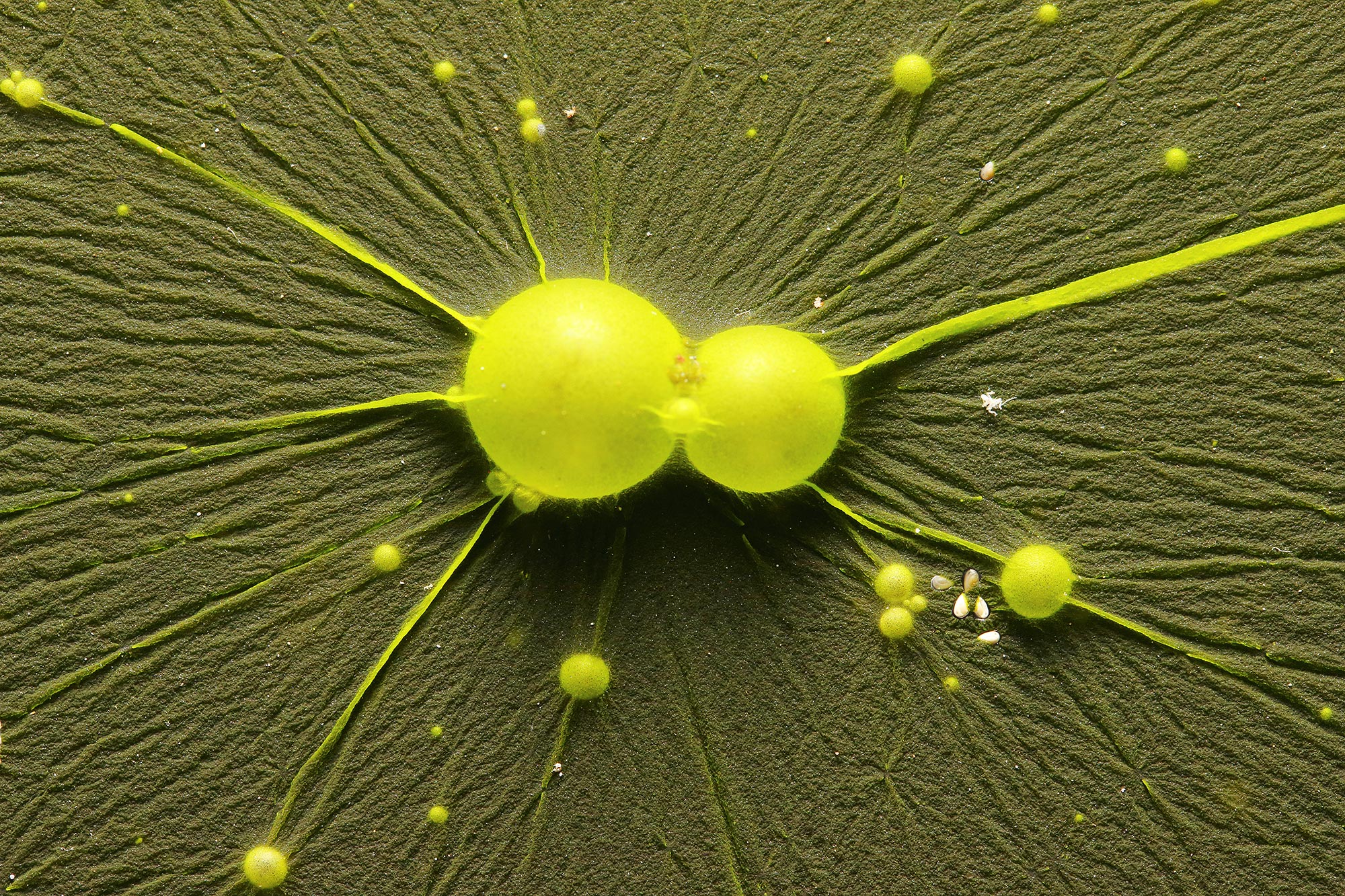
Billions of years ago, oxygen began to appear in Earth’s atmosphere, reshaping the planet and paving the way for complex life. Yet the buildup of oxygen was mysteriously delayed for nearly a billion years after cyanobacteria first evolved the ability to produce it.
A new study offers a fresh explanation, pointing to the roles of nickel and urea—two overlooked compounds that may have limited early cyanobacterial growth. As these substances gradually declined, cyanobacteria flourished, releasing enough oxygen to trigger the Great Oxidation Event.
The Mysterious Delay in Earth’s Oxygen Rise
The rise of oxygen in Earth’s atmosphere marked one of the most important turning points in the planet’s history, transforming it into a place capable of supporting complex life. This major shift, called the Great Oxidation Event (GOE), occurred about 2.1 to 2.4 billion years ago.
However, even though cyanobacteria had already developed oxygen-producing photosynthesis hundreds of millions of years earlier, oxygen levels in the atmosphere remained very low for an extended time. Scientists have long sought to explain this delay, proposing ideas that involve volcanic gases, chemical reactions, and microbial processes. Despite decades of research, the complete answer has remained unclear.
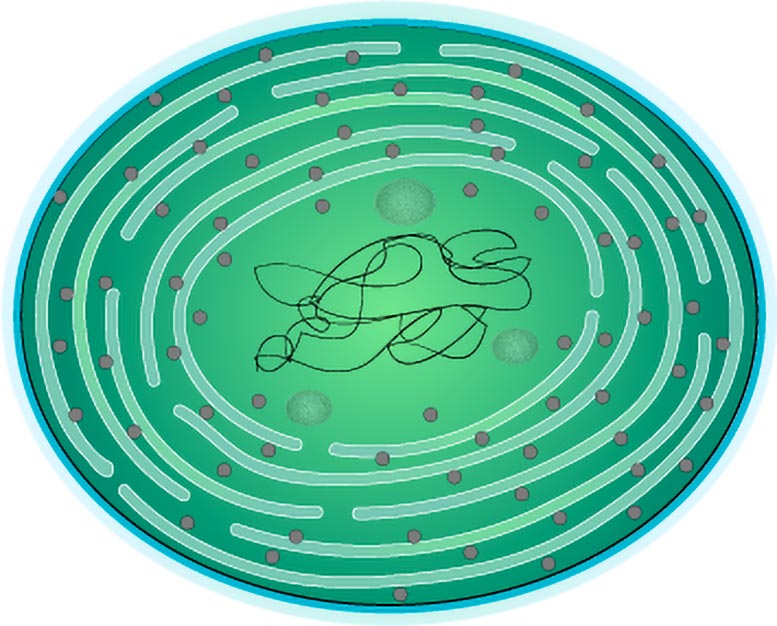
Nickel, Urea, and the Hidden Keys to Oxygenation
A recent study offers a new perspective on this puzzle by focusing on two little-discussed factors: nickel and urea. These trace elements and compounds appear to have played a powerful role in controlling cyanobacterial growth, and by extension, the pace of oxygen production.
Lead researcher Dr. Dilan M. Ratnayake from the Institute for Planetary Materials, Okayama University, Japan (current address is Department of Geology, University of Peradeniya, Sri Lanka), explained, “Generating oxygen would be a massive challenge if we are ever to colonize another planet. Therefore, we sought to understand how a tiny microbe, cyanobacteria, was capable of altering the Earth’s conditions to make them suitable for the evolution of complex life, including our own. The insights gained from this study will also provide a new framework for the sample analysis strategies for future Mars sample return missions.”
Professors Ryoji Tanaka and Eizo Nakamura from the same institute also contributed to the research, which was published in Communications Earth & Environment.
Simulating the Archean World
To better understand how these elements influenced early ecosystems, the scientists recreated aspects of the Archean Earth (around 4-2.5 billion years ago) through a two-part experiment. In the first phase, they combined ammonium, cyanide, and iron compounds, then exposed the mixture to ultraviolet (UV)-C light, replicating the high levels of UV radiation that once reached Earth’s surface before the ozone layer formed. This experiment explored whether urea, an important nitrogen compound essential for life, could form naturally under such ancient conditions.
In the second phase, cultures of cyanobacteria (Synechococcus sp. PCC 7002) were grown under alternating light and dark conditions while varying the amount of nickel and urea in their growth medium. The team measured growth through optical density and chlorophyll-a content to determine how these substances affected cyanobacterial reproduction.
A New Model for the Great Oxidation Event
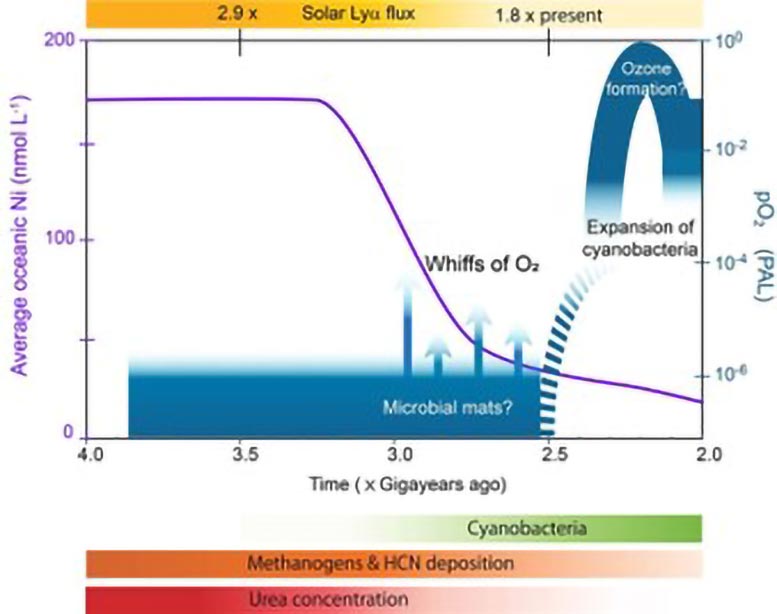
The results led to a new model for understanding how oxygen accumulated in Earth’s atmosphere. According to the researchers, during the early Archean, high concentrations of nickel and urea limited cyanobacterial blooms, preventing sustained oxygen release.
As Dr. Ratnayake noted, “Nickel has a complex yet fascinating relationship with urea regarding its formation as well as its biological consumption, while the availability of these at lower concentrations can lead to the proliferation of cyanobacteria.”
When levels of these compounds eventually fell, cyanobacteria were able to thrive, steadily releasing oxygen and setting off the Great Oxidation Event.
Implications for Life Beyond Earth
The study’s findings have implications that stretch far beyond understanding Earth’s past. “If we can clearly understand the mechanisms for increasing the atmospheric oxygen content, it will shed light upon the biosignature detection in other planets,” shares Dr. Ratnayake. He adds, “The findings demonstrate that the interplay among inorganic and organic compounds played crucial roles in Earth’s environmental changes, deepening our understanding of the evolution of Earth’s oxygen and hence the life on it.”
The same chemical interactions that shaped Earth’s oxygen balance may also help scientists recognize potential signs of life on distant worlds, as elements like nickel and urea could influence how oxygen builds up elsewhere in the universe.
How Nickel and Urea Paved the Way for Life
By confirming that urea could form naturally under Archean conditions and showing that both nickel and urea could either support or inhibit microbial life depending on their concentrations, this research reframes how scientists view early ecosystems. The gradual decline of nickel and stabilization of urea levels appear to have removed major barriers to cyanobacterial expansion, ultimately fueling the oxygen boom that made Earth a habitable world. Through these experiments, researchers have gained a clearer understanding of how subtle chemical shifts shaped the evolution of life and the planet we call home.
Reference: “Biogeochemical impact of nickel and urea in the great oxidation event” by Dilan M. Ratnayake, Ryoji Tanaka and Eizo Nakamura, 12 August 2025, Communications Earth & Environment.
DOI: 10.1038/s43247-025-02576-8
Never miss a breakthrough: Join the SciTechDaily newsletter.
Follow us on Google and Google News.
1 Comment
So what caused the diminution of nickel and urea? Oxidation by increasing numbers of cyanobacteria??
One thing is for sure; H sapiens will be all dead and and gone by the time introduced terra-forming cyanobacteria start flourishing on Mars