

A dazzling cosmic swirl, NGC 3507 shines alone in this Hubble image, though it secretly belongs to a dynamic galactic duo.
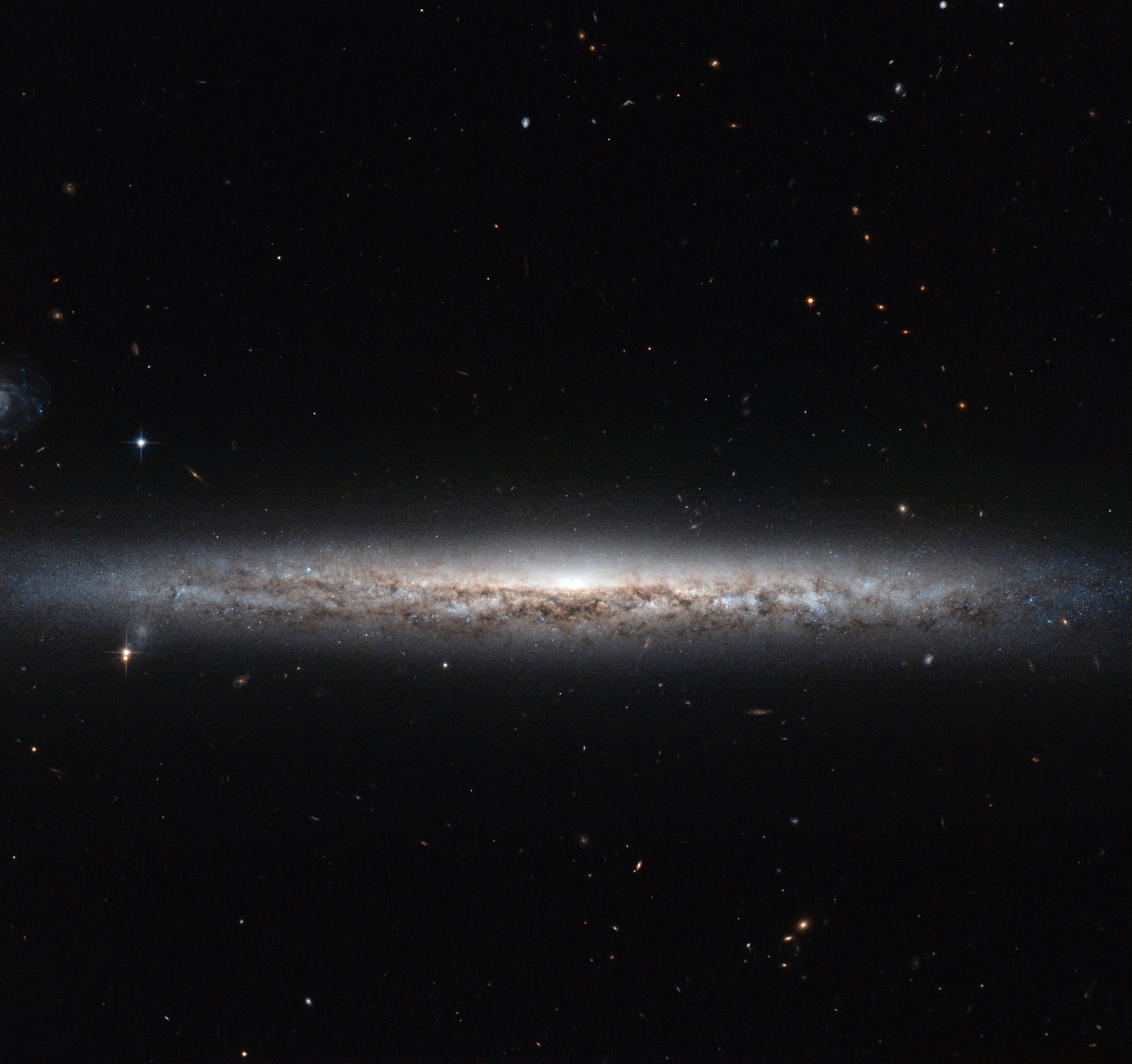
While it flaunts the classic pinwheel shape of a barred spiral, its companion, NGC 3501, appears as a sleek silver streak due to its edge-on view. This contrast in appearance reveals how perspective shapes our cosmic observations.
Stunning Spiral in Leo
Taking center stage in this Hubble Space Telescope image is a stunning spiral galaxy called NGC 3507. Located about 46 million light-years away in the constellation Leo, this celestial beauty is classified as a barred spiral galaxy. Its graceful arms don’t spiral out from the center as you might expect—instead, they stretch from the ends of a bright, central bar made of stars, giving it a distinct and eye-catching structure.
A Galactic Duo, Split by Perspective
Although it looks like a solo act here, NGC 3507 is actually part of a galactic pair. Its companion, NGC 3501, lies just outside the frame of this image and appeared in a previous Hubble feature (see image below). While NGC 3507 showcases a classic, face-on spiral form, its partner looks more like a silvery streak across the sky. This striking difference is all about perspective. Both galaxies are spirals, but we see them from different angles—one face-on, the other edge-on.
Hidden Depths in the Cosmic Background
For galaxies that are just a few tens of millions of light-years away, like NGC 3507 and NGC 3501, features like spiral arms, dusty gas clouds, and brilliant star clusters are on full display. More distant galaxies appear less detailed. See if you can spot any faraway galaxies in this image: they tend to be orange or yellow and can be anywhere from circular and starlike to narrow and elongated, with hints of spiral arms. Astronomers use instruments called spectrometers to split the light from these distant galaxies to study the nature of these objects in the early Universe.
In addition to these far-flung companions, NGC 3507 is joined by a far nearer object, marked by four spikes of light: a star within the Milky Way, a mere 436 light-years away from Earth.
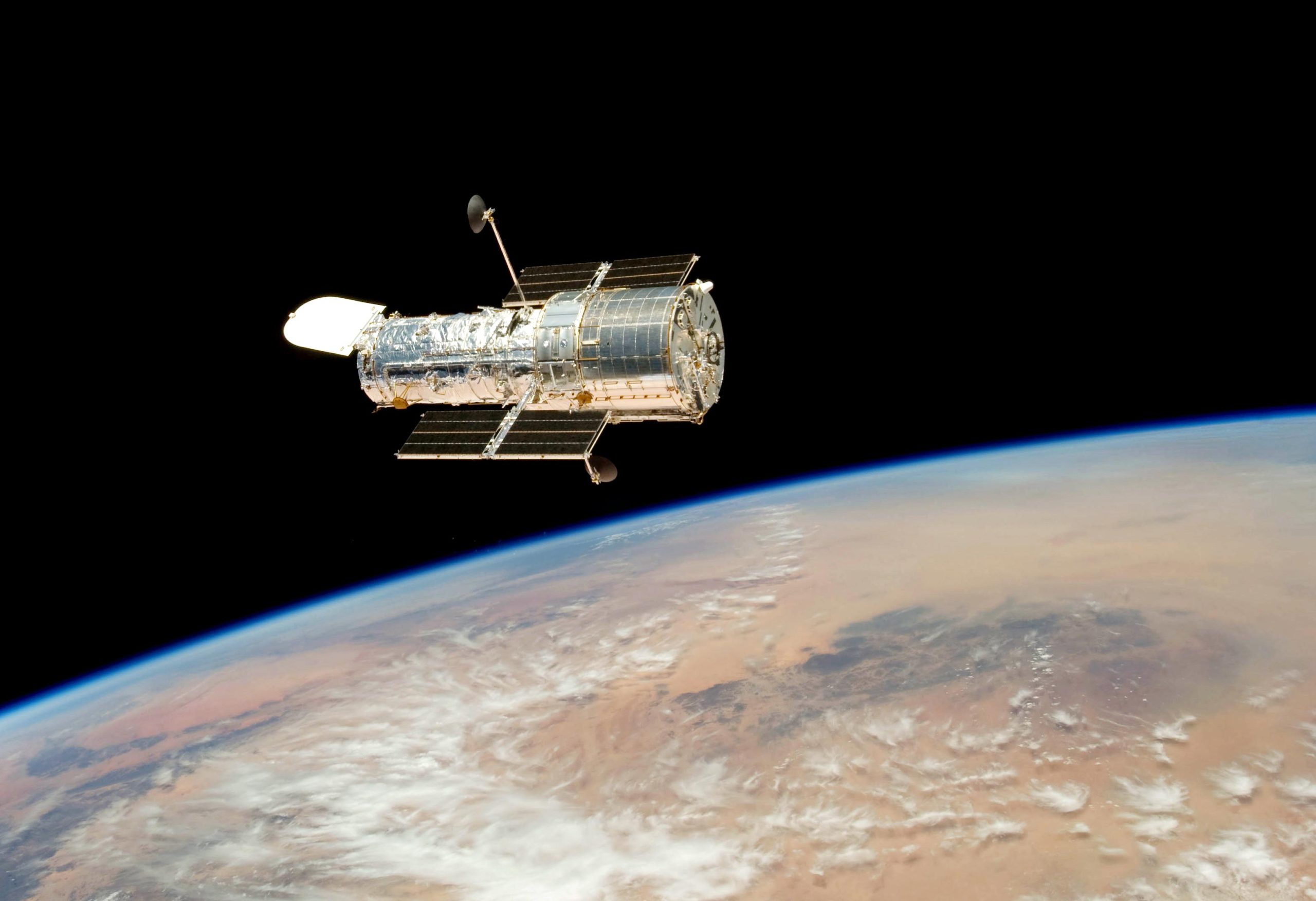
The Hubble Space Telescope is one of the most iconic and transformative observatories in the history of astronomy. Launched in 1990 by NASA and the European Space Agency, Hubble orbits Earth at an altitude of about 340 miles, capturing incredibly detailed images of the universe free from atmospheric distortion. Equipped with powerful cameras and spectrographs, it has provided groundbreaking insights into galaxies, nebulae, black holes, and the early universe. Hubble has helped measure the expansion rate of the cosmos, revealed the existence of dark energy, and inspired both scientists and the public with its breathtaking views of deep space. Its legacy continues as a cornerstone of modern astronomy.
Never miss a breakthrough: Join the SciTechDaily newsletter.
Follow us on Google and Google News.
1 Comment
NOTE 2505311732_Source1. Analyzing【
The universe gives a more detailed picture as observation equipment advances. My cosmology’s msbase.galaxy can introduce countless mysterious sights of space that James Webb’s versionups cannot see due to its resolution. Huh.
_[1-3]msbase.galaxy may be horizontally and vertically decomposed (*) into several msbases because bank(c=i2=-1)ing.
This is seen from perspective in terms of perspective.
_[2-3] There are countless nk.stars in msbase.galaxy, acceleration and positional movement, and gravity. The reason why the arrangement of numbers is different is that the space-time is different due to gravity. In the space-time, mcell means that the change in depth means the change in acceleration. Huh.
Thus, since the change in the position of the stars implies a change in gravity of the mass, msbase.nk_stars, which have been newly decomposed from the side, also have a side view of the multilateral decomposition galaxy parts + star nk.smolas (*). Uh-huh.
≈≈============
Source 1.
https://scitechdaily.com/this-galaxy-is-a-showstopper-but-the-real-twist-is-nearby/
1.
This galaxy is eye-catching. But the real twist is nearby.
The galaxy on the other side is out of frame in this stunning photo from the Hubble Space Telescope, with the beautiful spiral galaxy NGC 3507 catching the eye. NGC 3507, a stunning swirl of space, is actually part of two dynamic galaxies, although it is glowing alone in the Hubble photo.
1-1.
While displaying the classical pinwheel shape of a bar spiral, NGC 3501 appears to be a smooth sliver strip from the side. The contrast in these appearances shows how perspective influences cosmic observations.
1-2. The amazing spiral of Leo
At the center of this photo, which was taken by the Hubble Space Telescope, is a beautiful spiral galaxy called NGC 3507. This beautiful celestial body, which is about 46 million light years away from Leo, is classified as a bar spiral galaxy.
The galaxy’s elegant arms do not spiral out of its core, contrary to expectations. Instead, it extends from the tip of a bright central bar of stars and has a unique and eye-catching structure.
1-3. Galactic Duo Divided by Perspective
NGC 3507, while seemingly solitary, is actually part of a binary galaxy. The companion star, NGC 3501, is just outside the frame in this photo, and has also appeared in an earlier Hubble photo (see image below).
NGC 3507 exhibits a typical frontal spiral shape, while the companion star appears to be a sliver of streaks across the sky. [This striking difference is due to perspective. Both galaxies are spiral galaxies, but we see them from different angles, one from an angle that is frontal and the other from an angle that appears laterally.]
2.
In the Hubble Space Telescope image, the spiral galaxy NGC 3501 appears long and very narrow as it is laterally oriented.
2-1. Hidden depths of the cosmic background
For galaxies tens of millions of light-years away, such as NGC 3507 and NGC 3501, spiral arms, dusty gas clouds, and bright clusters are clearly visible. Further galaxies are visible in less detail.
2-2.
Astronomers use an instrument called a spectrometer to separate light from these distant galaxies to study the properties of these objects in the early universe.
2-3.
[In addition to this distant companion star, NGC 3507 has a much closer celestial body marked with four light-pointed parts. It is a star within the Milky Way, just 436 light-years away from Earth.]