
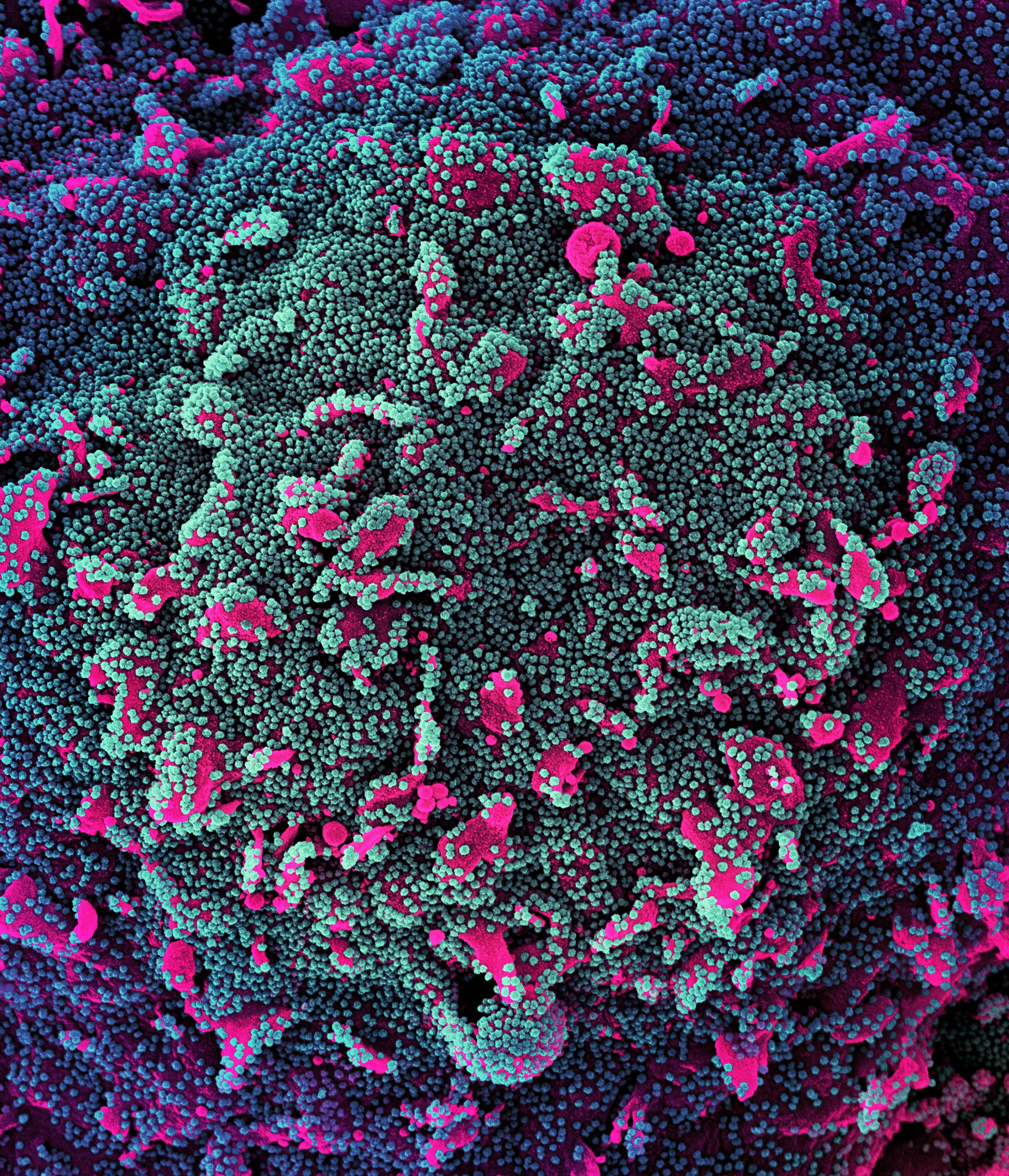
Polymerase-targeting T cells may pave the way for next-gen COVID vaccines.
Researchers at the Eli and Edythe Broad Center of Regenerative Medicine and Stem Cell Research at UCLA have identified rare, naturally occurring T cells that are capable of targeting a protein found in SARS-CoV-2 and a range of other coronaviruses.
The findings suggest that a component of this protein, called viral polymerase, could potentially be added to COVID-19 vaccines to create a longer-lasting immune response and increase protection against new variants of the virus.
Most COVID-19 vaccines use part of the spike protein found on the surface of the virus to prompt the immune system to produce antibodies. However, newer variants — such as delta and omicron — carry mutations to the spike protein, which can make them less recognizable to the immune cells and antibodies stimulated by vaccination. Researchers say that a new generation of vaccines will likely be needed to create a more robust and wide-ranging immune response capable of beating back current variants and those that may arise in the future.
One way to accomplish this is by adding a fragment of a different viral protein to vaccines — one that is less prone to mutations than the spike protein and that will activate the immune system’s T cells. T cells are equipped with molecular receptors on their surfaces that recognize foreign protein fragments called antigens. When a T cell encounters an antigen its receptor recognizes, it self-replicates and produces additional immune cells, some of which target and kill infected cells immediately and others which remain in the body for decades to fight that same infection should it ever return.
Polymerase: The Stable Engine of Coronavirus Replication
The researchers focused on the viral polymerase protein, which is found not only in SARS-CoV-2 but in other coronaviruses, including those that cause SARS, MERS and the common cold. Viral polymerases serve as engines that coronaviruses use to make copies of themselves, enabling infection to spread. Unlike the spike protein, viral polymerases are unlikely to change or mutate, even as viruses evolve.
To determine whether or not the human immune system has T cell receptors capable of recognizing viral polymerase, the researchers exposed blood samples from healthy human donors (collected prior to the COVID-19 pandemic) to the viral polymerase antigen. They found that certain T cell receptors did, in fact, recognize the polymerase. They then used a method they developed called CLInt-Seq to genetically sequence these receptors. Next, the researchers engineered T cells to carry these polymerase-targeting receptors, which enabled them to study the receptors’ ability to recognize and kill SARS-CoV-2 and other coronaviruses.
More than 5 million people have died from COVID-19 worldwide. Current vaccines provide significant protection against severe disease, but as new, potentially more contagious variants emerge, researchers recognize that vaccines may need to be updated — and the new UCLA findings point toward a strategy that may help increase protection and long-term immunity. The researchers are now conducting further studies to evaluate viral polymerase as a potential new vaccine component.
The study was published online on December 9, 2021, in the journal Cell Reports.
Reference: “HLA-A*02:01 restricted T cell receptors against the highly conserved SARS-CoV-2 polymerase cross-react with human coronaviruses” by Pavlo A. Nesterenko, Jami McLaughlin, Brandon L. Tsai, Giselle Burton Sojo, Donghui Cheng, Daniel Zhao, Zhiyuan Mao, Nathanael J. Bangayan, Matthew B. Obusan, Yapeng Su, Rachel H. Ng, William Chour, Jingyi Xie, Yan-Ruide Li, Derek Lee, Miyako Noguchi, Camille Carmona, John W. Phillips, Jocelyn T. Kim, Lili Yang, James R. Heath, Paul C. Boutros and Owen N. Witte, 9 December 2021, Cell Reports.
DOI: 10.1016/j.celrep.2021.110167
Pavlo Nesterenko, a UCLA graduate student, is the study’s first author; the corresponding author is Dr. Owen Witte, who holds the presidential chair in developmental immunology in the UCLA Department of Microbiology, Immunology and Molecular Genetics and is founding director emeritus of the Broad Stem Cell Research Center. A full list of co-authors is available in the journal.
The research was supported by the Parker Institute for Cancer Immunotherapy, a Ruth L. Kirschstein Institutional National Research Service Award from the National Institutes of Health and the UCLA W.M. Keck Foundation COVID-19 Research Award Program.
Never miss a breakthrough: Join the SciTechDaily newsletter.
Follow us on Google and Google News.
2 Comments
Our healthcare system is about to experience a tsunami! Potential side effects of jabs include chronic inflammation, because the vaccine continuously stimulates the immune system to produce antibodies. Other concerns include the possible integration of plasmid DNA into the body’s host genome, resulting in mutations, problems with DNA replication, triggering of autoimmune responses, and activation of cancer-causing genes. Alternative COVID cures exist. Ivermectin is one of them. While Ivermectin is very effective curing COVID symptoms, it has also been shown to eliminate certain cancers. Do not get the poison jab. Get your Ivermectin while you still can.
Posts like Tammy’s make me so sad. She is obviously someone who cares about health and wants information which is great but apparently she has fallen victim to unscrupulous web sites posting misinformation or rather LIES.
I am a PharmD, that is a Doctor of Pharmacy. I can’t let Tammy’s post go without a reply. First, vaccines do not continuously stimulate the immune system to produce antibodies. Over time immunity wanes which is why we need booster shots from time to time. Chronic inflammation is found naturally in a host of diseases such as rheumatoid arthritis, psoriasis, Type II diabetes and many other conditions that have nothing to do with vaccines. There have been reports of post vaccine inflammation but infinitely fewer cases than inflammation caused by the Covid itself. Tammy expresses concern about integration of plasmid DNA into the body’s genome. Currently DNA vaccines have NOT been approved for human use!!! DNA vaccines have been studied for decades and DNA mutations caused by a plasmid vaccine happen no more often than mutations that occur naturally. Every time a cell divides there is a chance of mutations. Instead of triggering autoimmune responses and activation of cancer causing genes these vaccines are being studied to TREAT autoimmune diseases and cancer. It is a moot point however because DNA VACCINES HAVE NOT BEEN APPROVED FOR HUMAN USE. Finally, Ivermectin is not a covid cure. It is used by veterinarians to kill parasites in animals. In humans its used under the brand name Stromectol to treat parasites (worms and lice and scabies). In Africa and Latin America ivermectin is used under the brand name Mectizan to treat “river blindness” caused by a parasitic worm.
The original studies with the Covid virus were in vitro, that means in a test tube at concentrations much higher than could safely be used in humans. A large analysis of all the studies up to date revealed that hundreds of studies were not valid because of small patient numbers and/or poor study design. The remaining studies haven’t shown significant differences in hospitalizations or survival. Although studies are ongoing, so far Ivermectin hasn’t proven beneficial. If you know someone who took Ivermectin and recovered from Covid-19 they would have also recovered without the Ivermectin. Why the enthusiasm? In poorer regions like Latin America and India there is the hope for a treatment using a cheap drug that has been around for decades.
Has Ivermectin been shown to eliminate certain cancers? Again many studies are in vitro (test tube) but research into combining Ivermectin with other traditional chemo drugs does look hopeful. It is not currently being used in cancer treatment but on a limited basis with other drugs in clinical trials. Only time will tell if ivermectin will ever be approved as a new cancer treatment.
Finally the link to buy Ivermectin is an Indian website that sells prescription drugs without a prescription which is illegal in the US/England/Australia/Canada. A “pharmacy” that sells such drugs without a prescription is fraudulent. I also noticed they were selling under the brand name “Imrotab” which is not a legally approved product in the US/England/Australia/Canada. A search at an Indian pharmacy benefits manager listed the brand names and manufacturers of ivermectin in India and Imrotab was not listed. The package pictured on the “pharmacy” website listed Knoll Pharmaceuticals as the manufacturer but a visit to Knoll’s website showed “Imrotab” is “not found”.
Link to British Medical Journal review: https://ebm.bmj.com/content/early/2021/05/26/bmjebm-2021-111678
Link to Indian pharmacy benefits manager listing ivermectin brands available: https://www.sastimedicine.com/salt-alternatives/20902-3268427/Ivermectin-12mg-Price-Dosage-Side-Effects-and-Generic-Alternatives-its-cost
Link to Knoll Pharaceuticals after I searched for “Imrotab”: https://knollhealthcare.com/?s=imrotab