
An ancient alabaster vase from Yale’s Babylonian Collection has revealed traces of opium, offering the strongest evidence yet of widespread opiate use in ancient Egypt.
A recently analyzed alabaster vase from the Yale Peabody Museum’s Babylonian Collection has been found to contain traces of opiates, offering the strongest evidence so far that opium was widely used in ancient Egyptian society, according to new research from the Yale Ancient Pharmacology Program (YAPP).
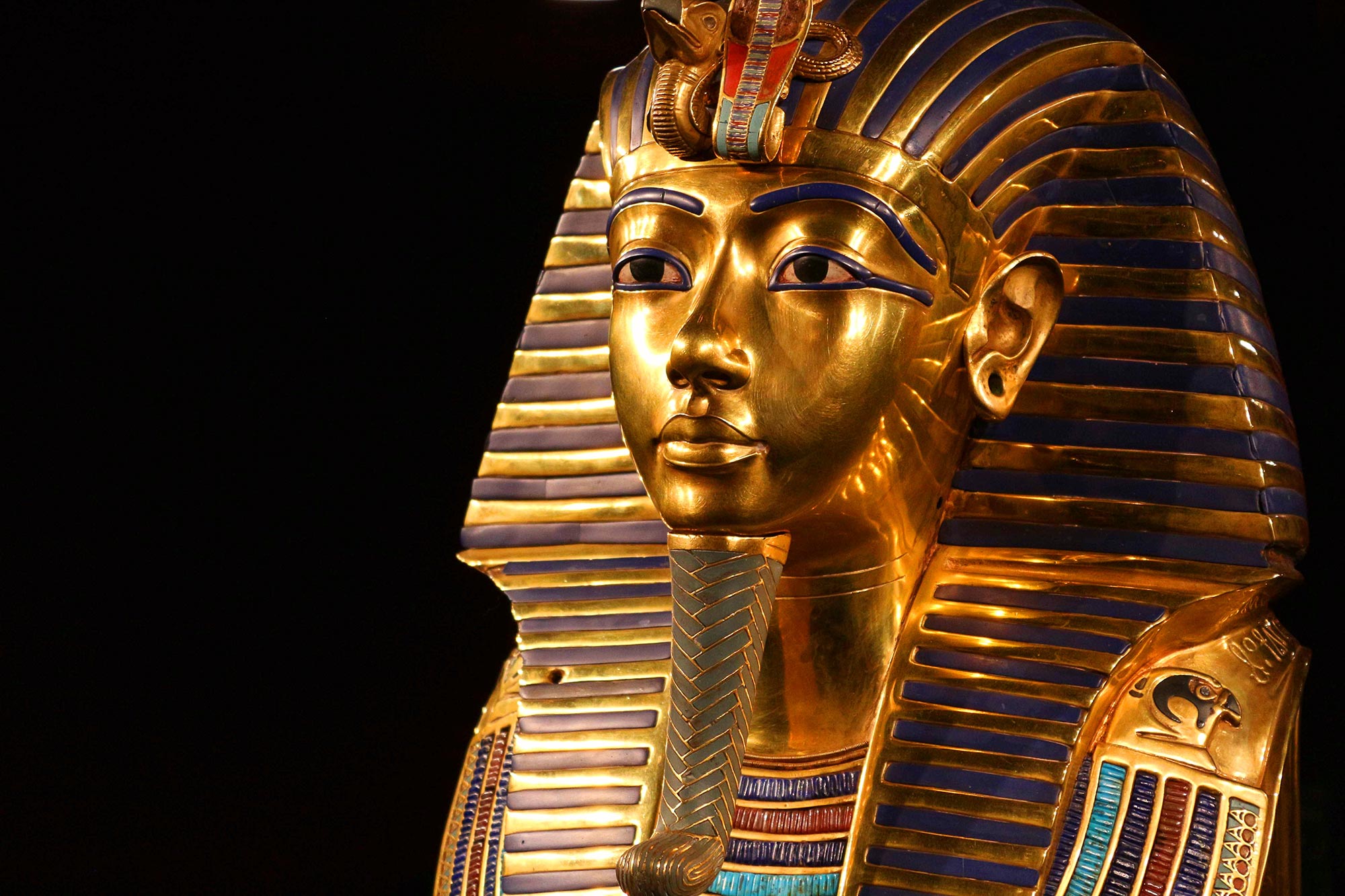
The discovery indicates that other Egyptian alabaster vessels, all carved from calcite sourced from the same Egyptian quarries, may also hold remnants of opiates. This group includes several ornate examples uncovered in the tomb of Pharaoh Tutankhamun, explained Andrew J. Koh, principal investigator for YAPP and lead author of the study.
“Our findings combined with prior research indicate that opium use was more than accidental or sporadic in ancient Egyptian cultures and surrounding lands and was, to some degree, a fixture of daily life,” said Koh, a research scientist at the Yale Peabody Museum. “We think it’s possible, if not probable, that alabaster jars found in King Tut’s tomb contained opium as part of an ancient tradition of opiate use that we are only now beginning to understand.”
The study, published in the Journal of Eastern Mediterranean Archaeology, was coauthored by Agnete W. Lassen, associate curator of the Yale Babylonian Collection, and Alison M. Crandall, YAPP’s lab manager.
The vase itself bears inscriptions in four ancient languages—Akkadian, Elamite, Persian, and Egyptian—dedicated to Xerxes I, ruler of the Achaemenid Empire from 486 to 465 BCE. At its peak, this empire, centered in Persia, encompassed Egypt, Mesopotamia, the Levant, Anatolia, and parts of Eastern Arabia and Central Asia.
A second inscription on the vase, written in Demotic script — a simplified form of ancient Egyptian writing — indicates that it has a capacity of about 1,200 milliliters. (It is 22 centimeters tall.) Intact examples of inscribed ancient Egyptian alabaster vessels are exceptionally rare, likely numbering less than 10 in collections worldwide, the researchers noted.
Provenance and Research Approach
The provenances of the intact vessels are generally unknown, the researchers said, but they at least span the reigns of Achaemenid emperors Darius, Xerxes, and Artaxerxes, a period covering 550 to 425 BCE. Yale’s vase has been part of the Babylonian Collection since shortly after the assemblage of about 40,000 ancient artifacts was established at the university in 1911.
Based at the Peabody Museum, YAPP harnesses ethnography, science, and technology to better understand how people lived thousands of years ago. Its researchers study the organic residues found on or within ancient vessels, providing insight into ancient people’s diets and lifestyles. The program has developed specific methods for analyzing organic residues — which degrade and decompose over time and are susceptible to contamination — found in artifacts in museum collections or those that have been recently excavated.
“Scholars tend to study and admire ancient vessels for their aesthetic qualities, but our program focuses on how they were used and the organic substances they contained, knowledge that reveals a great deal of information about the daily lives of ancient peoples, included what they ate, the medicines they used, and how they spent their leisure time,” Koh said.
For the new study, Koh’s interest was initially piqued after observing dark-brown aromatic residues inside the vase.
YAPP’s analysis of the residues revealed definitive evidence for noscapine, hydrocotarnine, morphine, thebaine, and papaverine — well-known diagnostic biomarkers for opium.
Researchers say the results echo the discovery of opiate residues in a group of Egyptian alabaster vessels and Cypriot base-ring juglets found in an ordinary tomb, likely a merchant family, in Sedment, Egypt, located south of Cairo, that dates to the New Kingdom, the Egyptian empire that stretched from the 16th to the 11th century BCE.
Connections to Tutankhamun’s Tomb
The two findings, which stretch over a millennium and across socio-economic groups, raise the distinct possibility that opium is present among the large quantity of alabaster vessels found in Tutankhamun’s tomb in the Valley of the Kings, Koh said.
There are clear signals of opium usage that goes beyond medicinal usage and into the spiritual realm throughout antiquity, stretching from ancient Mesopotamia to Egypt and through the Aegean, he said. During Tutankhamun’s lifetime, for example, people in Crete were associated with the so-called “poppy goddess” in clearly ritualistic contexts. The poppy plant is mentioned in multiple ancient texts including the Ebers Papyrus, Hippocrates, Dioscorides’s De Materia Medica, and Galen.
Egyptologist and archaeologist Howard Carter’s discovery of Tutankhamun’s tomb in November 1922 yielded an enormous haul of artifacts, including a vast number of exquisitely preserved Egyptian alabaster vessels that likely represented the finest available during Tutankhamen’s reign, which last from 1,333 to 1,323 BCE.
In 1933, the analytical chemist Alfred Lucas, a member of Carter’s research team, performed a cursory chemical study of the vessels, many of which contained sticky, dark brown, aromatic organics. At the time, Lucas was unable to chemically identify the organic materials, but he determined that most were not unguents or perfumes.
“That Lucas questioned whether any of the vessels contained perfumes or unguents at all and did not identify the remaining vessel contents as primarily aromatic in nature is significant given that the prevailing conventions at the time would have pressured him to do so,” Koh said.
The Mystery of the Looted Vessels
No further analysis of the organic materials has been conducted since Lucas’ early attempt. The vessels — along with most other artifacts from Tutankhamun’s tomb — are housed at the Grand Egyptian Museum in Giza, Egypt.
After his historic discovery, Carter had noted an ancient looting incident that targeted the contents of the alabaster vessels, the researchers said. Finger marks found inside the vessels suggested that the looters had attempted to meticulously scrape out their contents to the dregs. Many of the looted vessels contained that same dark-brown, aromatic substances that Lucas concluded were not perfumes, the researchers note. A few of the vessels were not looted and remain filled with their original contents.
Those contents, whatever they were, were considered important enough to accompany Tutankhamen into the afterlife and to inspire grave robbers to risk their lives in an attempted theft, Koh said.
It is unlikely, he added, that ancient people would have assigned such value to the standard unguents and perfumes of the day.
“We now have found opiate chemical signatures that Egyptian alabaster vessels attached to elite societies in Mesopotamia and embedded in more ordinary cultural circumstances within ancient Egypt,” Koh said. “It’s possible these vessels were easily recognizable cultural markers for opium use in ancient times, just as hookahs today are attached to shisha tobacco consumption. Analyzing the contents of the jars from King Tut’s tomb would further clarify the role of opium in these ancient societies.”
Reference: “The Pharmacopeia of Ancient Egyptian Alabaster Vessels: A Transdisciplinary Approach with Legacy Artifacts ” by Andrew J. Koh, Agnete W. Lassen and Alison M. Crandall, 1 September 2025, Journal of Eastern Mediterranean Archaeology and Heritage Studies.
DOI: 10.5325/jeasmedarcherstu.13.3.0317
Never miss a breakthrough: Join the SciTechDaily newsletter.
Follow us on Google and Google News.
3 Comments
Humans have been using natural medicine like opium forever. Its only been recently in our history thats its been so demonized.
Very incomplete article that completely misses the relevance. There was a drug trade with South America.
Source: University of California, Riverside https://share.google/ENVg1WYpvPxYxBBLz
It’s only been demonized the day it was sold for riches n wealth or coveted? Just as with everything else? Beginning with Land?