

Astronomers used NASA’s James Webb Space Telescope to detect atmospheric asymmetry in the exoplanet WASP-107b.
This unprecedented observation reveals differences in temperature and cloud properties between the planet’s east and west sides, which is crucial for understanding the dynamics of exoplanetary atmospheres. Their findings, which challenge existing models, suggest exciting complexities in how these planets experience sunlight.
Groundbreaking Discovery in Exoplanet Atmosphere
Researchers from the University of Arizona, along with an international group of scientists, observed the atmosphere of a hot and uniquely inflated exoplanet using NASA’s James Webb Space Telescope. The exoplanet, which is about the size of Jupiter but only a tenth of its mass, is found to have east-west asymmetry in its atmosphere, meaning that there is a significant difference between the two edges of its atmosphere.
The findings are published today (September 24) in the journal Nature Astronomy.
Unveiling East-West Asymmetry From Space
“This is the first time the east-west asymmetry of any exoplanet has ever been observed as it transits its star, from space,” said lead study author Matthew Murphy, a graduate student at the University of Arizona Steward Observatory. A transit is when a planet passes in front of its star – like the moon does during a solar eclipse.
“I think observations made from space have a lot of different advantages versus observations that are made from the ground,” Murphy said.
Exploring Atmospheric Dynamics
East-west asymmetry of an exoplanet refers to differences in atmospheric characteristics, such as temperature or cloud properties, observed between the eastern and western hemispheres of the planet. Determining whether this asymmetry exists or not is crucial for understanding the climate, atmospheric dynamics and weather patterns of exoplanets – planets that exist beyond our solar system.
The exoplanet WASP-107b is tidally locked to its star. That means that the exoplanet always shows the same face to the star it is orbiting. One hemisphere of the tidally locked exoplanet perpetually faces the star it orbits, while the other hemisphere always faces away, resulting in a permanent day side and a permanent night side of the exoplanet.
Advanced Techniques With the James Webb Space Telescope
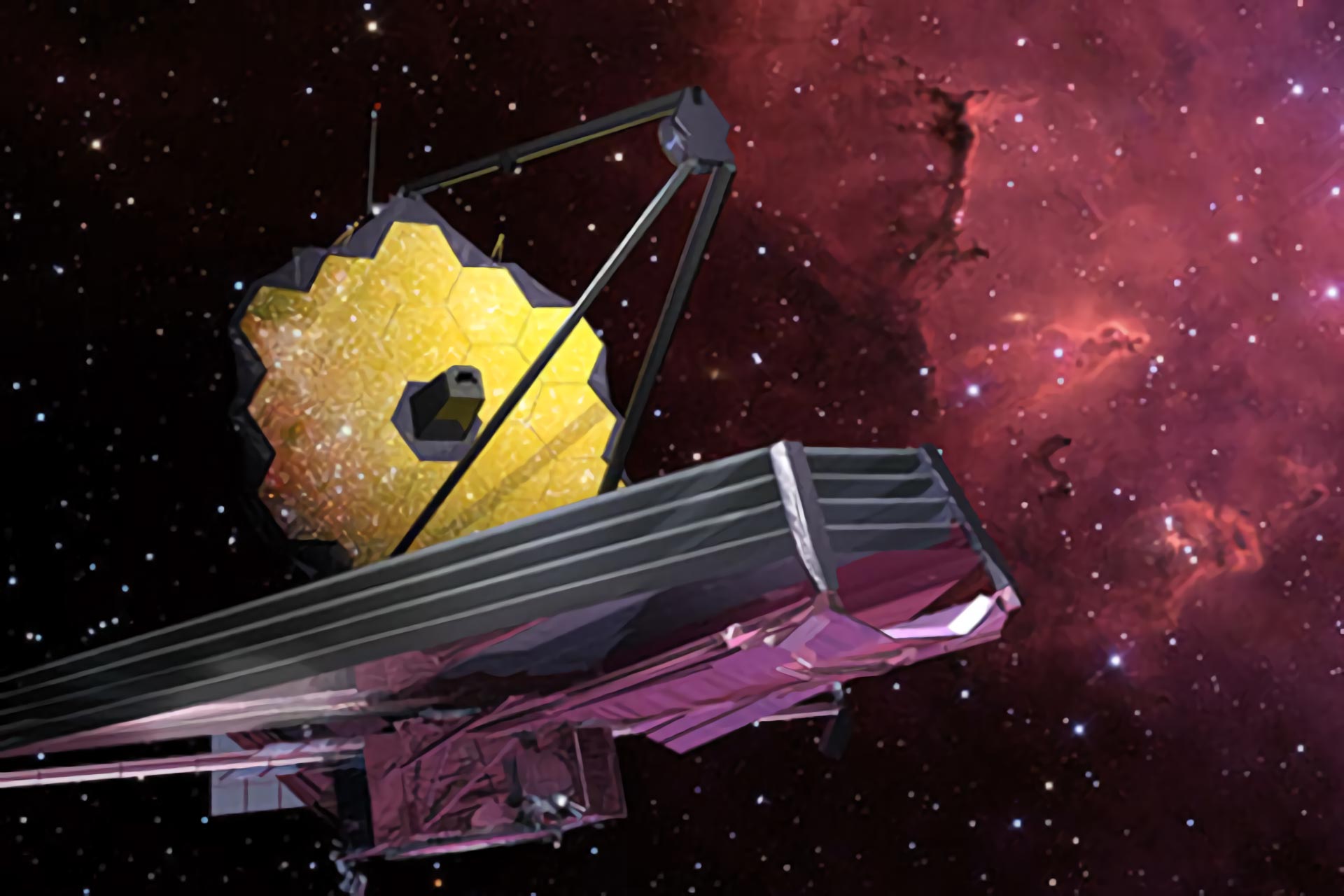
Murphy and his team used the transmission spectroscopy technique with the James Webb Space Telescope. This is the primary tool that astronomers use to gain insights into what makes up the atmospheres of other planets, Murphy said. The telescope took a series of snapshots as the planet passed in front of its host star, encoding information about the planet’s atmosphere. Taking advantage of new techniques and the unprecedented precision of the James Webb Space Telescope, the researchers were able to separate the signals of the atmosphere’s eastern and western sides and get a more focused look at specific processes happening in the exoplanet’s atmosphere.
“These snapshots tell us a lot about the gases in the exoplanet’s atmosphere, the clouds, structure of the atmosphere, the chemistry and how everything changes when receiving different amounts of sunlight,” Murphy said.
The exoplanet WASP-107b is unique in that it has a very low density and relatively low gravity, resulting in an atmosphere that is more inflated than other exoplanets of its mass would be.
“We don’t have anything like it in our own solar system. It is unique, even among the exoplanet population,” Murphy said.
WASP-107b is roughly 890 degrees Fahrenheit – a temperature that is intermediate between the planets of our solar system and the hottest exoplanets known.
“Traditionally, our observing techniques don’t work as well for these intermediate planets, so there’s been a lot of exciting open questions that we can finally start to answer,” Murphy said. “For example, some of our models told us that a planet like WASP-107b shouldn’t have this asymmetry at all – so we’re already learning something new.”
Researchers have been looking at exoplanets for almost two decades, and many observations from both the ground and space have helped astronomers guess what the atmosphere of exoplanets would look like, said Thomas Beatty, study co-author and an assistant professor of astronomy at the University of Wisconsin-Madison.
“But this is really the first time that we’ve seen these types of asymmetries directly in the form of transmission spectroscopy from space, which is the primary way in which we understand what exoplanet atmospheres are made of – it’s actually amazing,” Beatty said.
Murphy and his team have been working on the observational data they have gathered and are planning to take a much more detailed look at what’s going on with the exoplanet, including additional observations, to understand what drives this asymmetry.
“For almost all exoplanets, we can’t even look at them directly, let alone be able to know what’s going on one side versus the other,” Murphy said. “For the first time, we’re able to take a much more localized view of what’s going on in an exoplanet’s atmosphere.”
Reference: “Evidence for morning-to-evening limb asymmetry on the cool low-density exoplanet WASP-107 b” by Matthew M. Murphy, Thomas G. Beatty, Everett Schlawin, Taylor J. Bell, Michael R. Line, Thomas P. Greene, Vivien Parmentier, Emily Rauscher, Luis Welbanks, Jonathan J. Fortney and Marcia Rieke, 24 September 2024, Nature Astronomy.
DOI: 10.1038/s41550-024-02367-9
Never miss a breakthrough: Join the SciTechDaily newsletter.
Follow us on Google and Google News.