
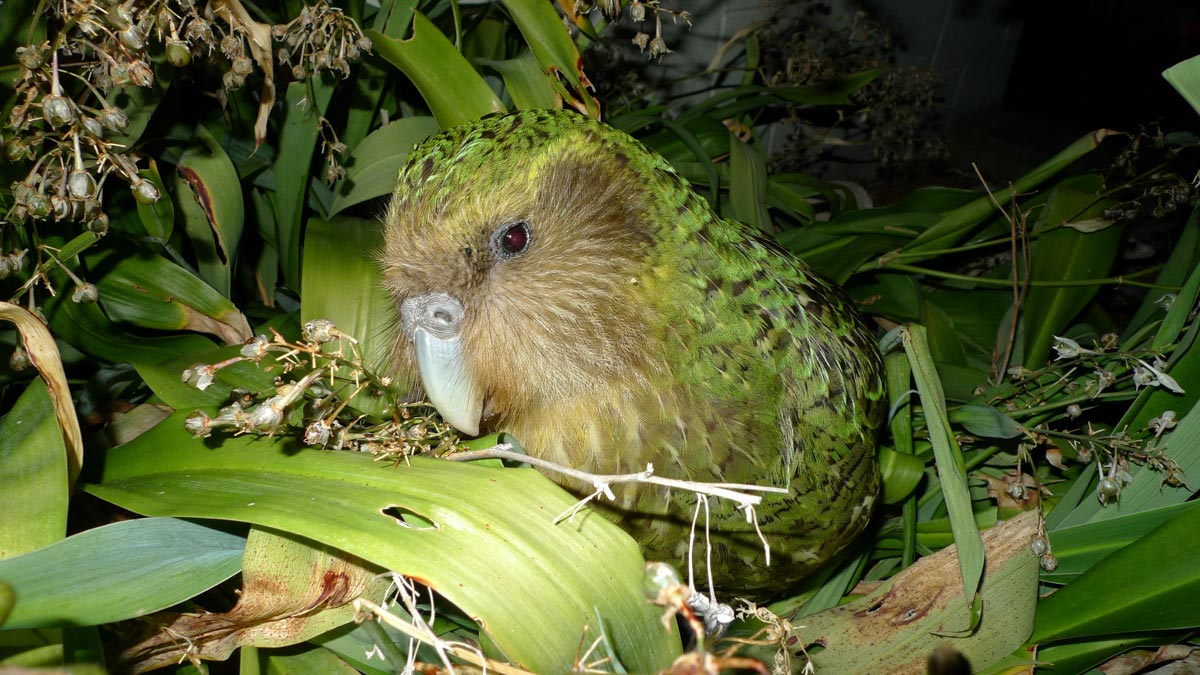
Ancient kākāpō droppings have revealed a startling truth: more than 80% of the bird’s parasites have disappeared.
This “coextinction” shows that as endangered animals struggle to survive, their microscopic companions often vanish first.
Ancient Poo Reveals a Hidden Timeline
Researchers from the University of Adelaide, New Zealand’s Manaaki Whenua-Landcare Research and University of Auckland have discovered that more than 80 per cent of parasites detected in kākāpō poo prior to the 1990s are no longer present in contemporary populations.
The project used ancient DNA and microscopic techniques to sample faeces dating back more than 1500 years, with nine of 16 original parasite taxa disappearing prior to the 1990s, when the endangered parrot came under full-population management, and an additional four recorded as lost in the period since.
The Overlooked Role of Parasites
“Despite their sometimes negative portrayal, parasites are increasingly appreciated for their ecological importance,” says the University of Adelaide’s Dr. Jamie Wood, who contributed to the study published in Current Biology.
“Parasites are among the planet’s most ubiquitous, successful, and species-rich groups of organisms, and nearly all free-living species harbor some parasites. They may help with immune system development and compete to exclude foreign parasites that may be more harmful to their hosts”.
“However, the dependence of parasites on living hosts may make them susceptible to extinction, especially as many parasites live with just one host species.”
Coextinction: When Hosts and Hitchhikers Vanish Together
An extinction of a parasite that occurs in tandem with its host is known as a secondary extinction or a coextinction, and it often happens at a faster rate than for the host animal.
“Predictive models indicate that parasites may go extinct before their hosts during the coextinction process as opportunities to transmit between host individuals diminish,” says Dr. Wood.
“As a result, faunal declines may have a lasting impact on parasite communities, even if host populations eventually recover.
“Dependent species, like parasites, are rarely preserved or documented prior to their extinction, and so until now we have had few data to indicate the actual scale of the coextinction process.
“Our new research indicates that parasite extinctions may be far more prevalent than previous estimates suggest, with unknown impacts on their hosts and their ecosystems.”
Bigger Than Just One Bird
Lead author Alexander Boast, from Manaaki Whenua-Landcare Research, was surprised at the degree of parasite loss.
“The level of parasite loss in kākāpō was greater than we had expected, and very few parasite species were found in both ancient and modern kākāpō populations. Thus, it seems that endangered species everywhere may possess fractions of their original parasite communities,” he says.
Why Parasite Conservation Matters
As we reckon with the impacts of biodiversity loss, Dr. Wood says due attention should also be given to parasitic life.
“Global rates of climate change, ecosystem modification, and biodiversity decline continue to rise, which means there is an increasingly urgent need to recognise and understand the downstream impacts on dependent species, such as parasites, mutualists, or predators,” he says.
“Documenting parasite extinction, how quickly it can unfold, and estimating the number of presently threatened parasites are key first steps toward a ‘global parasite conservation plan’ and supporting informed predictions for past, present, and future parasite losses.”
Reference: “Long-term parasite decline associated with near extinction and conservation of the critically endangered kākāpō parrot” by Alexander P. Boast, Jamie R. Wood, Nicola Bolstridge, George L.W. Perry and Janet M. Wilmshurst, 24 July 2025, Current Biology.
DOI: 10.1016/j.cub.2025.07.009
Never miss a breakthrough: Join the SciTechDaily newsletter.
Follow us on Google and Google News.
1 Comment
How do we rule out coincidence?