
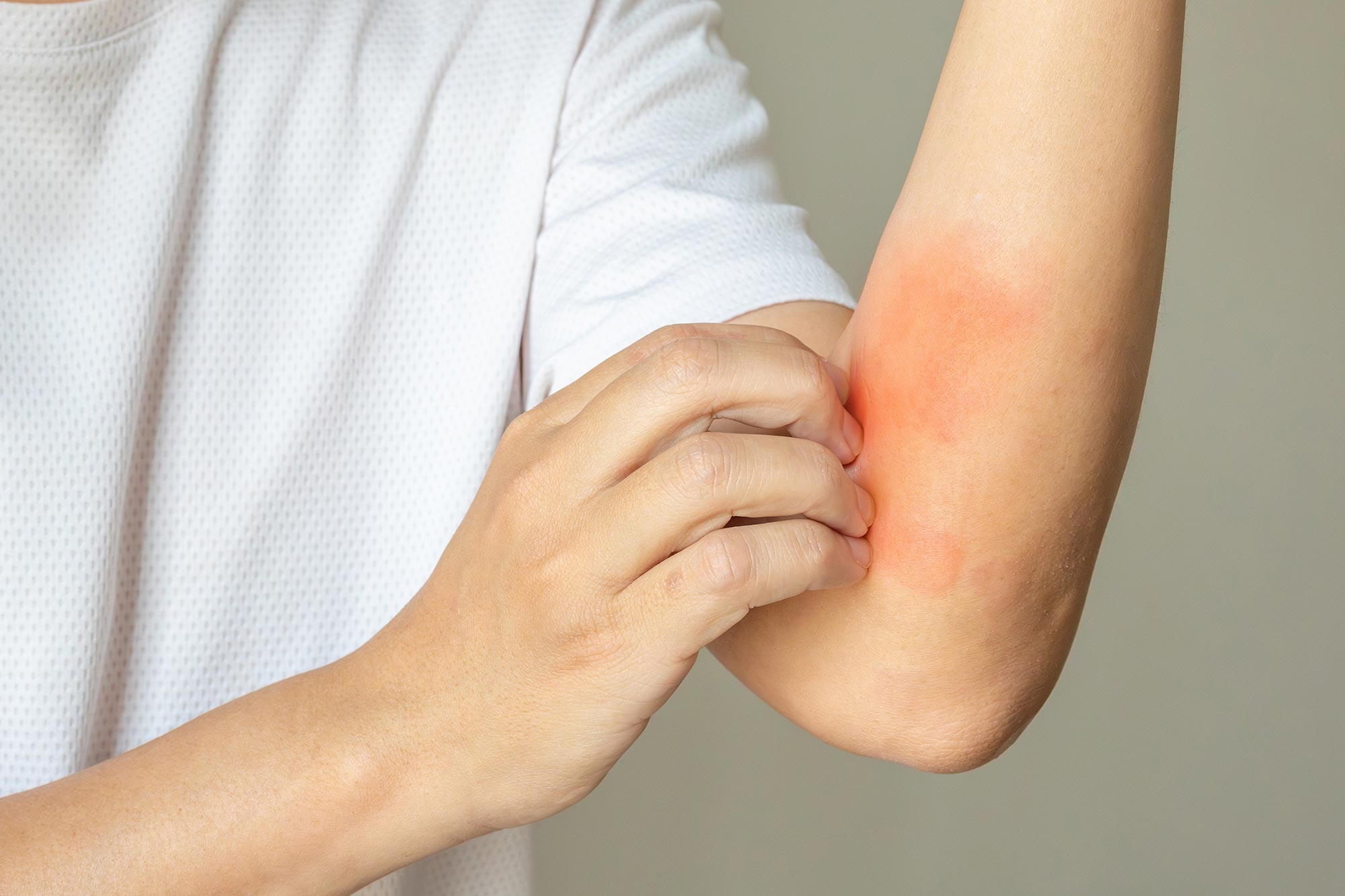
Skin conditions in people with first-episode psychosis may signal a higher risk of depression and suicidal behavior, offering a potential early warning marker for clinicians.
Scientists report that people receiving mental health care who also have skin conditions may face a higher risk of serious outcomes, including depression and suicidality. The findings, which could help clinicians identify patients at greater risk and tailor psychiatric treatment more precisely, were presented at the ECNP meeting in Amsterdam.
The study examined 481 patients experiencing a first episode of psychosis (which is the first time an individual experiences a psychotic episode, such as loss of contact with reality, hallucinations, and delusions). Testing showed that 14.5% of participants had dermatological symptoms, with higher rates among women than men (24% female, 9.8% male). These symptoms included rash, itching, photosensitivity, etc. All patients received four weeks of antipsychotic treatment and were then assessed across multiple mental health measures.
Higher depression and suicide risk
Lead researcher, Dr. Joaquín Galvañ (Instituto de Investigación Sanitaria Gregorio Marañón, Madrid) said:
“After 4 weeks of follow-up, patients with a first episode of psychosis presenting with skin conditions experienced higher levels of depression and risk of suicide. We found that just 7% of the patients without the initial skin conditions had suicidal thoughts or attempts, in contrast, around 25% of the patients with initial skin conditions had suicidal thoughts or attempts. Initial skin conditions are also linked to greater depression and poorer well-being at follow-up.
This discovery suggests that the presence of skin conditions indicates that these patients are more at risk for worse outcomes than patients who do not have skin conditions after a first episode of psychosis”.
The researchers add that, if these results are confirmed, skin conditions could serve as an early warning sign of elevated mental health risk. In this way, they could function much like a blood test that signals increased risk for diseases such as cancer or heart disease.
Interest in this connection stems from the fact that the brain and the skin both originate from the same embryonic layer, the ectoderm, leading the team to explore how skin health and mental health may be linked.
A shared developmental link offers clues
Dr. Galvañ continued: “It was already known that between 30% and 60% of people with skin conditions show psychiatric symptoms. What we have done is look at things from the opposite direction: do people with mental health problems have skin conditions, and if so, can this tell us anything useful?
Our findings suggest that dermatological symptoms may represent a marker of illness severity and poor short-term outcomes in the early stages of psychosis, potentially identifying a subgroup of patients with a poorer clinical prognosis who may benefit from early tailored interventions. The reason for the connection is still unclear, but our working hypothesis is that this may be due to the skin and neurological systems having common developmental origins and inflammatory pathways; but this needs to be confirmed. As far as we know, this is the first study to show this link in patients with psychosis, so we need follow-up studies to confirm the finding. We also need to understand if this link applies also to a range of other psychiatric conditions, such as bipolar disorder, ADHD, anxiety, or depression.”
Commenting, Professor Eric Ruhe (Professor of Difficult-to-Treat Depression at Radboud University, the Netherlands) said: “This is an interesting association between skin problems and a first episode of psychosis. These results need replication in different cohorts but might indeed show a new link between skin and psychopathology.
As the skin and the brain derive from the same embryonic origin, this would be worth pursuing further, both diagnostically and mechanistically (which may be more interesting). For example, this association might be used to culture skin cells to begin to understand which treatment is appropriate.”
Meeting: 38th ECNP Congress
Never miss a breakthrough: Join the SciTechDaily newsletter.
Follow us on Google and Google News.
2 Comments
Relative, to this pollution, it’s a tremendous link with eczema and asthma.
Considering our skin is probably the most underminded organ.
Also, consider the stigma, the adaptation to
How do I say ,,,,an itch You can’t scratch. As well as a good reason, not to be social or want to be seen, causing reclusiveness.
Social anxiety and spiraling cituations.
This all can be relevent to your study as well as the embrynoic theroy. Yet.. the brain and relation to psychology is broad and sounds like the core roots of our systemic problems are being ignored.
Seems like as if efering to my cervix And sexual arousal as relative. Brain being the organ we hold responsible for every thought.
Couldnt this be a harmony of different instruments in unisons effect? Differnt organs.
Seems like we get tunnel vision . The closer we look the more questions we have. Still it appears to me that most of our solutions today are the beginning of tomorrow’s problems now. And we’ve lost site of where we started.
The links the researchers continue to miss are nearly subclinical (sub-acute) non-IgE-mediated food allergies (Dr. Arthur F. Coca, by 1935) aggravated (or not) with toxic officially (FDA in the US) approved food additives. As a senior lay male victim, I now find my skin (the largest organ) is simply trying to eliminate excessive waste that my internal organs can no longer handle. My most serious mental disorders as I attempt to compensate with partial avoidance of known allergens and toxic food additives and targeted nutritional supplementation are probably brain fog, insomnia and senior moments, For a brief overview and summary of some forty-four years of my “experience-based” discovery and only relative wellness: https://odysee.com/@charlesgshaver:d?view=about