
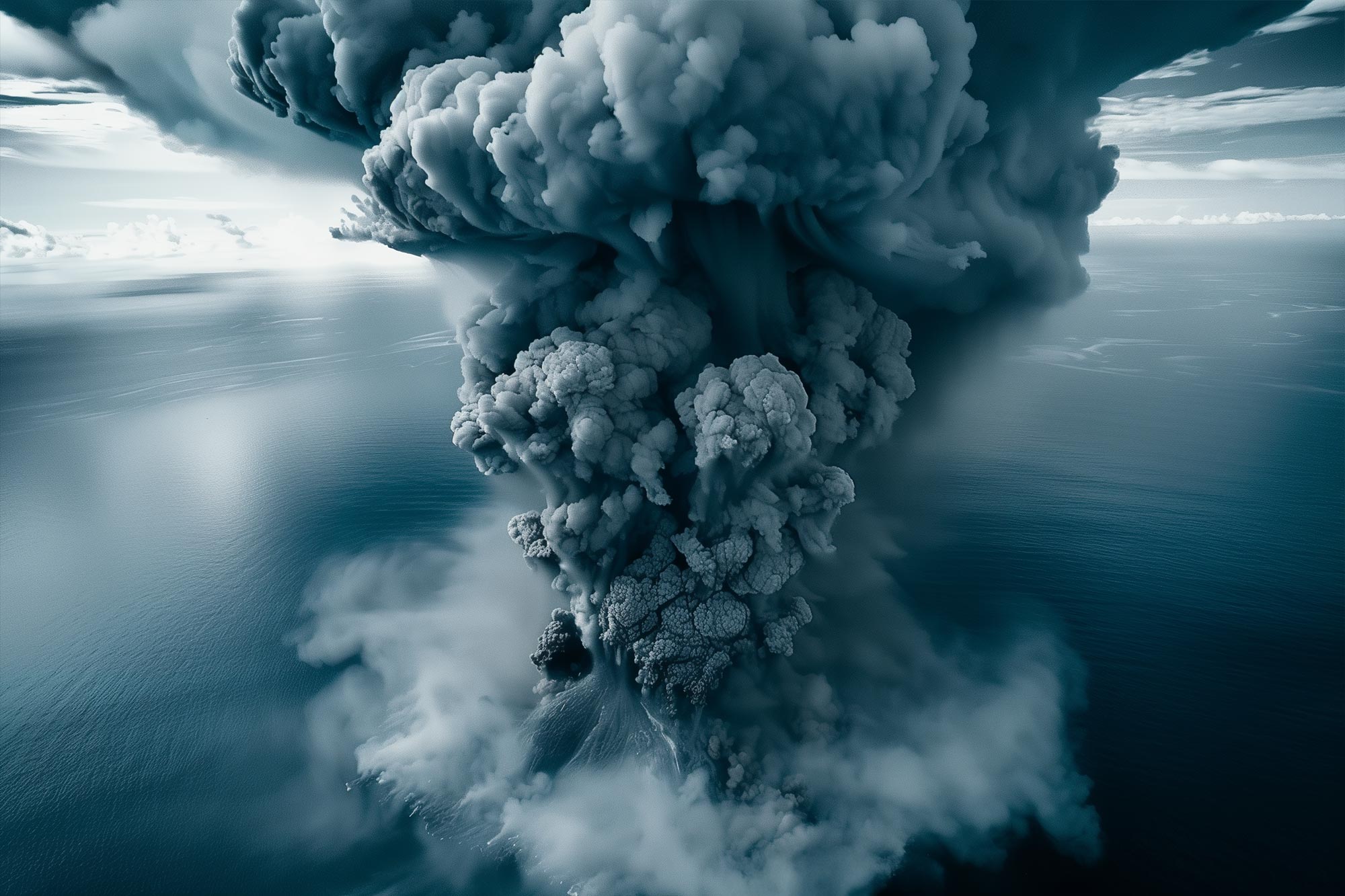
In January 2022, the undersea volcano Hunga Tonga-Hunga Ha’apai erupted spectacularly, becoming one of the most powerful volcanic events of the century. It sent a plume 50 kilometers high, impacting global weather and marine ecosystems. This eruption was preceded by seismic activities detected 15 minutes before any visible signs, a groundbreaking discovery that could transform our understanding of volcanic prediction.
Volcanoes are not confined to land; many exist beneath the ocean. One such undersea volcano, Hunga Tonga-Hunga Ha’apai, is located off the coast of Tonga. On January 15, 2022, it erupted with extraordinary force, marking one of the most powerful eruptions in recent history.
A recent study revealed that seismic waves were detected 15 minutes before the eruption began, even before any visible surface activity. These waves, recorded by a seismic station 750 kilometers away, represent the first documented precursor signal of this kind.
Seismic Discoveries and Volcanic Activity
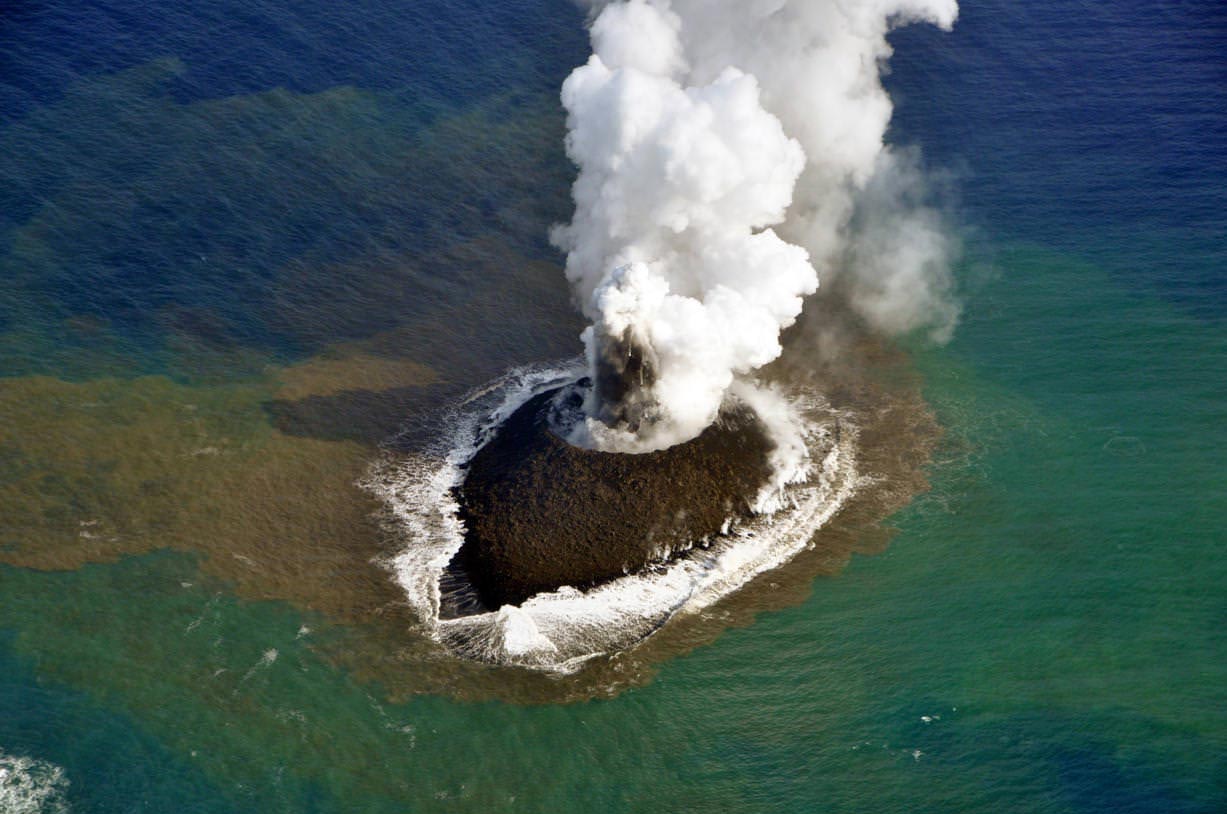
Undersea volcanoes are openings in the Earth’s crust beneath the ocean, where magma escapes from the mantle, leading to eruptions. Surprisingly common, they account for most of Earth’s volcanic activity, particularly along mid-ocean ridges and subduction zones. These undersea eruptions play a critical role in creating new seafloor through the process of seafloor spreading, as molten magma cools and hardens into basaltic crust.
Some undersea volcanoes grow tall enough to breach the ocean’s surface, forming volcanic islands like Iceland and Hawaii. Their eruptions also release substantial amounts of gas, heat, and minerals, which significantly influence surrounding marine ecosystems.
Record-Breaking Eruption of Hunga Tonga-Hunga Ha’apai
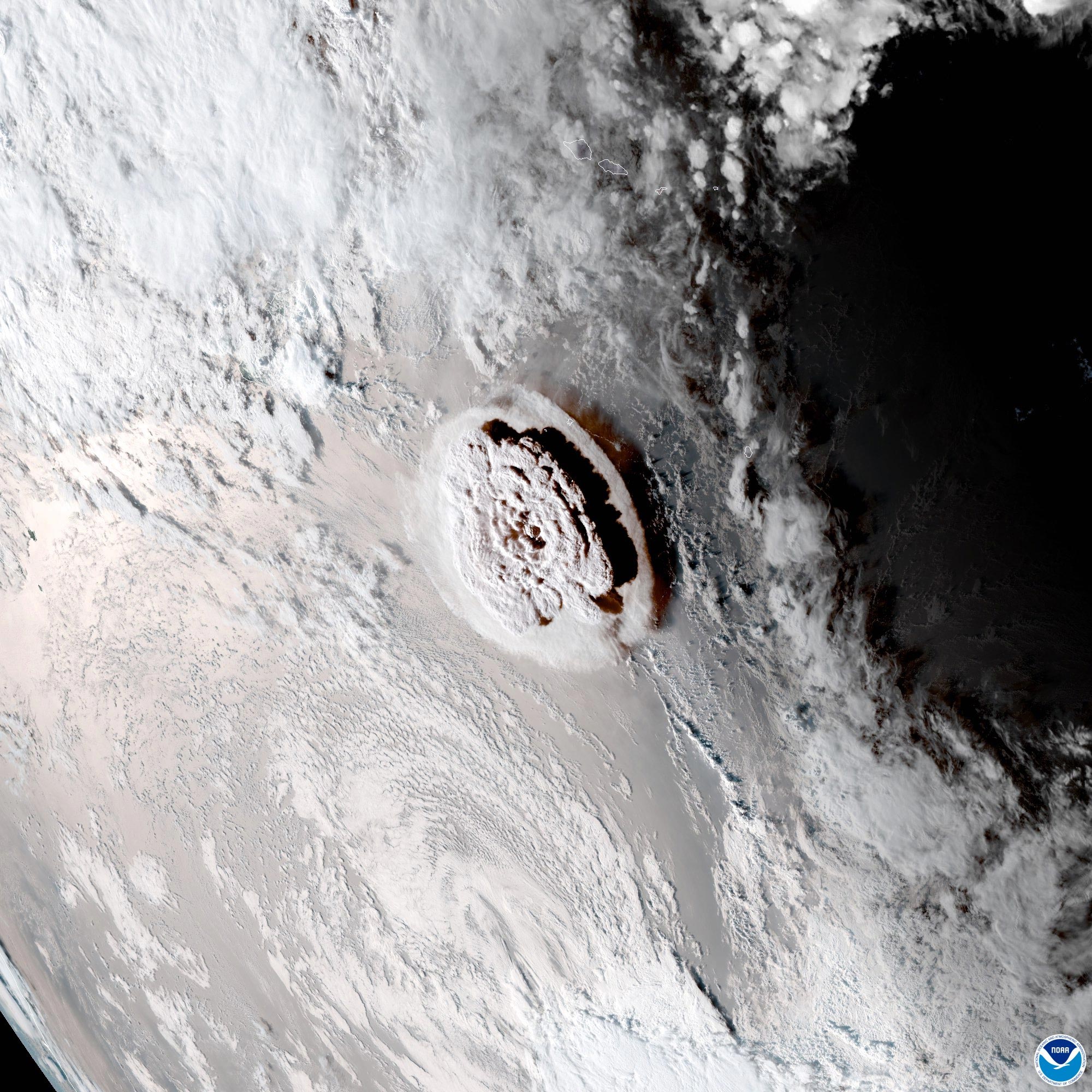
The Hunga Tonga-Hunga Ha’apai volcano is an undersea volcano located in the South Pacific. It became well known after its massive eruption in January 2022. The eruption was one of the most powerful volcanic events of the 21st century, triggering tsunamis that affected coastlines as far away as Japan and the Americas. The explosion released a plume of ash, gas, and water vapor, reaching over 50 kilometers into the atmosphere, making it the highest plume ever recorded. It impacted global weather patterns and temporarily increased water vapor in the stratosphere.
Seismic Analysis of the 2022 Eruption
The eruption of January 2022 formed a caldera on Hunga Tonga-Hunga Ha’apai. There were disturbances that were recorded by many surface stations and satellites in orbit. The data which had been captured revealed that the eruptions began just after 04:00 UTC on January 15. There were a number of reports of seismic waves from around 15 minutes before the onset of the eruption. In a paper published recently by lead author Takuro Horiuchi and a team from the University of Tokyo, they explore the wave detection and mechanics of the eruption.

Implications and Insights from Seismic Data
The team aims to confirm that the event actually occurred just before the 04:00 published timestamp. If they can confirm this, it will help understand the processes that led to the violent eruption. At the time of the eruption, no seismic stations had been working on Tonga but data had been recorded as far away as Fiji and Futuna, both of which around 750km away from the volcano.
The study concluded that the waves that had been detected were Rayleigh waves – a type of seismic waves that are a combination of compression (longitudinal) and shearing (vertical) movements. The waves started around 03:45 on January 15th, 15 minutes before the onset of the eruption. This is the first time significant seismic activity has been seen before the eruption event. It demonstrates that seismic stations hundreds of kilometers away can be positively used to detect signals as precursors to eruptions.
Adapted from an article originally published on Universe Today.
Reference: “A Seismic Precursor 15 min Before the Giant Eruption of Hunga Tonga-Hunga Ha’apai Volcano on 15 January 2022” by Takuro Horiuchi, Mie Ichihara, Kiwamu Nishida and Takayuki Kaneko, 4 November 2024, Geophysical Research Letters.
DOI: 10.1029/2024GL111144
Never miss a breakthrough: Join the SciTechDaily newsletter.
Follow us on Google and Google News.
1 Comment
“Volcanoes are not confined to land; many exist beneath the ocean.”
Indeed, submarine volcanoes are almost certainly more abundant than terrestrial volcanoes. Certainly the density of submarine volcanoes in the Pacific Ring of Fire is much greater than on the cratons of the continents. Yet, little is said about the aggregate role they might play in climate change, other than the cooling effect of sulfate aerosols they emit. Most climatologists turn a blind eye to all but their favorite paradigm.