
Close Menu
    Facebook X (Twitter) Instagram
    SciTechDaily
    • Biology
    • Chemistry
    • Earth
    • Health
    • Physics
    • Science
    • Space
    • Technology
    Facebook X (Twitter) Pinterest YouTube RSS
    SciTechDaily
    Home»Space»This Week @NASA: Webb Celebrates First Year, NASA Humanoid Robot, Low Altitude Flights
    Space

    This Week @NASA: Webb Celebrates First Year, NASA Humanoid Robot, Low Altitude Flights

    By NASAJuly 15, 20231 Comment3 Mins Read
    Facebook Twitter Pinterest Telegram LinkedIn WhatsApp Email Reddit
    Share
    Facebook Twitter LinkedIn Pinterest Telegram Email Reddit
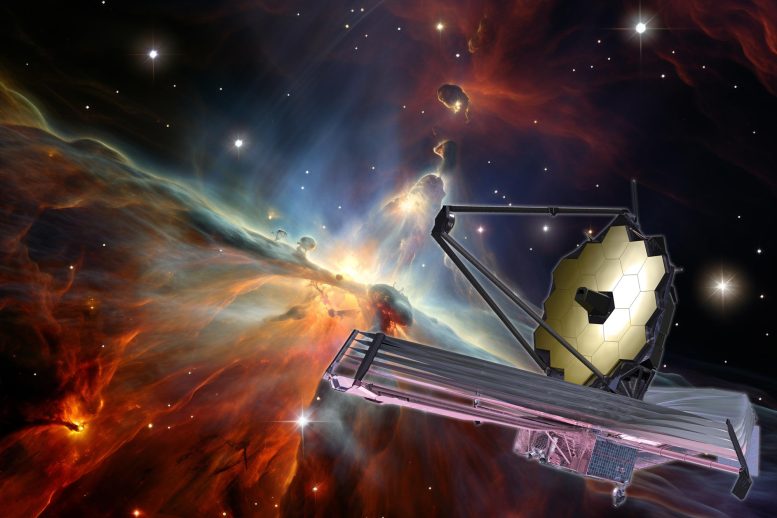
    Webb Interstellar Clouds Art Concept
    NASA’s James Webb Space Telescope marks its first year of operations, delivering a detailed image of the nearest star-forming region to Earth, the Rho Ophiuchi cloud complex. This milestone has expanded our understanding of the cosmos, identifying the compositions of distant galaxies, black holes, planet atmospheres, and shedding new light on our own solar system.

    Celebrating the Webb Space Telescope’s first year of science …

    Testing remote possibilities of a NASA humanoid robot …

    And a fleet of clean new rides for Artemis astronauts …

    A few of the stories to tell you about – This Week at NASA!

    Webb Celebrates First Year of Science with New Image

    On July 12, NASA celebrated the James Webb Space Telescope’s first year of science operations with the release of this new Webb image of the Rho Ophiuchi (OH-fee-yoo-kee) cloud complex – the closest star-forming region to us – some 390 light-years away. Since the release of Webb’s first full-color images in July 2022, the telescope has discovered some of the earliest galaxies ever observed, delivered the most detailed views of the atmospheres of planets outside our solar system, and captured new views of planets within our solar system.
    NASA Dexterous Robotics Team Valkyrie Robot
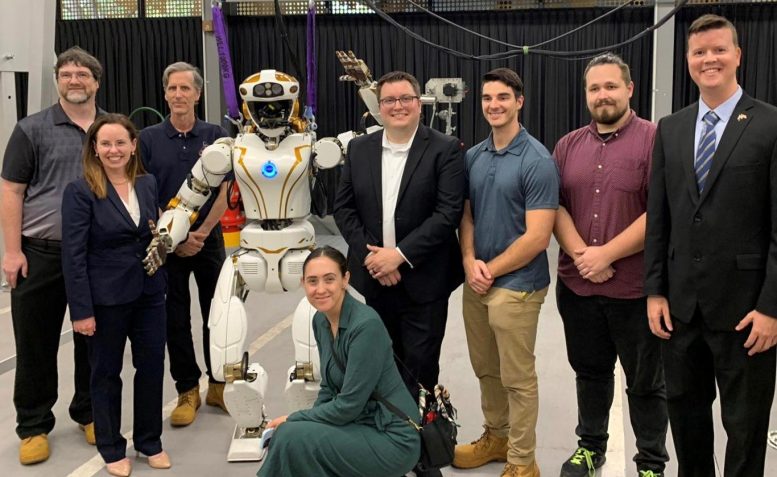
    NASA’s Dexterous Robotics Team and U.S. State Department representatives with NASA’s Valkyrie robot at Woodside Energy. From left: Mark Paterson (METECS), Siri Nair (US Consul General), Scott Askew (NASA), Valkyrie, Clare Millen (US Consul General Economic Advisor), Evan Laske (NASA), Alex Sowell (NASA), Misha Savchenko (METECS), Oliver Bentley (US Department of Commerce). Credit: NASA/JSC

    NASA Humanoid Robot to Be Tested in Australia

    NASA and Western Australia’s Woodside Energy plan to use a NASA Valkyrie robot to test robotic remote operations at the company’s facilities. The collaboration could lead to improved operational safety and efficiency at the company’s offshore and remote installations. The venture could also help NASA develop a remotely operated mobile robot capable of working in conditions not suited for humans – like those astronauts may encounter on future Artemis missions to the Moon.
    New NASA Artemis Crew Vehicle Fleet
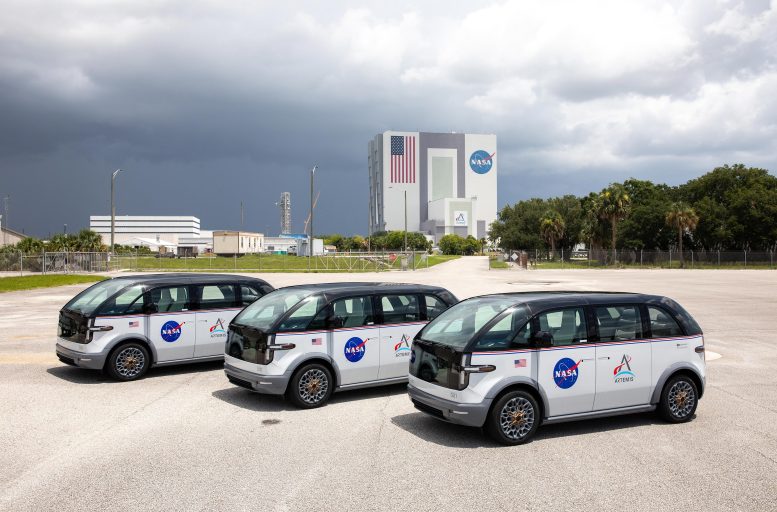
    With the Vehicle Assembly Building in the background, the three specially designed, fully electric, environmentally friendly crew transportation vehicles for Artemis missions arrived at NASA’s Kennedy Space Center in Florida on July 11, 2023. The zero-emission vehicles, which will carry astronauts to Launch Complex 39B for Artemis missions, were delivered by the manufacturer, Canoo Technologies Inc. of Torrance, California. Credit: NASA/Isaac Watson

    New Fleet of Vehicles for NASA’s Artemis Crews

    On July 11, three specially designed, fully electric, environmentally friendly crew transportation vehicles were delivered to NASA’s Kennedy Space Center by Canoo Technologies, Inc. The zero-emission vehicles will be used to transport astronauts from the crew quarters at Kennedy to their rocket and spacecraft at Launch Pad 39B ahead of Artemis missions to the Moon.
    NASA DC-8 Aircraft Low Altitude Flight
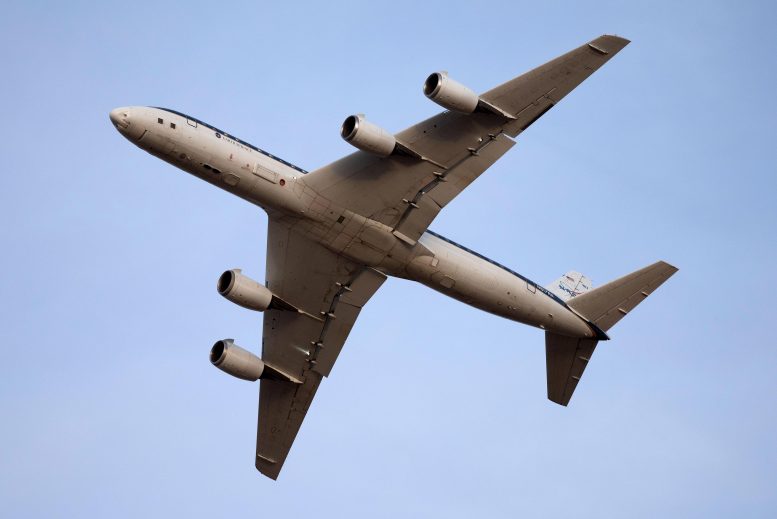
    NASA’s DC-8 aircraft flies low over urban places to collect data on air quality. Credit: NASA

    Low Altitude Flights Study Everyday Emissions

    NASA Armstrong’s DC-8 aircraft is conducting a series of low-altitude flights over some of the most densely populated places in North America, as part of a collaborative effort with NOAA. The project is called AEROMMA – short for Atmospheric Emissions and Reactions Observed from Megacities to Marine Areas. It looks at how urban emissions and atmospheric chemical reactions that stem from the use of everyday items like personal care products and cleaning agents affect air quality and climate.

    That’s what’s up this week @NASA

    Never miss a breakthrough: Join the SciTechDaily newsletter.
    Follow us on Google and Google News.

    NASA
    Share. Facebook Twitter Pinterest LinkedIn Email Reddit

    Related Articles

    NASA’s Hubble Accidentally Witnesses a Comet Shattering in Space

    NASA’s Roman Space Telescope Could Finally Find the Milky Way’s Missing Neutron Stars

    NASA’s Psyche Spacecraft Is About To Fly Shockingly Close to Mars

    This Mars Rock Refused To Let Go of NASA’s Curiosity Rover

    Blue Origin’s New Moon Lander Passes a Crucial Test for NASA Missions

    NASA Fires Up Record-Breaking Plasma Thruster for Future Mars Missions

    Artemis II Just Proved NASA Is Closer Than Ever to Returning to the Moon

    NASA Powers Down Voyager 1 Instrument As It Fights To Survive Deep Space

    NASA Artemis II Nears Dramatic Moon Flyby With Record-Breaking Moment Ahead

    1 Comment

    1. rassalas on July 16, 2023 4:29 pm

      They need three crew vehicles… How many astronauts are they gambling with for this launch?

      Reply
    Leave A Reply Cancel Reply

    • Facebook
    • Twitter
    • Pinterest
    • YouTube

    Don't Miss a Discovery

    Subscribe for the Latest in Science & Tech!

    Trending News

    Scientists Built a Programmable Chip That Can Slow Light on Command

    The Backyard “Silly Sprinkler” That Cracked One of Physics’ Biggest Puzzles

    This Common Sleep Habit Could Be Making You Gain Weight

    Mathematician Offers New Solution to a Fundamental Cosmic Paradox

    Scientists Turn Plastic Waste Into Clean Hydrogen Fuel

    Long COVID Brain Scans Reveal Damage to Dopamine Neurons

    Scientists Warn a Silent Oxygen Crisis Is Spreading Through Earth’s Waters

    James Webb Telescope Discovers Hidden Giant Planet in Famous Star System

    Follow SciTechDaily
    • Facebook
    • Twitter
    • YouTube
    • Pinterest
    • Newsletter
    • RSS
    SciTech News
    • Biology News
    • Chemistry News
    • Earth News
    • Health News
    • Physics News
    • Science News
    • Space News
    • Technology News
    Recent Posts
    • Plant Compounds in Berries, Tea, and Cocoa May Support Healthy Brain Aging
    • Scientists Find a Way To Keep Cancer-Fighting T Cells From Burning Out
    • Scientists Turn an Old Antibiotic Back Into a Superbug Killer
    • Scientists Discover Two Competing Memories in Matter
    • Quantum Heat Waves Spotted at Room Temperature for the First Time
    Copyright © 1998 - 2026 SciTechDaily. All Rights Reserved.
    • Science News
    • About
    • Contact
    • Editorial Board
    • Privacy Policy
    • Terms of Use

    Type above and press Enter to search. Press Esc to cancel.