
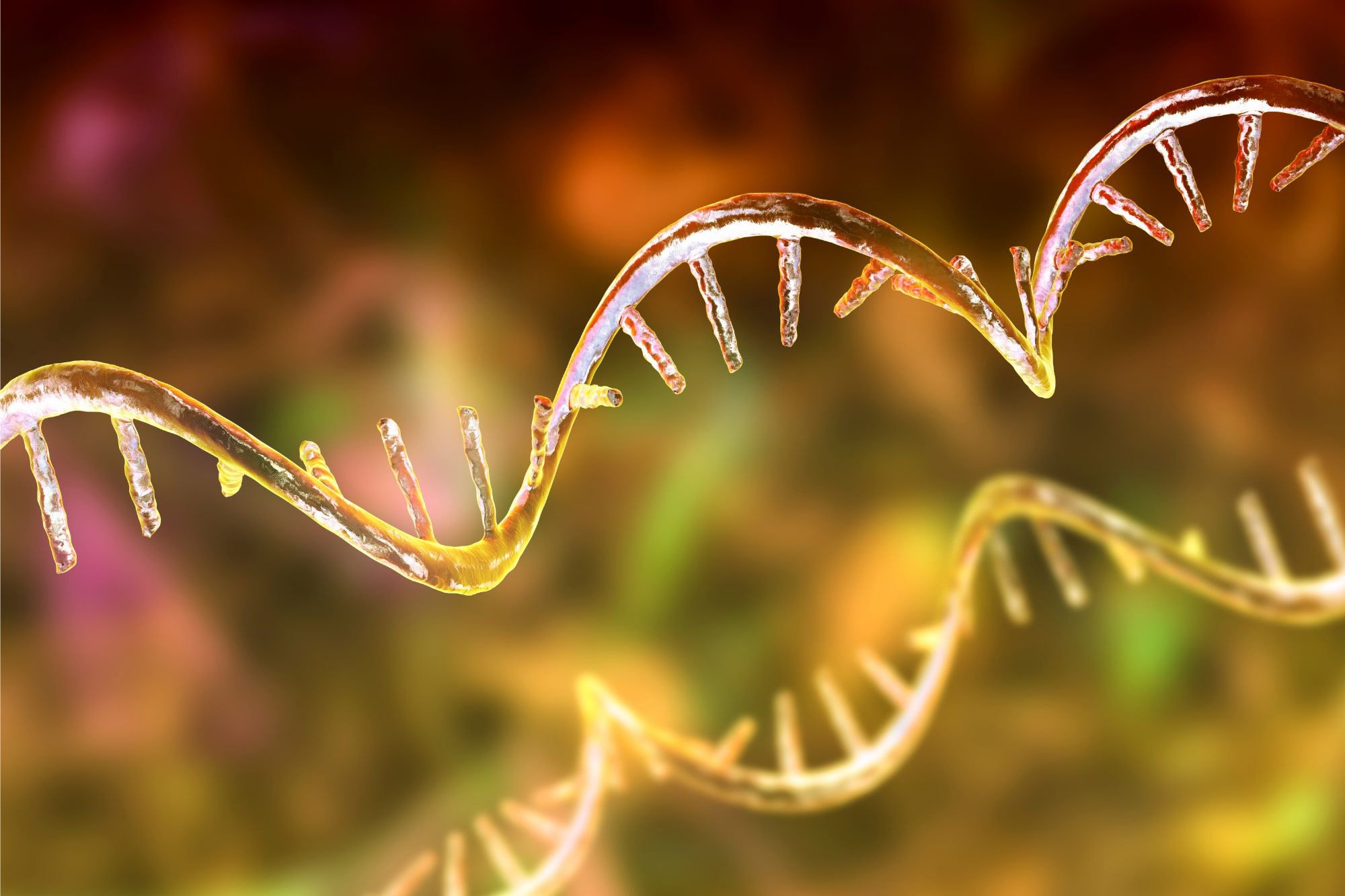
Cornell researchers created a diagnostic tool using cell-free RNA to distinguish between pediatric inflammatory conditions like MIS-C and Kawasaki Disease. This tool also tracks organ health and was developed with support from the NIH.
RNA is released from cells either through cell death or active secretion and can eventually enter the bloodstream. A research team led by Cornell University has created machine-learning models that utilize these cell-free RNA fragments to diagnose pediatric inflammatory conditions that are difficult to differentiate.
The diagnostic tool can accurately determine if a patient has Kawasaki disease (KD), Multisystem Inflammatory Syndrome in Children (MIS-C), a viral infection or a bacterial infection, while simultaneously monitoring the patient’s organ health.
Inflammatory diseases are a particular threat to children because the symptoms – such as fever and rash – are generic, and the patients often get misdiagnosed. If not properly treated, MIS-C can cause swelling in the heart, lungs, brain, and other organs. Similarly, KD – the primary cause of acquired heart disease in children – can lead to cardiac aneurysms and heart attacks. A cell-free RNA-based test would be the first molecular diagnostic tool that clinicians can use to catch these inflammatory conditions at the crucial early stage in children.
Research Origins and Early Findings
The team’s paper was published in the Proceedings of the National Academy of Sciences. The Cornell team was led by Iwijn De Vlaminck, associate professor of biomedical engineering and co-senior author of the paper. The lead author is Conor Loy, currently an Ignite Fellow for New Ventures.
The findings stem from a previous collaboration that began four years ago and used next-generation sequencing to characterize the severe cases of COVID-19 and MIS-C in children that spiked during the pandemic. Initially, De Vlaminck and Loy were focused on the potential of using cell-free DNA to investigate the diseases, but they found themselves increasingly interested in cell-free RNA, because of the rich information content it provides. While cell-free RNA has been shown to be an effective biomarker for pregnancy and cancer, it’s not as well studied as cell-free DNA.
The Advantages of Cell-Free RNA
“When you analyze RNA in plasma, what you’re looking at is RNA from dying cells, and also RNA that’s been released from cells anywhere in the body,” Loy said. “This gives you a huge advantage. In inflammatory conditions, there’s lots of cell death. Cells are, in some cases, exploding and their RNA gets released into plasma. By isolating that RNA and sequencing it, we can discover biomarkers for disease and backtrack where the RNA is coming from to measure cell death.”
The collaborators studied 370 plasma samples from pediatric patients with a range of inflammatory conditions. The team converted the RNA to DNA, then conducted DNA sequencing that analyzed the protein-coding regions of the genome. Loy spent a year experimenting with machine-learning algorithms to find disease signatures in the samples, basically creating a pipeline of different tools to make sense of cell-free RNA.
Beyond developing an accurate model for diagnosis, the researchers also demonstrated that cell-free RNA sequencing can be used to quantify injury to specific tissues and organs, including the liver, heart, endothelium, nervous system and the upper respiratory tract.
“I think a lot of the novelty and the technical innovation, the engineering, is in the data analysis,” De Vlaminck said. “We’re able to quantify how much of the RNA is coming from different organs. How much is coming from the liver, or epithelial cells in the vascular system. By quantifying the sources, we can also learn about injury processes that are likely immune-related but happening in vascularized tissues.”
Reference: “Plasma cell-free RNA signatures of inflammatory syndromes in children” by Conor J. Loy, Venice Servellita, Alicia Sotomayor-Gonzalez, Andrew Bliss, Joan S. Lenz, Emma Belcher, Will Suslovic, Jenny Nguyen, Meagan E. Williams, Miriam Oseguera, Michael A. Gardiner, null null, null null, Jong-Ha Choi, Hui-Mien Hsiao, Hao Wang, Jihoon Kim, Chisato Shimizu, Adriana H. Tremoulet, Meghan Delaney, Roberta L. DeBiasi, Christina A. Rostad, Jane C. Burns, Charles Y. Chiu, Iwijn De Vlaminck, Lukas Austin-Page, Amy Bryl, Joelle Donofrio-Ödmann, Atim Ekpenyong, David Gutglass, Scott Herskovitz, Paul Ishimine, John Kanegaye, Margaret Nguyen, Mylinh Nguyen, Kristy Schwartz, Stacey Ulrich, Tatyana Vayngortin, Elise Zimmerman, Jocelyn Ang, Margalit Rosenkranz, Joseph Bochini, Michelle Sykes, Lerraughn Morgan, Laura D’Addese and Maria Pilar Gutierrez, 6 September 2024, Proceedings of the National Academy of Sciences.
DOI: 10.1073/pnas.2403897121
The research was supported by the NIH’s National Institute of Child Health and Human Development.
Never miss a breakthrough: Join the SciTechDaily newsletter.
Follow us on Google and Google News.