
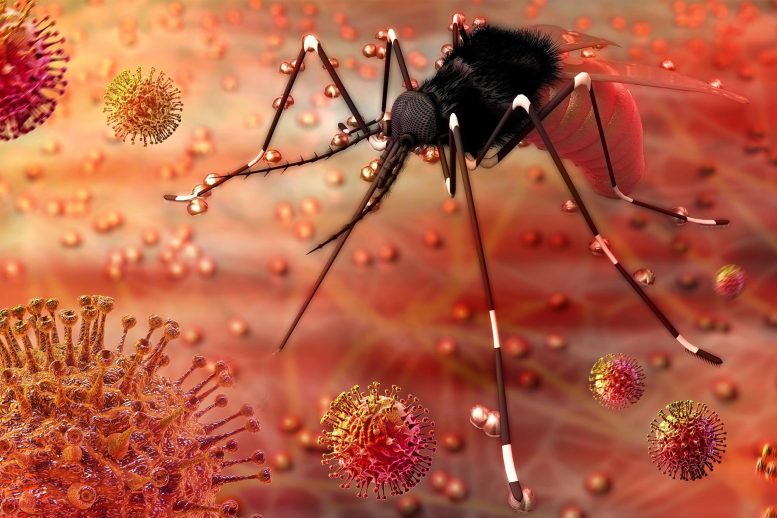
Researchers identified a missing transporter in mosquitoes essential for their development, leading to new insecticide possibilities that don’t harm other insects.
A genetic discovery from the University of California – Riverside (UCR) could permanently transform disease-carrying mosquitoes into adolescents, never developing or reproducing.
Contrary to conventional scientific thinking, UCR entomologist Naoki Yamanaka discovered in 2018 that a crucial steroid hormone needs transporter proteins to enter or depart fruit fly cells. Ecdysone, a hormone, is referred to as the “molting hormone.” Flies cannot develop into adults or breed without it.
Before his discovery, textbooks taught that ecdysone travels freely across cell membranes, slipping past them with ease. “We now know that’s not true,” Yamanaka said.
Ecdysone and Its Role in Insect Development
Ecdysone is necessary for some stage of every insect species’ life cycle, from the egg to the offspring-producing adult. The ecdysone transporter that Yamanaka discovered in 2018 as well as a few others discovered in recent research are present in every insect that Yamanaka has tested. He discovered, however, that mosquitoes are unique in this new study.
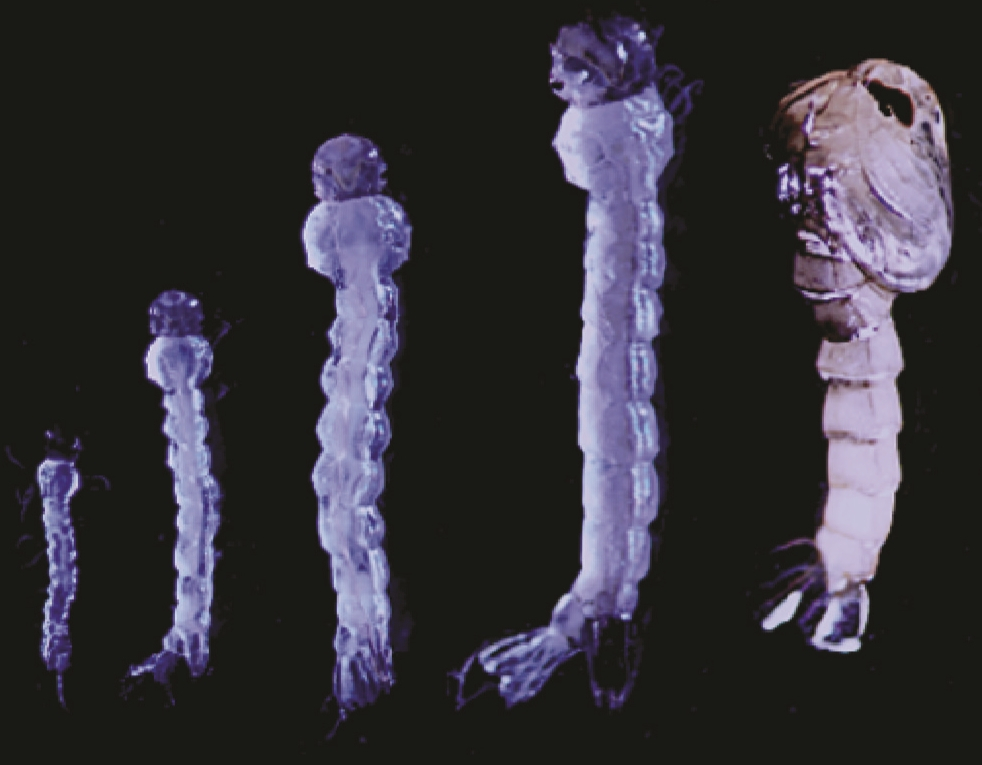
Only three of the four transporter proteins found in fruit flies are present in mosquitoes. They are lacking in the primary and most crucial ecdysone transporter.
“This primary one is somehow, mysteriously, missing in mosquitoes,” Yamanaka said.
These findings have recently been published in the Proceedings of the National Academy of Sciences.
Implications for Mosquito-Specific Insecticides
The discovery opens the door to a mosquito-specific insecticide that would not harm beneficial bees or other pollinators. It would, however, affect mosquitoes like the ones used in the study, Aedes aegypti, which spread Zika, dengue, yellow fever, chikungunya, and other viruses.
“We can develop chemicals to block the functions of these ecdysone transporters but do not affect the original transporter that is so key for other insects,” Yamanaka said. “The chances for off-target effects would be low.”
A related UC Riverside study, led by cell biologist Sachiko Haga-Yamanaka, is attempting to locate similar hormone transporting machinery in humans.
“Textbooks say that steroid hormones transport freely into and out of human cells, but based on our insect research, we doubt that to be the case,” Yamanaka said.
Yamanaka’s research has been funded by the National Institutes of Health. His laboratory is now screening for chemicals that can block mosquitoes’ ecdysone importers. He is also investigating ecdysone transporters in other animals.
Development of Additional Mosquito Control Methods
Other methods do exist to ensure local populations of mosquitoes cannot breed. Releasing sterile, irradiated male mosquitoes into the wild to mate with females results in eggs that do not hatch, a technique that eliminates the need for insecticides.
Though there are effective methods like this for controlling local populations of mosquitoes, Yamanaka feels it is important to develop additional tools so we can handle mosquito-related issues in many different scenarios.
“It is impossible to make mosquitoes go extinct,” Yamanaka said. “Depending on one tool to control them is dangerous. As the climate heats up, it creates even more favorable conditions for them to multiply, and they’re only likely to become a bigger problem, especially in Southern California.”
The study was funded by the NIH/National Institutes of Health.
Reference: “Essential functions of mosquito ecdysone importers in development and reproduction” by Lewis V. Hun, Naoki Okamoto, Eisuke Imura, Roilea Maxson, Riyan Bittar and Naoki Yamanaka, 13 June 2022, Proceedings of the National Academy of Sciences.
DOI: 10.1073/pnas.2202932119
Never miss a breakthrough: Join the SciTechDaily newsletter.
Follow us on Google and Google News.
6 Comments
“As the climate heats up, it creates even more favorable conditions for them to multiply, and they’re only likely to become a bigger problem, especially in Southern California.”
I remember being in Fairbanks (AK) in early April. Although streams were flowing, there was still at least a foot of snow on the ground. The unofficial Alaska state bird — the mosquito — was already out and in abundance. At least some species of mosquito are quite tolerant of cold and ‘climate change’ or no, will be a problem. For places like Southern California, increased temperatures might inhibit mosquitos because the Summers have low humidity, potentially desiccating the adults, and depriving them of water to reproduce in. I don’t remember encountering many mosquitos the last time I lived in Phoenix.
I think his remark was a knee jerk reaction without giving it thought, or possibly an appeal to potential funding sources concerned about the ravages of global warming of 0.018 deg F per year, most of which is at night and in the Winter. It seems everyone wants to get on the Climate Change bandwagon, with obligatory ‘Hallelujah’ sound bites, no matter how ludicrous.
IMHO, completely/permanently eradicating all diseases & parasites should/must be a common shared long term goal for whole humanity!
Each disease/parasite keep causing massive damage/loss/cost/labor to humanity, absolutely for sure!
Keep fighting against each/all (& keep suffering/losing) “for rest of eternity” is NOT a good/smart option, very obviously!
Especially, mosquitoes are carriers of many extremely dangerous diseases & parasites
& they do NOT have any essential function in nature (which cannot be done by many other insects)!
& so they should/must be one of highest priority targets to completely/permanently/globally eradicate!
(& of course, it would not be easy/quick/cheap! But, it is vitally important that we keep trying new ideas/solutions!)
(Also, the situation w/ mosquitoes is already bad enough that there is no reason to be scared of making it any worse, IMHO!)
If people are breeding in anticipation that 1/2 of their children won’t survive, maybe you should also include birth control on the other end of those who will be the beneficiaries of fewer mosquito born diseases.
“Believe it or not, mosquitoes are pollinators. In fact, mosquitoes’ primary food source is flower nectar, not blood. Just like bees or butterflies, mosquitoes transfer pollen from flower to flower as they feed on nectar, fertilizing plants and allowing them to form seeds and reproduce. It’s only when a female mosquito lays eggs does she seek a blood meal for the protein. Males feed only on flower nectar and never bite.”
Humans populating the earth and pushing out species by committing genetically engineered genocide sounds like a wonderful idea. How could that possibly go wrong? if mosquitos keep certain populations in check then we need more of them; not fewer.
Beware the law of unintended consequences.
How many fish,birds and other insects feed on the larvae and adult mosquitoes? Make them extint? Really? At what cost..