
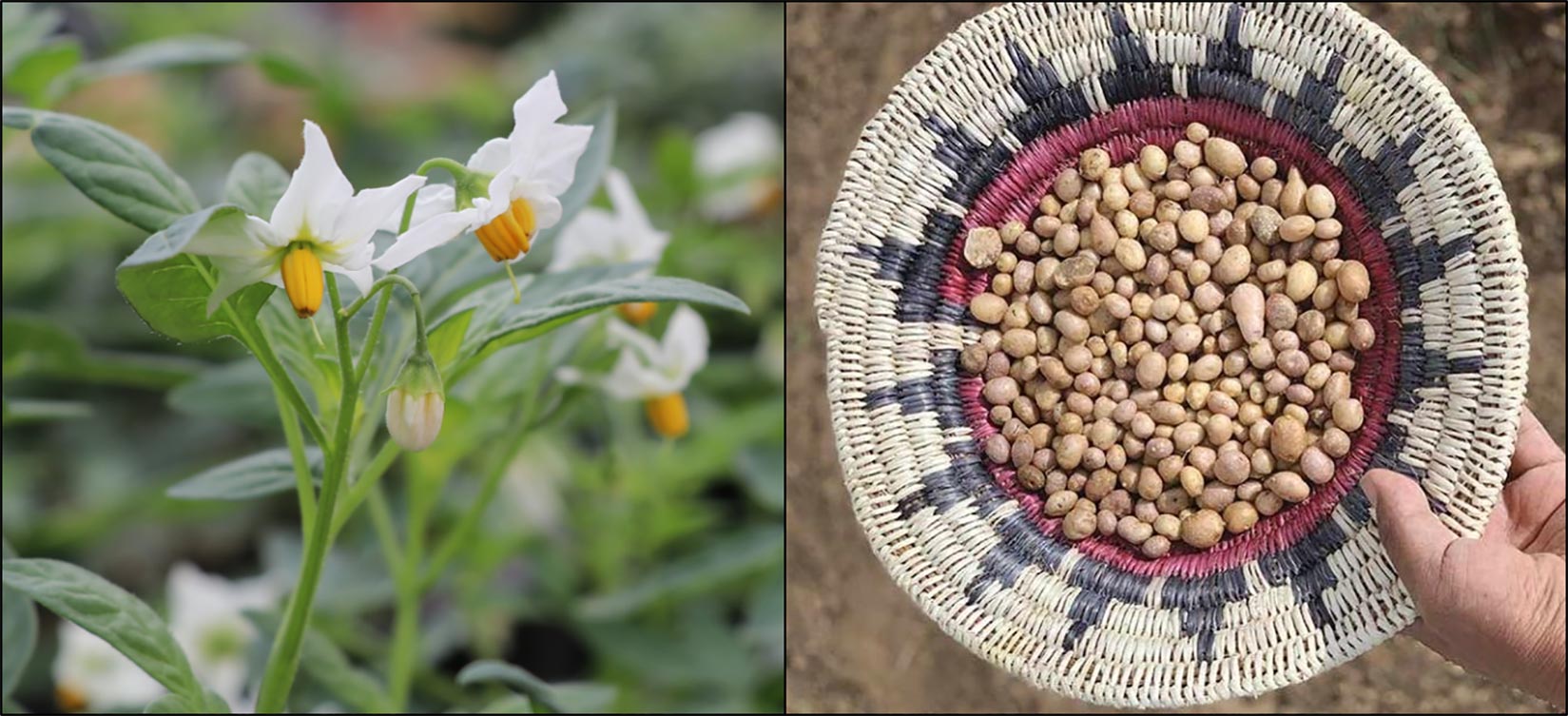
Ancient Indigenous peoples transported a wild potato across the Southwest, expanding its range thousands of years ago.
More than 10,000 years ago, people living in the American Southwest carried a wild relative of today’s potato across long distances, helping the plant spread beyond its original habitat. According to a study published today (January 21, 2026) in the open-access journal PLOS One, this movement likely expanded the species’ range and may represent early steps toward domestication. The research was led by Lisbeth Louderback of the University of Utah, U.S., along with an interdisciplinary team of scientists.
The findings also highlight how this wild potato became part of a distinctive cultural tradition in the Four Corners region, where the borders of Colorado, Utah, Arizona, and New Mexico meet.
A Hardy Wild Potato With Deep Roots
Known as the Four Corners potato (Solanum jamesii), this small but nutritious plant still grows across much of southwestern North America today. Its modern range stretches from southern Utah and Colorado into northern Mexico. Despite its modest size, the potato is resilient and well-adapted to dry environments.
To understand how people used and moved this plant in the distant past, researchers examined ground stone tools recovered from 14 archaeological sites. These sites span a wide time range, from several hundred to many thousands of years old. The team tested the tools for microscopic starch granules left behind during food preparation.
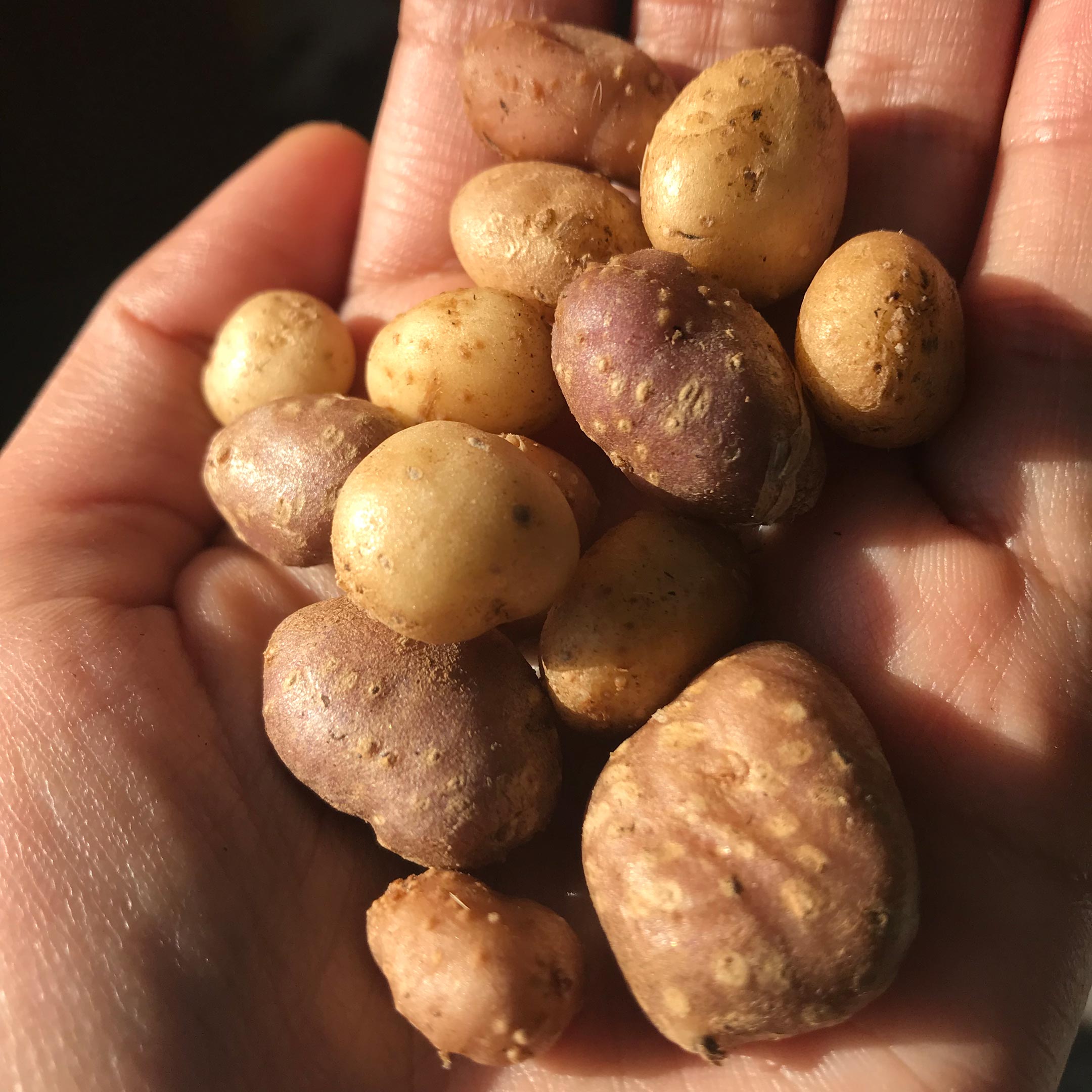
Stone Tools Reveal an Ancient Journey
Starch residues linked to the Four Corners potato were found on tools from nine of the sites. Some of the evidence dates back as far as 10,900 cal BP. Most of these locations sit near the northern edge of where the species grows today, along the Four Corners border region.
Earlier genetic studies offer another key piece of the puzzle. Some modern potato populations in this northern area show clear genetic signs that they originated much farther south — indicating that humans intentionally carried the plant across the landscape. This transport pushed the potato’s range north into parts of Utah and Colorado, where it continues to grow.
Signs of Early Domestication and Living Traditions
Researchers note that both the repeated use of a plant and its movement beyond its natural range are important markers of early domestication. In this case, those behaviors appear to have started thousands of years ago.
The Four Corners potato remains culturally important to Indigenous communities today. Alongside the laboratory analysis, the research team interviewed 15 Navajo (Diné) elders. These conversations confirmed that the wild potato is still recognized, eaten, and used in spiritual practices.
Lisbeth Louderback adds: “By combining new archaeobotanical data and elder interviews with transport patterns identified by genetic sequencing of the Four Corners potato, we have defined an anthropogenic range distinct from its natural distribution. This reveals a unique cultural identity developed by ancient transport of this species – one that continues into the present day.”
Cynthia Wilson adds: “The mobility of Indigenous foodways was driven by kinship-based practices across the landscape. Indigenous knowledge holders, especially matrilineal women, held on to these seedlings and stories across generations to sustain ties to ancestral land and foodways.”
Reference: “Ancient use and long-distance transport of the Four Corners Potato (Solanum jamesii) across the Colorado Plateau: Implications for early stages of domestication” by Lisbeth A. Louderback, Cynthia Wilson, Stefania L. Wilks, Kaley Joyce, Sara Rickett, John Bamberg, Alfonso del Rio and Bruce M. Pavlik, 21 January 2026, PLOS ONE.
DOI: 10.1371/journal.pone.0335671
Never miss a breakthrough: Join the SciTechDaily newsletter.
Follow us on Google and Google News.
1 Comment
And the budding British Empire brought it back to England. Another wondrous gift of the British Empire to the entire world, apart from railways and steam engines and radar. And a socialised National Health Service that once worked efficiently and effectively for 56 million people.