
Close Menu
    Facebook X (Twitter) Instagram
    SciTechDaily
    • Biology
    • Chemistry
    • Earth
    • Health
    • Physics
    • Science
    • Space
    • Technology
    Facebook X (Twitter) Pinterest YouTube RSS
    SciTechDaily
    Home»Science»Bizarre “Alien-Faced” Multi-Legged Forest Dwellers Discovered in Remote African Jungle
    Science

    Bizarre “Alien-Faced” Multi-Legged Forest Dwellers Discovered in Remote African Jungle

    By University of the Sunshine CoastFebruary 15, 2024No Comments3 Mins Read
    Facebook Twitter Pinterest Telegram LinkedIn WhatsApp Email Reddit
    Share
    Facebook Twitter LinkedIn Pinterest Telegram Email Reddit
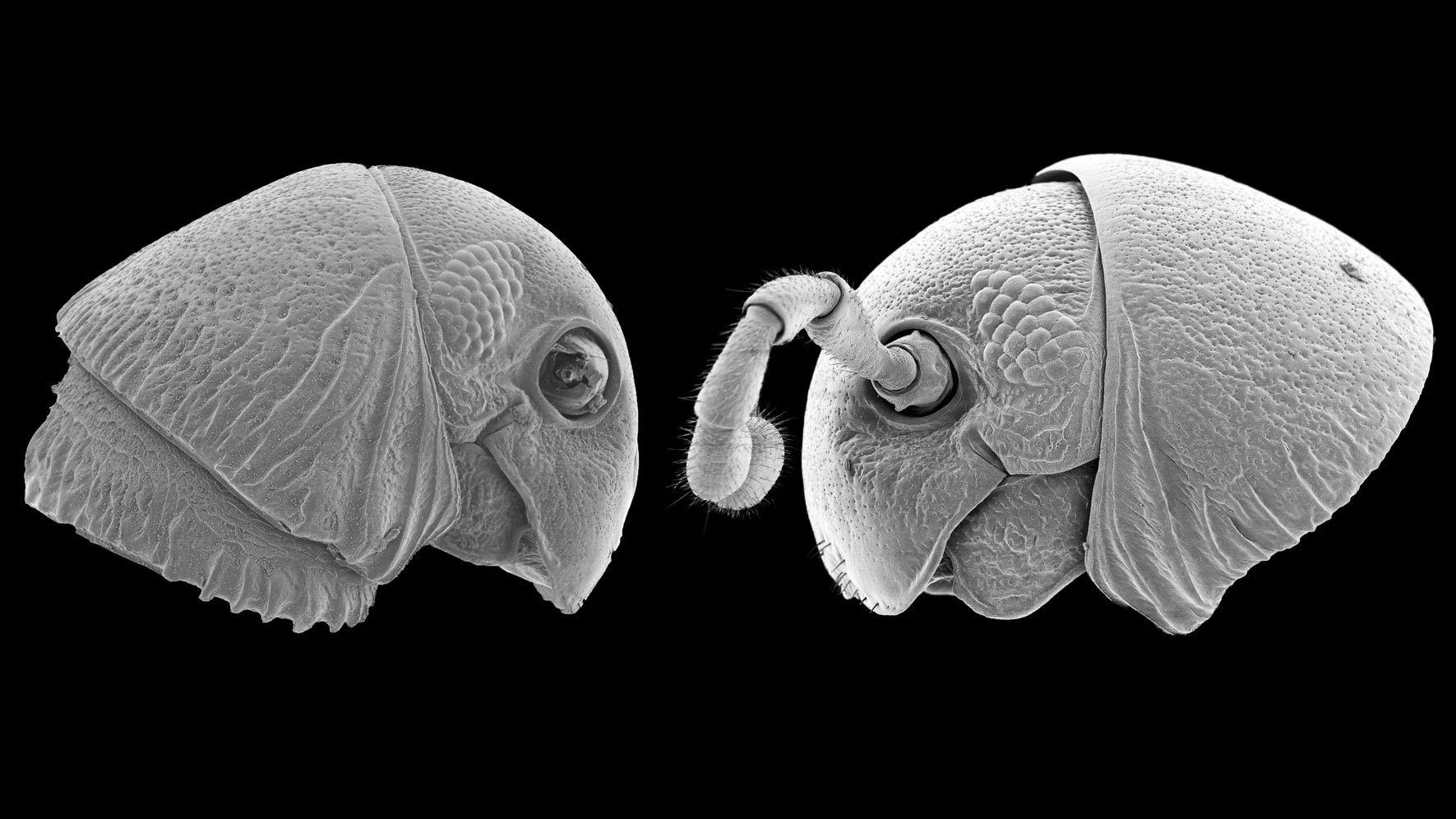
    Preserved Heads of Two New Millipede Species
    Preserved heads of two new millipede species, Lophostreptus magombera and Udzungwastreptus marianae. Credit: University of the Sunshine Coast

    Researchers have uncovered a new genus and five new species of millipedes in remote African jungles – and say the many-legged creatures could hold important clues to whether woody vines are choking or protecting the world’s forests.

    University of the Sunshine Coast Professor Andy Marshall said they found the millipedes – with heads that look somewhat like Star Wars characters – among forest litter and loose soil while researching tree and vine growth in the Tanzania’s remote Udzungwa Mountains.

    The new genus and species were officially described recently in the European Journal of Taxonomy in a paper titled “A mountain of millipedes,” with six international collaborators including lead author Professor Henrik Enghoff of the University of Copenhagen.
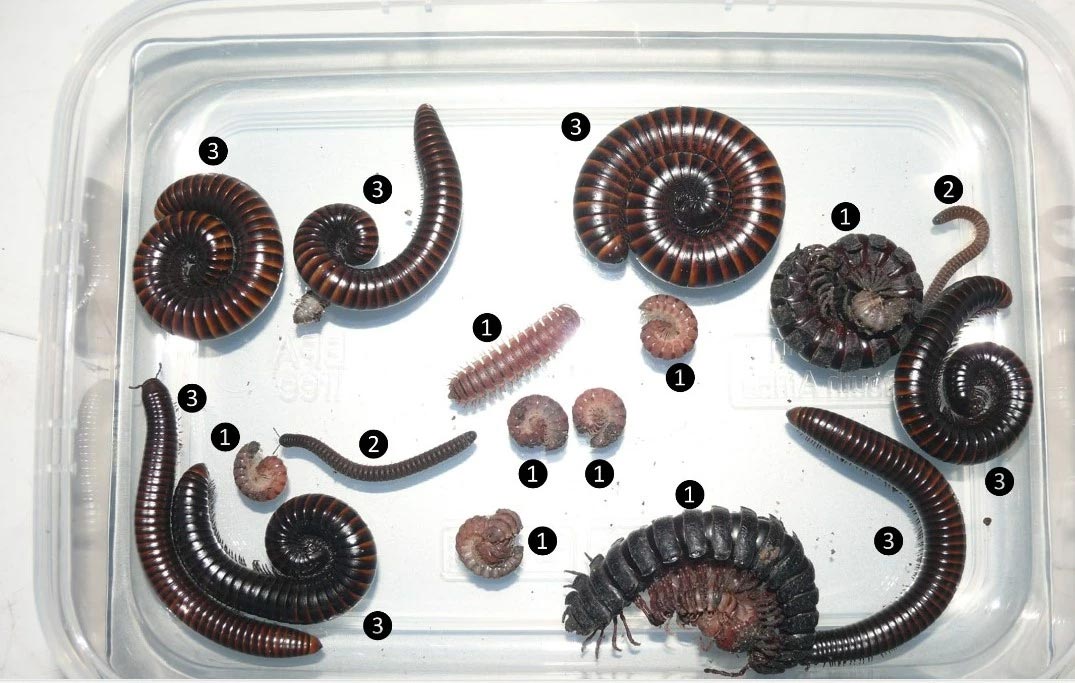
    Box of Sample Millipedes Tanzania
    Box of sample millipedes collected by UniSC FoRCE project researchers in Tanzania. Credit: A.R. Marshall

    “The millipedes will help us to determine two very different theories on the role of vines on forest recovery – whether the vines are like bandages protecting a wound or ‘parasitoids’ choking the forest,” Professor Marshall said.

    “We record millipedes of all sizes during our fieldwork to measure forest recovery because they are great indicators of forest health, but we didn’t realize the significance of these species until the myriapodologists had assessed our specimens.

    “It’s remarkable that so many of these new species did not appear in earlier collecting of millipedes from the same area, but we were still hoping for something new.”

    The project, funded by the Australian Research Council, aims to understand global forest recovery from heavy disturbance.
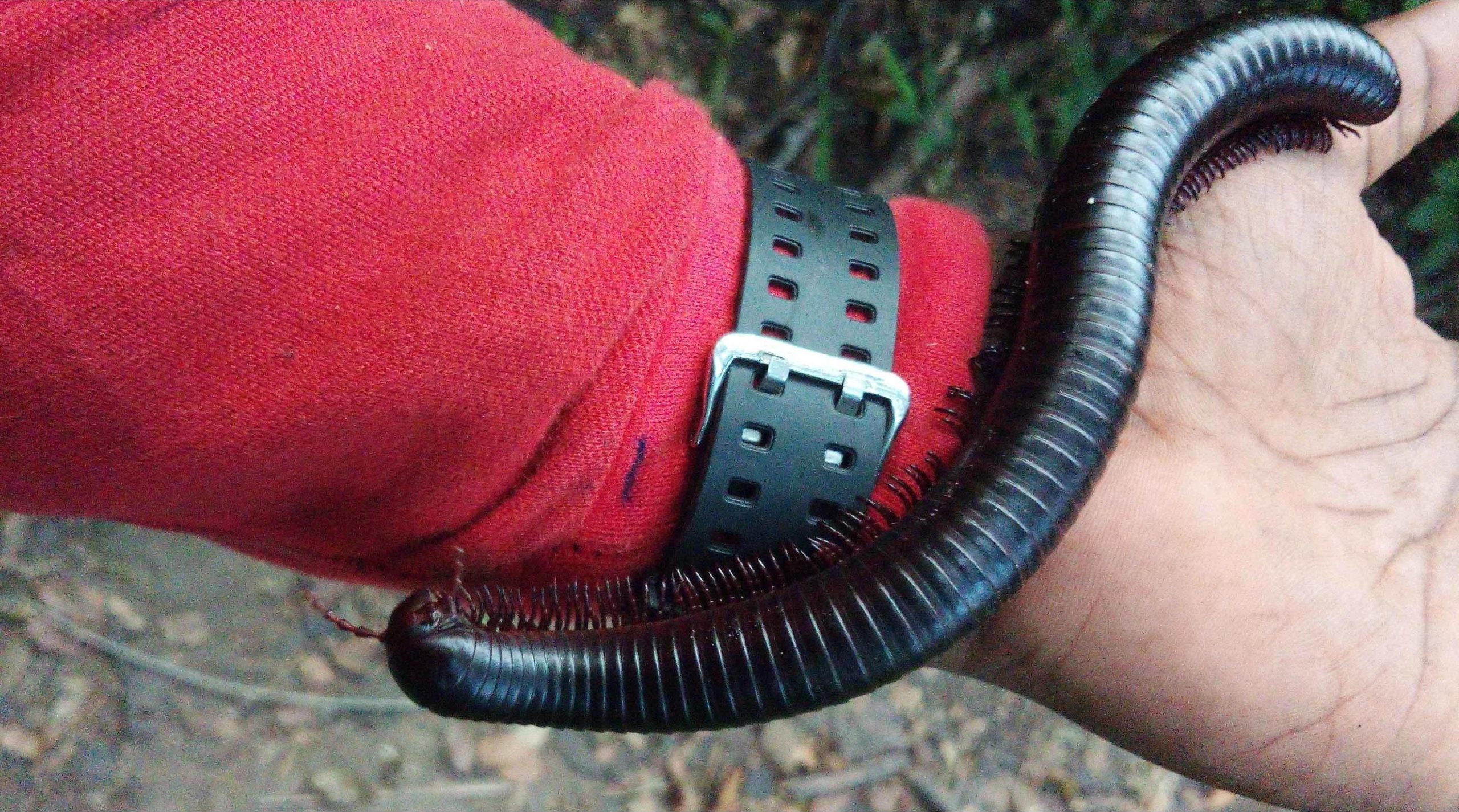
    Alain Ngute Holds a Live African Giant Black Millipede
    UniSC PhD student Alain Ngute holds a live African Giant Black Millipede, the largest living species of millipede on earth, native to Eastern and Southern Africa, can grow more than 30cm. Credit: University of the Sunshine Coast

    Recent findings, part of a global research collaboration, suggest warmer temperatures are a key driver in woody vines taking over the forests already disturbed by logging and other impacts.

    Known for their multitude of legs, the largest African millipedes can grow up to 35 centimeters.

    Professor Marshall, from UniSC’s Forest Research Institute, said while the millipedes they found were only a few centimeters long – they still had around 200 legs each.

    It is not the first time Professor Marshall has had the thrill of discovering new species during his research, including a new chameleon and new species of tree that could already be on its way toward extinction.

    He said unearthing the new genus and species of millipedes highlighted the huge amount of discovery remaining in tropical forests.

    Alain Ngute
    UniSC PhD student Alain Ngute processes a millipede specimen. Credit: Hamidu Mnendendo

    Professor Enghoff and the team named one of the new species Lophostreptus magombera after the Magombera Nature Reserve, a biologically unique forest that Professor Marshall has been working to conserve since the turn of the millennium.

    The millipede specimens are now in Denmark’s Natural History Museum at the University of Copenhagen.

    The new genus is Udzungwastreptus. The five new species are Lophostreptus magombera; Attemsostreptus cataractae; Attemsostreptus leptoptilos; Attemsostreptus julostriatus and Udzungwastreptus marianae.

    Reference: “A mountain of millipedes XI. The trachystreptoform spirostreptids of the Udzungwa Mountains, Tanzania (Diplopoda, Spirostreptida, Spirostreptidae)” by Henrik Enghoff, Alain S.K. Ngute, Revocatus L. Kwezaura, Richard L. Laizzer, Herman M. Lyatuu, Waziri Mhagawale, Hamidu R. Mnendendo and Andrew R. Marshall, 22 January 2024, European Journal of Taxonomy.
    DOI: 10.5852/ejt.2024.918.2405

    Never miss a breakthrough: Join the SciTechDaily newsletter.
    Follow us on Google and Google News.

    Entomology New Species Popular
    Share. Facebook Twitter Pinterest LinkedIn Email Reddit

    Related Articles

    Scientists Discover “Scary” New Species of Spider in California

    Hidden Diversity: Undiscovered Species Are Hiding Right Under Our Noses

    Sexual Intercourse of Ostracods Revealed Through 100-Million-Year-Old Amber Discovery

    “Seriously Strange” New Extinct Family of Giant Wombat Relatives Discovered in Australian Desert

    Fossil Discovered in the 1960s Finally Reveals Its Secrets: New Plant Species That Lived About 365 Million Years Ago

    Deadly Virus Turns Honey Bees Into Trojan Horses, Rapidly Spreading the Infection to Healthy Hives

    New Fossil Discovery Highlights Canada-Russia Connection 53 Million Years Ago

    Aphids Use Rudimentary Sunlight Harvesting Similar to Photosynthesis

    Entomologists Recreate Colony Collapse Disorder That Affects Bee Populations Worldwide

    Leave A Reply Cancel Reply

    • Facebook
    • Twitter
    • Pinterest
    • YouTube

    Don't Miss a Discovery

    Subscribe for the Latest in Science & Tech!

    Trending News

    Millions Take These IBS Drugs, But a New Study Finds Serious Risks

    Scientists Unlock Hidden Secrets of 2,300-Year-Old Mummies Using Cutting-Edge CT Scanner

    Bread Might Be Making You Gain Weight Even Without Eating More Calories

    Scientists Discover Massive Magma Reservoir Beneath Tuscany

    Europe’s Most Active Volcano Just Got Stranger – Here’s Why Scientists Are Rethinking It

    Alzheimer’s Symptoms May Start Outside the Brain, Study Finds

    Millions Take This Popular Supplement – Scientists Discover a Concerning Link to Heart Failure

    The Universe Is Expanding Too Fast and Scientists Can’t Explain Why

    Follow SciTechDaily
    • Facebook
    • Twitter
    • YouTube
    • Pinterest
    • Newsletter
    • RSS
    SciTech News
    • Biology News
    • Chemistry News
    • Earth News
    • Health News
    • Physics News
    • Science News
    • Space News
    • Technology News
    Recent Posts
    • Doctors Surprised by the Power of a Simple Drug Against Colon Cancer
    • Why Popular Diabetes Drugs Like Ozempic Don’t Work for Everyone: The “Genetic Glitch”
    • Scientists Create Improved Insulin Cells That Reverse Diabetes in Mice
    • Scientists Stunned After Finding Plant Thought Extinct for 60 Years
    • A Common Diabetes Drug May Hold the Key to Stopping HIV From Coming Back
    Copyright © 1998 - 2026 SciTechDaily. All Rights Reserved.
    • Science News
    • About
    • Contact
    • Editorial Board
    • Privacy Policy
    • Terms of Use

    Type above and press Enter to search. Press Esc to cancel.