
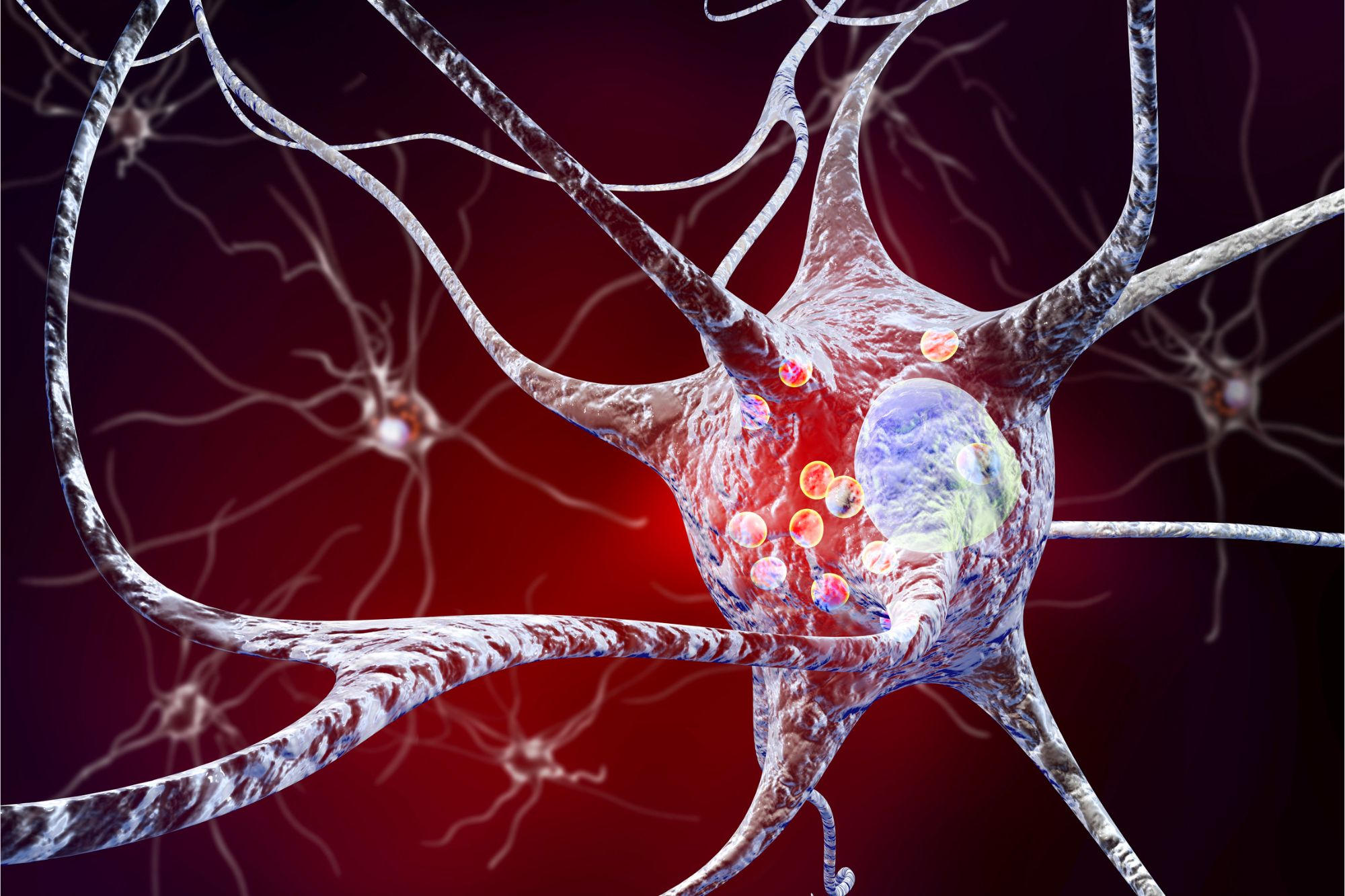
Researchers have developed a method to recreate the formation of Lewy bodies in human neurons, shedding light on the essential roles of alpha-synuclein and immune responses in their development.
This breakthrough offers new insights into Parkinson’s disease, showing that Lewy bodies form only under specific conditions and highlighting the potential for new treatment avenues.
Lewy bodies are a key feature of Parkinson’s disease (PD) and other related neurological disorders. Unraveling their development is essential for improving treatments. Researchers at The Neuro (Montreal Neurological Institute-Hospital) of McGill University, in collaboration with its Early Drug Discovery Unit, have successfully replicated the formation of Lewy bodies in human neurons.
This study offers vital insights into their development, highlighting the crucial role of immune responses and establishing a previously unidentified connection between the immune system and neurological diseases.
Advancements in Lewy Body Simulation
Lewy bodies are thought to result from the buildup of misfolded proteins in neurons. Previously, the only way to study them in human neurons was through brain autopsy, which is not ideal because cells break down quickly after death. In this study, neuroscientists used human stem cells to create Lewy bodies in living dopaminergic neurons, the kind of cells especially at risk in PD.

Key Findings on Immune Response and Lewy Body Formation
The scientists did this by incubating the neurons with a protein called alpha-synuclein, which is found in Lewy bodies, and coupling it to an immune reaction.
The results reveal that Lewy bodies develop only when dopaminergic neurons are exposed to both a rise in alpha-synuclein and an immune stimulation. Without the immune challenge, no Lewy bodies developed. Moreover, performing the same procedure on other cells, such as cortical neurons does not produce Lewy bodies, suggesting this effect is specific to dopaminergic neurons.
Implications for Parkinson’s Disease Treatment
By following the development of Lewy bodies in real-time, the scientists discovered that in dopaminergic neurons, the immune response impairs autophagy—the removal of damaged cellular materials. They also found that in these cells, Lewy bodies are membrane-bound, and contain other organelles and membrane fragments, contradicting previous dogma that Lewy bodies were composed exclusively of misfolded proteins.
Conclusion and Future Directions
This study is the first to show that both alpha-synuclein and an immune response are needed for Lewy body formation and that this effect is specific to dopaminergic neurons. It also provides important insight into Lewy body formation and structure, information that could be important to future drug development.
“Replicating Lewy body formation in living neurons is a significant step forward to understanding key aspects of Parkinson’s and other neurological disease,” says Peter McPherson, a researcher at The Neuro and the study’s senior author. “These neurons came from stem cells of healthy patients, suggesting anyone can develop Parkinson’s if exposed to the right environment, and so a genetic predisposition to disease may not be necessary.”
“The results support previous research showing that an immune response plays an important role in Parkinson’s development,” says Armin Bayati, a PhD candidate in McPherson’s lab and the study’s first author. “Future studies should focus on understanding how inflammation caused by an overexcited immune system causes Lewy body formation when coupled with α-synuclein.”
The scientists published their results today (October 8) in the journal Nature Neuroscience.
Reference: “Modeling Parkinson’s disease pathology in human dopaminergic neurons by sequential exposure to α-synuclein fibrils and proinflammatory cytokines” by Armin Bayati, Riham Ayoubi, Adriana Aguila, Cornelia E. Zorca, Ghislaine Deyab, Chanshuai Han, Sherilyn Junelle Recinto, Emmanuelle Nguyen-Renou, Cecilia Rocha, Gilles Maussion, Wen Luo, Irina Shlaifer, Emily Banks, Ian McDowell, Esther Del Cid Pellitero, Xue Er Ding, Behrang Sharif, Philippe Séguéla, Moein Yaqubi, Carol X.-Q. Chen, Zhipeng You, Narges Abdian, Heidi M. McBride, Edward A. Fon, Jo Anne Stratton, Thomas M. Durcan, Patrick C. Nahirney and Peter S. McPherson, 8 October 2024, Nature Neuroscience.
DOI: 10.1038/s41593-024-01775-4
The study was made possible by support from the Canada First Research Excellence Fund, Healthy Brain, Healthy Lives, the Canadian Institutes for Health Research, and Fonds de recherche du Québec- Santé.
Never miss a breakthrough: Join the SciTechDaily newsletter.
Follow us on Google and Google News.