
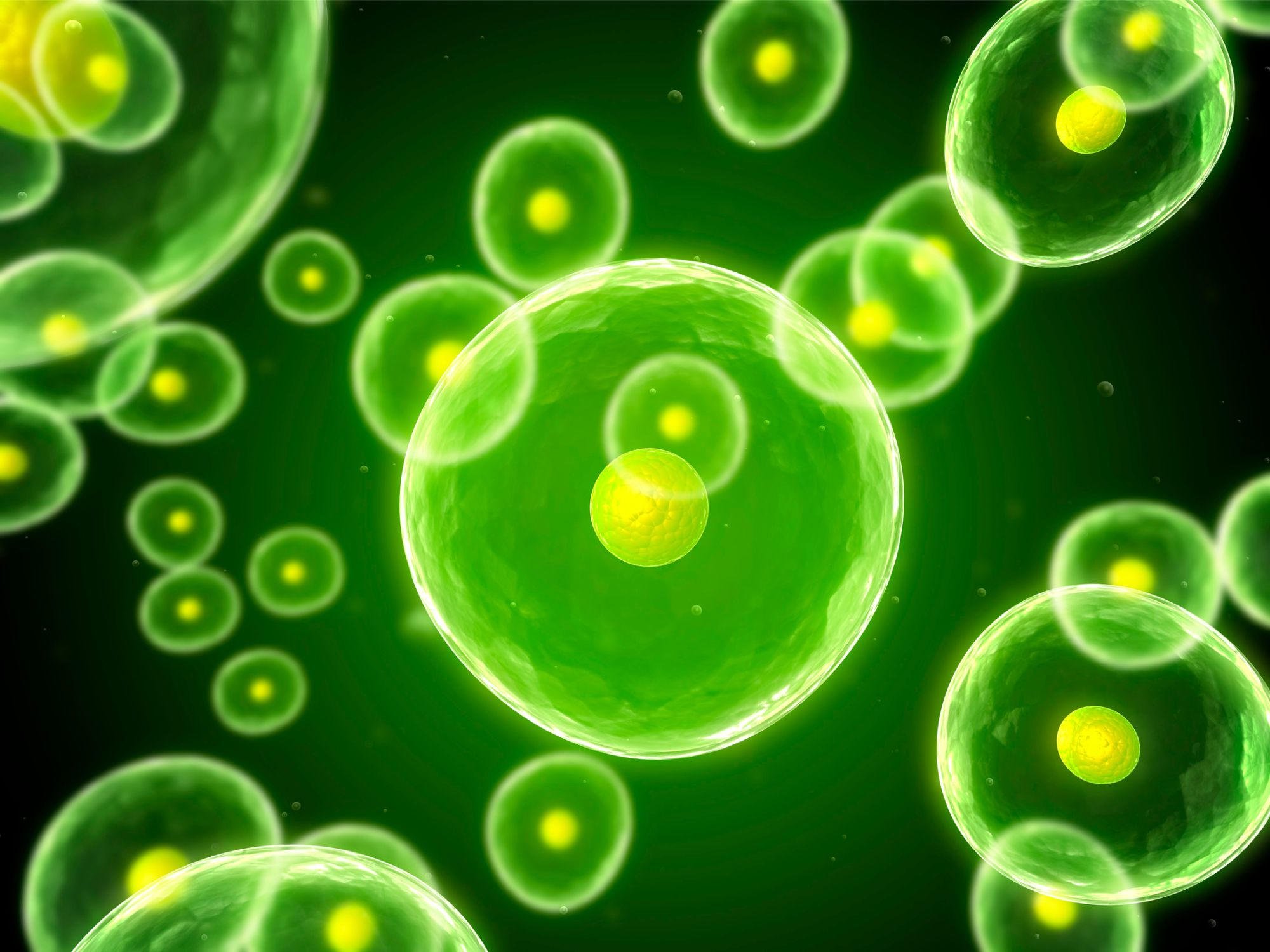
Non-reciprocal interactions between particles enable the regulation of dynamic states.
Most systems, whether companies, societies, or entire nations, tend to function most effectively when each member performs their designated role. This efficiency is often supported by spatial organization, which can arise either through established rules or through natural processes like learning and self-organization.
Similarly, at the microscopic level, cells operate with specialized components carrying out distinct functions. Researchers at the Max Planck Institute for Dynamics and Self-Organization (MPI-DS) are investigating how such complex biological structures form. Their models explore the fundamental components required to create organized structures, focusing on how simple interactions between different elements can give rise to intricate organization.
Tuning Particle Behavior
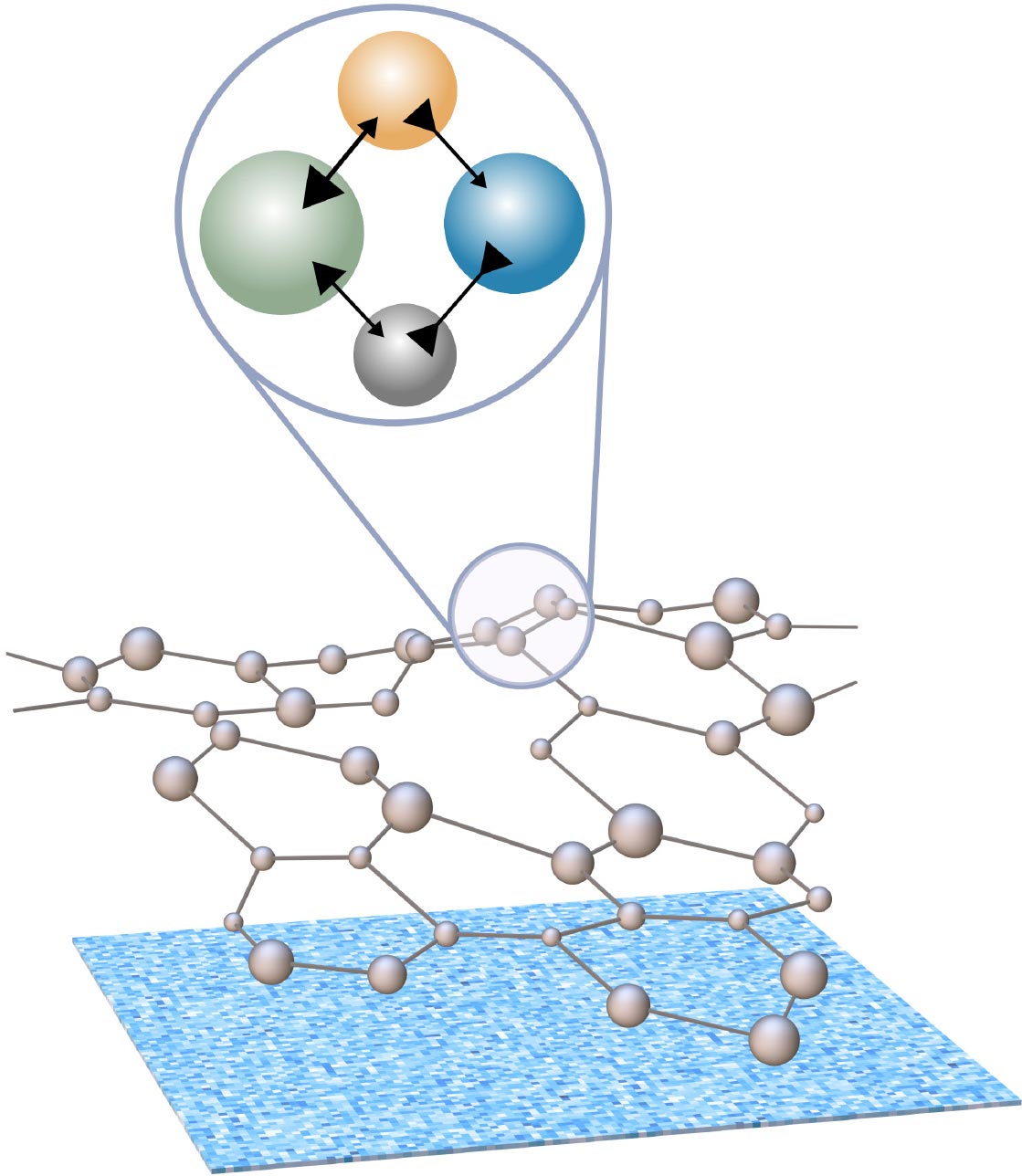
“In a passive system, random interactions between particles are balanced and lead to the formation of stable patterns,” explains Laya Parkavousi, first author of the study. “However, if we add non-reciprocal interactions to the system, meaning that one particle is attracted by another, which in turn is repelled, we observe activity that can homogenize the mixture,” she continues. In other words, non-reciprocal interactions, which were also investigated in previous studies, allow to control the state of the particle organization.
“By tuning the non-reciprocity, we enable the system to adapt to different states,” says Navdeep Rana, shared first author of the study. “These states can be so-called molecular condensates within a cell which are not separated by a membrane, or also waves of travelling information that is used in cellular signaling pathways,” he explains. The study thus offers a new route to understanding how complex patterns and structures emerge and how cellular functions can be maintained.
Reference: “Enhanced Stability and Chaotic Condensates in Multispecies Nonreciprocal Mixtures” by Laya Parkavousi, Navdeep Rana, Ramin Golestanian and Suropriya Saha, 7 April 2025, Physical Review Letters.
DOI: 10.1103/PhysRevLett.134.148301
Never miss a breakthrough: Join the SciTechDaily newsletter.
Follow us on Google and Google News.